The Drifter on Dickens and De Quincy

…And one thinks of the elder Charles Dickens (in his 50s) embracing his new, or renewed, favorite hobby: exploring London’s opium dens.

We don’t know if the esteemed author ever developed a habit, but we can be sure he partook, and not lightly, of the primary wares in the opium dens.

Such behavior resulted in several immortal characters who are contained in Dickens’ last, unfinished novel, The Mystery of Edwin Drood.

This book is a murder mystery which became a true murder mystery for all future history, since Dickens never finished the book, never provided a clue to who the murderer was (he never left notes nor told anyone about it, either), and since he died of a stroke right in the middle of the book’s composition, at the age of 58.

Her Royal Highness the Princess Puffer is one immortal character from this novel.

She’s a haggard-looking woman who runs an opium den and who the world thinks is also disabled and in need.

But she’s neither disabled nor in need in reality. And I say “haggard-looking” only because her haggard appearance is a costume she deliberately dons.

She spends her time looking like she’s pretty out of it while secretly gathering info on all the customers of her establishment, just in case she ever needs any of it. A spy, in other words.

Over the years, many literary scholars have pointed out that Dickens’ last tale, Drood, almost reads like a rewriting of one of Dickens’ all-time favorite books, Confessions of an English Opium Eater, by Thomas de Quincy.

The Confessions is a short book (or long essay) that first appeared in The London Magazine when Thomas was around 36 and Charles was around 9 years old, in 1821.

(The population of London and environs was just over two million in the early to mid nineteenth century. Most English writers lived in London, and most knew or had at least met one another. At the time, London was, by far, the largest city in the world.)

Within a year or so of its magazine appearance, the Confessions appeared in book form. It made de Quincy an immediate “celebrity” (of the dubious variety) and remained his best-known work for the rest of his life, even though he completed many other works just as worthy as this one. Later, he blew up the text to four times its original size and republished it once again, this time in a much slacker, weaker, more verbose version probably influenced by none other than laudanum.

De Quincy’s book would later go on to have an explosive impact on American writers of the twentieth century as well, including William S. Burroughs, Jack Kerouac, Allen Ginsberg, and Hunter S. Thompson. The influence extended through them, of course, onto entire counter-cultural movements continuing through to our own time (2025).

De Quincy was a lifelong laudanum user and addict (he discovered it as a teenager). He cycled back and forth between just using and being hopelessly addicted. He was 4 feet ten inches tall, and thin. He lived to be 74 (which would be like at least 84 now) and often walked 25 miles a day, including on heavy use days. He had eight children; Dickens had ten; such numbers were normal back then.

Thomas took his inspiration from his pal and mentor, Samuel Taylor Coleridge, another lifelong user who cycled between addiction, use, and abuse.

De Quincy called it “eloquent opium!” and said it gave him the feeling of having “hands washed free of blood.”

But he also depicted the horrific, terrifying, nightmarish aspects of the drug in his writing.

He wrote about it as if using opium were like dropping into a pit.

In the same way, Dickens very much had a dual view of the world. His characters in Drood are still hilarious and horrible by turns, just like De Q’s depiction of drugs.

Thomas de Quincy was also an author who (in many ways) started what we now call the “true crime” genre of nonfiction writing, when he began to explore London murder/s in his works, like people getting their throats cut in their own beds over their own taverns on the edge of town and the crimes never being solved.

In The Mystery of Edwin Drood, Dickens gathered together the triple obsessions of De Quincy with crime, drugs, murder and put them all on display in a way he never had before. One way he did this was with the prose style.

Before Thomas de Quincy, prose was prosaic. There were exceptions, like John Donne and Samuel Johnson. But prose was considered to be far below poetry and its nature was merely functional.

In his Confessions of 1821, De Quincy talked about wanting a new thing in the world: what he called “impassioned prose.”

And then he proceeded to make it happen, as did Herman Melville 30 years later in America. De Quincy took opium and Melville drank wine.

Dickens had a massive stroke after a hard, full, fulfilling day of working on Drood, and never regained consciousness.

The Drifter: The Writer’s Most Important Job in 2025 (and Beyond)

(Wonderful images provided by The Drifter)

In the present age, the writer has one single solitary job to do which is far, far more important and crucial than all other aspects of the writer’s work.

It is a job so important that if the writer fails in this, she or he immediately loses all credibility and all right to call one’s self a writer.

It is a job so important, too, that it’s more important than any other job anyone else in society is called upon to do – by far.

It is a job so crucial, and so difficult, and so nearly impossible almost all the time, that it shows us why so few people in this world have really earned the right to call themselves writer in the highest sense of the word.

Without this job, which the writer must do alone, totally alone, society itself is utterly doomed. Utterly doomed as in destined to fail, to completely collapse, if this job of the writer, this one key job of the writer, were to completely disappear from society.

This job of the writer is so important that it’s even more important than the writer actually writing anything, especially today in a world drowning in meaningless words.

And it’s far more important than the writer gaining any kind of mainstream “success.” (Fame in a land of zombies is about as solid and valuable as air, as thin, thin air.)

This job will sound simple. It will sound so simple that you may even be amazed – at first.

THE WRITER MUST STAY SANE.

THEY MUST STAY SANE, BE SANE, REMAIN SANE, ALWAYS BE SANE, AND NEVER NOT BE SANE. THE WRITER MUST BE, WITHOUT PEER, THE SANEST PERSON IN HIS OR HER SOCIETY.

An AI computer, no matter how intelligent it becomes, cannot do this job for humans. Only humans ARE humans, and only humans can think for humans about what it means to be human.

The writer is a thinker who sees more nuance than anyone else. Without nuanced thought, which is profound thinking, which is against “black and white,” “us and them” thinking, the writer’s work becomes mere regurgitated entertainment, a thing the world is literally swamped with, a thing that may cause a flood so bad it will make the Noah’s Ark story look like child’s play.

The real (human) writer must stay sane and be able to see reality for what it truly, really is.

All other jobs of the real writer are utterly subservient to this.

The irony is that, in this society, USA America 2025, the writer looks like the nuttiest person on the block to most folks in mainstream society.

Staying apart from the herd, refusing to believe what almost everyone else believes (because they are lies sold to us by snake oil sales folks), drifting around with your eyes wide open, living “underground” (literally or metaphorically), and keeping your inner eye so clear that IT IS NEVER DELUDED, NOT EVEN FOR A SINGLE SECOND, are all jobs that are so hard to do it can actually cause one to lose one’s footing again and again and again. And to fail, and to fall, again and again and again.

But the real writer never stays down; or not for long.

They may stay down long enough so they can rise again once rested.

And that too is sanity, though it surely looks like madness to the rest of the world, as the writer lays there in plain sight with eyes closed, refusing to move, almost as if paralyzed.

But the writer is never paralyzed. Not if they really are a writer.

The inner vision, the eye that sees beyond the party line, the other eye that can see around corners, the eyes that can see through walls, the eyes that can see someone who is thousands of miles away, the eyes that can see the future and the past as clearly as they can see the present, are always the sanest eyes in town.

Many millions of American men stand around outside with their leaf blowers now in November determined to obliterate every beautiful fallen leaf from their well-manicured lawns. And they will stay there all day, with their blinders on and their leaf blowers blowing, creating horrendous noise pollution and other pollution, and do it. Meanwhile the world burns with global warming, rising seas, species extinctions happening before our eyes, climate change – faster, much, much faster climate change than has ever happened on the Planet before except from extreme events like an asteroid hitting the ground and blowing up the dinosaurs.

Many millions of American women sit around online, watching each other take fancy vacations and shop endlessly at the most fun online locations, whether that be shopping for goods or services or romantic partners. Meanwhile, seven hundred thousand Americans live on the streets and don’t know where their next meal is coming from (and in many cases they are much happier than the people within the houses, which also says something profound).

Many millions of American children live their lives chained to tiny, dominating machines that shape, mold, shrink, and rot their brains, and turn their eyes into useless orbs of nothingness reflecting unreal, lifeless screen dreams manufactured by technological monsters. And getting a pat on the head from mom and dad before being sent back to their rooms for more screen time.

And those three examples are just a tiny few of the surface symptoms.

There is something much, much deeper and more profound going on. It’s so evil it doesn’t even have a name.

And people in the United States have lost touch with themselves.

And they have lost touch with reality.

And they have lost touch with each other, too.

Our cold and distant and sometimes even frozen hearts have gotten the leaders and the systems and the lifestyles that we deserve.

Only the writer, or people like the writer (and there are many of them, although they are a vast minority), can see through it all, beyond it all, within it all, around it all, and over it all – above it all.

The writer must stay the course, remain sane in an insane world, and tell the human truth.

Great fiction itself is nothing less than a lie that tells the truth.

Great poetry is the truth boiled down to its essence in beautiful language.

Great essays are poetry in the form of prose.

Staying sane in an insane world is the hardest thing in the world to do.

It’s a thankless task but somebody has to do it.

The reward for the writer is inner wholeness, and ultimately, inner peace, an inner peace that can perhaps only be matched by someone like a genuine Buddhist monk, a Tibetan Buddhist monk – who is a kind of writer.

“Only that day dawns to which we are awake,” wrote the writer Henry David Thoreau.

The Drifter
Beatific Dreams

For Leonard Cohen

“I sang in my chains like the sea.” – Dylan Thomas

(Images provided by The Drifter)

Hello!

“The Drifter” writes this with a wickedly bad, early November Chicago head and lung cold which he contracted from his kids’ friends and the sneezing baby in their care while he was driving them to Urgent Care.

I didn’t enforce a mask policy and now I’m paying the price.

Symptoms include the usual coughing, sniffling, loss of appetite, stomach issues, and body aches.

But the worst part of a cold for me is always, always the horrible MALAISE and FATIGUE (and brain fog) that always comes with it.

Thinking slows down. Therefore writing, too, slows down. If I don’t write on a regular basis, I start to lose touch with it all. On the other hand, after a few days of not writing, the writing energy usually returns with a (very satisfying) vengeance.

The reason why the malaise and fatigue are always so horrible for me is because I have an advanced case of Bipolar One Disorder.

“Disorder” is a wonderful word for this sometimes magical, sometimes terrifying brain disease, because it causes so much constant disorder in the life of the sufferer.

But “bipolar,” while I like the term well enough, is not as vivid and telling as the older term: MANIC DEPRESSION.

Manic Depression can mean many things in many ways. One thing it means that most people are not aware of is that, for many of us who have this, the depression itself is often manic (sometimes called a mixed state).

Manic depression, where the word manic is an adjective describing the depression, is the “worst” kind. This is the kind that leads to the most suicides.

Another thing about us bipolar people is that we CANNOT STAND TALKING ON THE PHONE.

This is a very, very, very, very common symptom of bipolar disorder, so common that almost everyone who has bipolar also has an intense phobia of the phone.

Those who don’t have bipolar disorder are almost always hard-pressed to understand WHY bipolar people are terrified of talking on the phone.

There are many and many more reasons.

One reason is because the mind of a bipolar person has much trouble confining itself to the requirements of a conventional phone call, for example when dealing with a medical or insurance issue. Listening to the other person, or robot; following instructions; answering immediately; speaking clearly; being immersed in and surrounded by a generic world; all can cause intense Kafkaesque anxiety, general uneasiness, mental and emotional disruption, and even panic and terror in the average bipolar person.

And sixty percent of bipolar people are alcoholics, alcohol abusers, heavy drinkers, or former alcoholics, alcohol abusers, or heavy drinkers.

A single wrong phone call can cause a bipolar person to suddenly feel SUICIDAL.

It can cause a bipolar person to suddenly fall off the wagon, too.

Or if they don’t fall off the wagon, it can cause them to FLEE. To disappear. To vamoose. To vanish. Again. Without warning.

People who have to deal with this sort of behavior up close and personal tend to get very annoyed by it. Even when they themselves are suffering from some sort of bipolar disorder.

It appears utterly irrational (that is to say, at least half insane, or “just plain nuts”) to the “average,” non-bipolar, well-adjusted person.

A bipolar person has a lot of trouble following society’s rules, especially things like all the coordinated schedules, highly structured group activities, and rigidly organized social situations, all the boxes they make you check and recheck and check again.

Oftentimes, bipolar folks have so much trouble following society’s rigid rules that it is utterly impossible for them to do so at all.

This can really irritate and annoy misunderstanding bosses, employers, family members, friends, romantic partners, the public in general, and the unlucky ones who have to deal with the bipolar person on the phone.

People who have bipolar disorder often suffer from headaches, digestive issues and the shakes; they frequently feel battered by life to the point of total burnout and exhaustion; they are frequently astonished; frequently amazed; and frequently quite lost in flights of fancy that mask as being lost in space.

The author of this column will now, before he loses energy today, supply a round half dozen further symptoms of most bipolar people, in honor of Leonard Cohen, who himself suffered from bipolar disorder and always acted as an advocate for the mentally ill in various ways, from writing songs and poetry about it, to speaking openly about it, to performing free shows in mental wards throughout his career.

These six do not say it all. They only begin to say some of it.

One: frequent, intense, out-of-control arguments with other people, followed by various forms of emotional, mental, and hormonal collapse.

Two: wicked, truly wicked, Irritability coupled with uncontrollable Impulses, such as walking off the job or burning other bridges with unpredictable dramatic flair, later hauntingly regretted.

Three: feeling so thin-skinned that the smallest brush-off from someone else can give you a minor nervous breakdown or make you want to break out into tears, fits of rage, or both. Morbid sensitivity coupled with an extremely tender heart.

Four: intense difficulty being around other people while also needing to sometimes be around other people.

Five: the feeling of being watched by people (or spirits) even when they’re not there. Paranoia about being watched in general.

Six: regular, lifelong Insomnia coupled with inexplicably intense dreams (day dreams and night dreams), sometimes horrific; SOMETIMES BEATIFIC.

Drifter” Concluding Note: Happy Death Day to Dylan Thomas, one of the most inspiring Manic-depressive Alcoholic Writers of the twentieth century. I say “Happy Death Day” because I don’t believe he’s really dead.

Robert Browning said, “Never say of me that I am dead.” What he really meant by that remains to be explored by everyone, whether they know it or not.

(Do it now before it’s too late…)

My Heart Laid Bare by The Drifter
(Images provided by the Drifter)

“Tenderness of heart started the Buddha on his journey to awakening.”

– an anonymous sage from his mountain cave

Benevolent-hearted Reader,

(Parenthetical opening salvo: Beware. A column has a right to be an essay and an essay has a right to be a meandering thing (like the mind of the writer), going from point to point for 1,100 words seemingly almost without direct connections. In this case, the Reader can assume that this essay has a destination like a river reaching the sea; and all the parts along the way needed to be there even if for sometimes mysterious (or veiled, hidden) reasons.)

For three decades, ever since I first heard it, one of my favorite quotations about writing, and life, comes from the US writer Harry Crews: “Walking the wire is everything. The rest is just waiting.”

It’s been so long since I first heard the quote that I don’t even know if I have it exactly any more. I do feel that I know the spirit of it.

For pondering purposes, life can be broken down into two aspects, or halves.

One is where we feel “on;” where we’re “in the zone;” where we feel life intensely, and beautifully; where all the connections are understood and there is relevance and meaning aplenty, even an overflowing of this for some of us. This is the higher side of life.

The other side of life is the low side. This is where the meaning and faith disappear. It’s where the doubts come in, and the serious questioning starts to happen. This is when the drudgery returns. Call it a test of faith. Think of the ancient Jews wandering in the desert for forty years – and never giving in – although they were driven to despair and various kinds of starvation many times.

The first half of life is Jesus giving the Sermon on the Mount, where he couldn’t make a mistake even if he tried to.

The second half is him in the Garden of Gethsemane. As all his friends sleep comfortably, he knows very clearly what will happen tomorrow. “Let this cup be taken from my lips.” But the cup of blood was not taken from his lips. He had to drink it all the way, and then some. Even him – the one and only son of God.

Edgar Allan Poe said that he wanted to write a very short book that would say it all. The title would be MY HEART LAID BARE. He never wrote the book because he didn’t have it in him while he yet lived, and he was dead after. Charles Baudelaire, the Frenchman who became Edgar Allan Poe’s most brilliant and universal disciple, said he wished to write the same book with the same title. He did write it and left it unfinished (because he died, in his mother’s arms).

Nietzsche, the German philosopher, wrote, “Of all writing, I love only that which is written in blood.”

Nietzsche also said that the true artist needs to combine both Dionysus and Apollo within her or himself. This is the part that Jim Morrison knew best about Nietzsche (he surely would have learned more had he lived longer).

Dionysus stands for nature, wildness, energy, anarchy, the wind, the waves, pushing the boundaries, breaking the limits, being wild and free, having agency and vast willingness to break the rules.

Apollo stands for Reason (that term has many meanings, including a-reason-for-being, motive), order, focus, unity of purpose, control, form, shaping, sculpting, selecting, leaving out, knowing what to bring in.

If an artist can’t channel the Dionysus aspect of their personality, their work will be dry, boring, tame, cheerless, conventional.

And if they can’t channel the spirit of Apollo at the same time, the work will not be Art; it will be a formless mess, a pile of something lying lifelessly on the floor of the hapless would-be artist.

It’s like the tightrope walker of Harry Crews, doing something utterly wild that calls for the utmost in self-discipline.

And the poem appended to the end of this essay is my example of all this.

The term “troubadour” in this poem both does and does not mean that which it usually means in the literal sense. Since both of the main characters in this poem are and think of themselves as troubadours the definition/s of the term throw light over the whole work.

The first eight words of this poem summarize a period of years, as does the entire poem.

The phrase “ragged at the unemployment office” in the poem stands for a single moment and an entire way of being that is both chosen and forced upon one at the same time, as does the action “frowned and fled fast.” It’s this kind of reach and doubleness in the speech of this poem which give this poem whatever value it has.

The phrase “she, she, she” means her continuous changing.

Her monologue, in this poem, is the single most important thing she ever said. This verse/stanza changes its meaning every single time one reads it, as it should.

This poem, “Oklahoma Homeless 2015,” is the entire story of a relationship, beginning, middle, and end.

The casual nature of the narration in the poem (if it is casual) arises from its after-the-fact nature (which is called here: distance, or an escape from an overload of desperate-hearted emotion).

This kind of poem is best read aloud (even if that means silently in the mind) very, very, very, very SLOWLY. (Ideally many times, over years, after the first few readings, and thinkings.)

A writer, an artist, a poet, can say whatever they want to about their own work. They are entitled to at least that much in this world of painfully little rewards.

There have been famous cases where a writer belittled their own masterpiece and readers believed them for decades, only to discover later that the writer had been wrong about their own work all along (or had been being too humble probably in the aftermath of another high).

I say that this poem is my “Tangled Up in Blue.”

It is written in blood; it is my heart laid bare; and it is a place where Dionysus and Apollo come to a beautiful truce, holding hands and complimenting each other.

Oklahoma Homeless 2015

We were two troubadours for quite some

Time and i, i was ragged at the unemploy-

Ment office again when i

Frowned and fled fast

And she, she, she was a piano player in

Kansas fading on the line, a cowgirl

We rise, she said, if at all, only slowly,

And lonely, and only

One at a time…

Later we were cruise ship stowaways.

And always two troubadours,

Night and Day.

END NOTE: The Drifter wishes to here thank Irene Leila Allison for rescuing this ten-year-old poem by the writer who called himself Dale Williams Barrigar from dusty obscurity.
For Paranoid Job Seekers by Dale Williams Barrigar

Hey don’t sweat it so much, something will

Appear when you least expect it to so stay

Real drunk on water like Rodin’s Balzac

Statue if that’s what it takes from you.

Walk on land, contemplate water, and

If you end up on the beach scavenging

For sardine tins, you will have joined the

First Christians.

They who were played for dead

Just like you and me.

– Two on the beach in Rogers Park, Chicago, one speaking, 2013

Amber and Johnny; or, The Poet by Dr. Dale Williams Barrigar PhD

(Images provided by DWB)

“I live like a poet and I’ll die like a poet.” – Bob Dylan

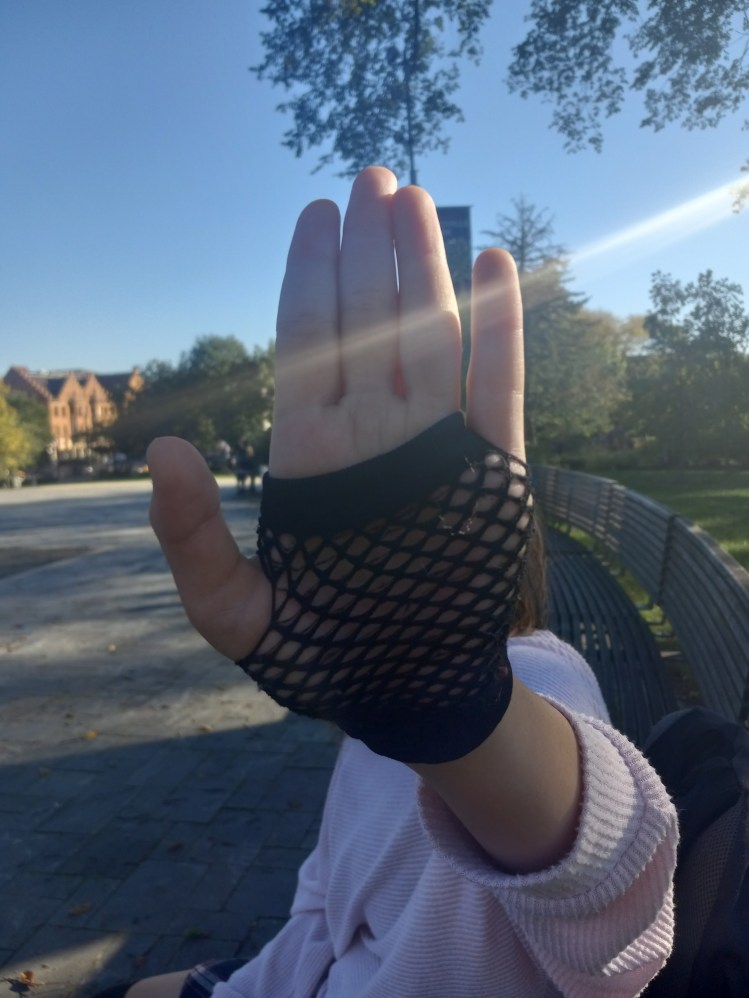
The person in these pictures is a poet in action.

She’s a poet and she does know it, but she does not show it, at least not in any overt kind of way (or hardly ever).

She’s 18 now, recently graduated from high school (she went to Hemingway’s high school), and she tried the poet clubs and poet readings at the school.

But she couldn’t really stand any of them.

Because she is horrified by any sort of insincerity. She can even feel it approaching before it’s there. For her, insincerity is akin to the proverbial fingernails screeching across a chalkboard. For her, most formal poetry readings and poet gatherings and poet clubs, and so forth, have the same sincerity value as Amber Heard’s testimony at the Johnny Depp trial which she, like her father, could not stand watching because of how blatantly insincere, false, and totally FAKE it obviously was.

(We were watching the trial because we’re Johnny Depp fans, big ones. And even though I couldn’t stand watching Amber make a fool of herself, or maybe because I couldn’t stand watching her make a fool of herself, she reminds me very much (physically included) of someone I once knew (and dated, and almost married), a stage actress and theater professor from Chicago, Illinois, which has more theater than any other place in the country except NYC).

To be a professional academic poet in the USA of today, one has to give professional poetry readings, and attend professional poet gatherings, and join poetry clubs, 99.999% of which have about as much sincerity as the testimony of Amber Heard at the Johnny Depp trial.

Hemingway, as a famous writer, was terrified of formal public speaking, so much so that he rarely, or never, did it.

Bukowski, Hemingway’s most famous direct heir, gave the greatest poetry readings of any poet in American history.

He could hold an audience of hundreds in the palm of his hand for hours. Almost literally.

And yet he hated doing it – hated it unto the death; because he said it made him feel like a fake, a freak, and a fraud.

The person in these pictures is a poet, but she almost never shows it, not in any overt way. (Although if you’re a sensitive human who’s a good judge of character and an artist, or artistically inclined, you may be able to tell it from a single glance.)

Writer in Action by Dr. Dale Williams Barrigar

(Images provided by DWB)

“You’ll find it when you stop looking.” – D.W. Barrigar

At 18, she doesn’t quite know it yet, but the way she walks, the way she talks, the way she thinks, and the way she acts all indicate one thing: writer.

Just who and what a writer is now is undergoing great flux and change, great challenges and readjustments. It’s been happening very dramatically since around the year 2000. We live in a period of rapid and sudden uncertainty, and we, of course, don’t know how things will pan out.

Edgar Allan Poe, it’s often said, was the first American writer who actually tried to make a living from his pen and nothing but his pen.

He failed miserably, had to work mostly as an editor instead, and died in the gutter because of it.

Before that, it wasn’t as if America didn’t have writers. Most people wrote and read letters, for instance, every day. (If they were “illiterate,” they dictated their letters and had letters from others read aloud to them from someone around them who could read and write.) It was simply the case that making a living as a creative writer was fairly unheard of. There were zero copyright laws at that time, among other reasons, many other reasons.

Geoffrey Chaucer, of England, author of the Canterbury Tales, is considered the first actual, individual author in the English language, in the modern sense. (Rome and other societies had their own versions much earlier than that.)

And making a living as a writer, as nothing more than a writer, never crossed Chaucer’s mind.

He had a million other jobs instead, while also completing the most lasting work in the English language outside of Shakespeare. And we all know how Shakespeare supported himself.

So even if she never publishes a word, and even as she also does other things, too, this is a writer in action – not tomorrow, not in a few years or decades, now.

America thinks everything is about money.

The best-seller mentality has poisoned the well of the minds of so many writers that many, or even most, of them have stopped writing seriously even as they still dream of writing.

I taught in the writing schools of the Midwestern USA for over twenty years, first as a graduate student, later as a professor and lecturer.

It gradually dawned on me that there was a mindset that was killing the creativity of many of my students.

Too many of them believed that if they didn’t become rich and famous writers overnight, then they weren’t writers at all.

And they quit doing it. They stopped writing. Because they thought the lack of instant “success” meant they weren’t good enough. So they bowed out, with embarrassed smiles on their faces. It was sad to see, sad that so many had (and still do) fallen for the lie. The big lie.

Writing, creative writing, is something you do if you’re called to it. Any outward success, or lack of so-called outward success, is never going to stop you if you’re a real writer.

We are all writers today, in many ways, inventing personas for ourselves, using words to text and email each other all the time every single day.

Jesus was a writer, even though he never wrote a word, except one known time, with his finger in the sand.

But who told more lasting, wide-ranging stories than he did? Short stories, usually very, very short stories, so powerful they turned him into the most famous human being who’s ever lived or ever will live – bar none. It was his words that did everything, including bringing back the dead. (“Lazarus, come out!”) And that makes him a writer. He was never paid a pittance for it, not even a single cent, ever, not even one time.

(He was never directly paid, but he was given free food, lodging, and wine from his audiences and hearers.)

The person in these pictures is a writer in action, even if she doesn’t quite know it yet, even if she never “publishes” a word.

“Nothin’ ain’t worth nothin’, but it’s free,” wrote Kris Kristofferson.

Beyond the Scientific Method by Dr. Dale Williams Barrigar PhD

(images provided by DWB)

“God is nowhere. God is now here.” – Philip K. Dick

The Omega Point is a theory conceived of and developed by the French mystical Jesuit and scientist Pierre Teilhard de Chardin meant to explain evolution and the end of time to the human world.

You know you’re in good company when you’re in the middle and roundly attacked by both sides.

In Teilhard de Chardin’s case, “both sides” meant the Western secular scientists over here, and the Catholic church over there.

Those are big enemies to face down.

This particular French mystical Jesuit and scientist (not as rare a creature as it might sound) did it for the love of truth.

May we all be so blessed.

The end of time is a wild concept, to say the least.

It’s when everything stops happening.

Nothing moves. Nothing develops. Anywhere. At all.

Also, nothing ages. Nothing dies.

I will offer, next, a further interpretation of the Omega Point.

I cannot pretend to understand this.

I can only claim to be massively fascinated by it and to believe that it may well have so much truth to it that it is the truth.

Teilhard de Chardin basically predicted the internet at least fifty years before it actually happened when he said that humans were moving toward a higher consciousness with technology, a global web of human consciousness that was a natural part of evolution.

He claimed that this would raise human consciousness to higher levels, and eventually, much higher levels.

That hasn’t happened yet; but it doesn’t mean that it never will.

The Omega Point is the end of all time, and it is what the Universe itself (and all the Universes around ours) are moving toward.

It’s the time and the point when all things merge together and stop moving.

“No time” means no pain.

And every single consciousness that has ever existed – everything that has ever lived – all animals, all plants, all humans, all stars, all celestial bodies, all everything – will become one, while simultaneously maintaining their separate knowledge and separate consciousnesses.

In other words, we will all be together, in a good way.

Suffering will end.

And we will know all of it and everything, even the Ultimate Reason why.

All of the above is what we call, in English, GOD.

According to the theory.

Until then, we can all continue to hum along with the country singer Chris Stapleton when he sings, so sweetly, from his song “Broken Halos,” “Don’t go looking for the reasons / Don’t go asking Jesus why / We’re not meant to know the answers / They belong to the by and by. / They belong to the by and by.”

(“I am the Alpha and the Omega.” – Jesus Christ)