

(Images provided by the Drifter)
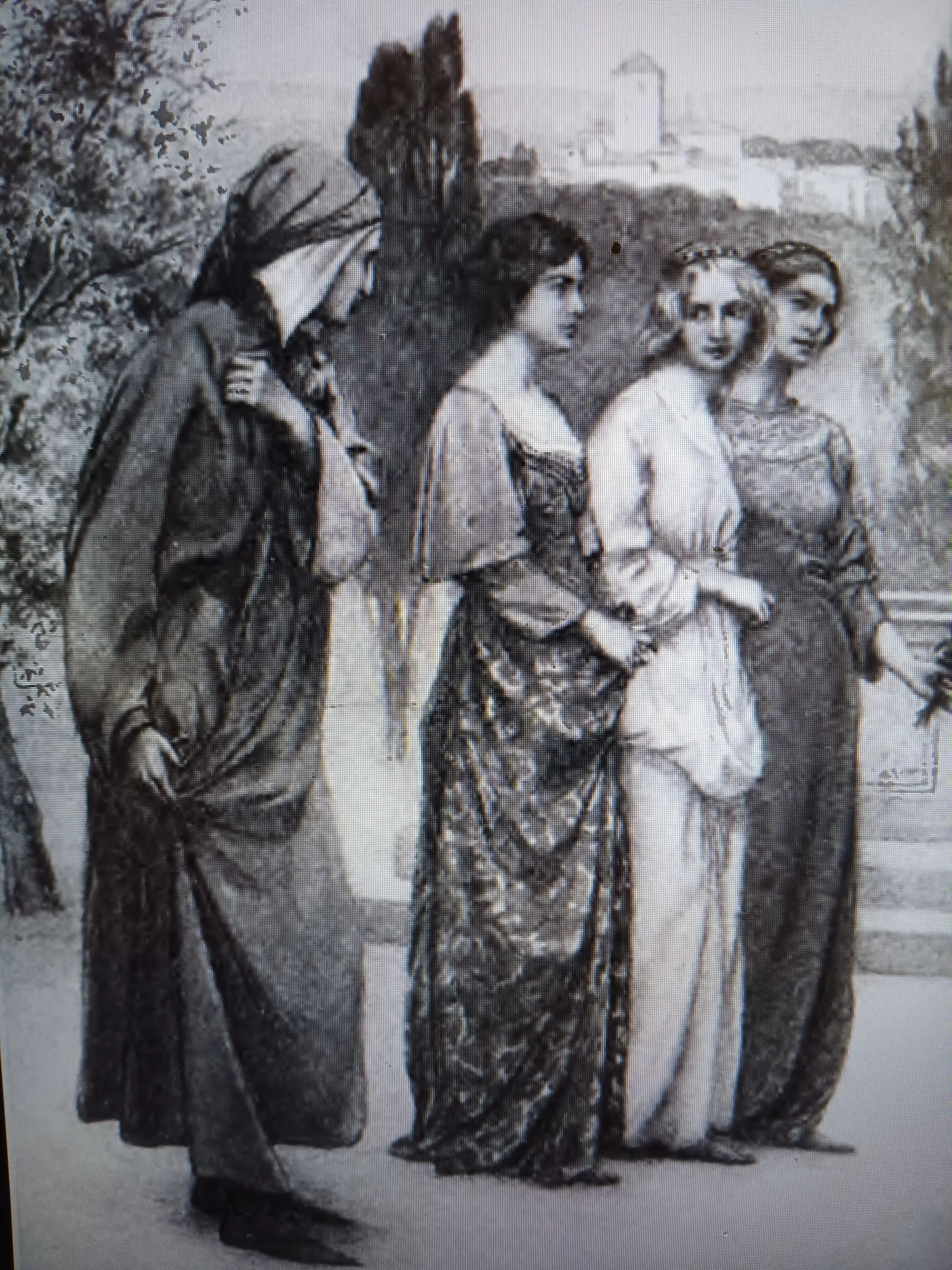
“Tenderness of heart started the Buddha on his journey to awakening.”
– an anonymous sage from his mountain cave
Benevolent-hearted Reader,
(Parenthetical opening salvo: Beware. A column has a right to be an essay and an essay has a right to be a meandering thing (like the mind of the writer), going from point to point for 1,100 words seemingly almost without direct connections. In this case, the Reader can assume that this essay has a destination like a river reaching the sea; and all the parts along the way needed to be there even if for sometimes mysterious (or veiled, hidden) reasons.)
For three decades, ever since I first heard it, one of my favorite quotations about writing, and life, comes from the US writer Harry Crews: “Walking the wire is everything. The rest is just waiting.”
It’s been so long since I first heard the quote that I don’t even know if I have it exactly any more. I do feel that I know the spirit of it.
For pondering purposes, life can be broken down into two aspects, or halves.
One is where we feel “on;” where we’re “in the zone;” where we feel life intensely, and beautifully; where all the connections are understood and there is relevance and meaning aplenty, even an overflowing of this for some of us. This is the higher side of life.
The other side of life is the low side. This is where the meaning and faith disappear. It’s where the doubts come in, and the serious questioning starts to happen. This is when the drudgery returns. Call it a test of faith. Think of the ancient Jews wandering in the desert for forty years – and never giving in – although they were driven to despair and various kinds of starvation many times.
The first half of life is Jesus giving the Sermon on the Mount, where he couldn’t make a mistake even if he tried to.
The second half is him in the Garden of Gethsemane. As all his friends sleep comfortably, he knows very clearly what will happen tomorrow. “Let this cup be taken from my lips.” But the cup of blood was not taken from his lips. He had to drink it all the way, and then some. Even him – the one and only son of God.
Edgar Allan Poe said that he wanted to write a very short book that would say it all. The title would be MY HEART LAID BARE. He never wrote the book because he didn’t have it in him while he yet lived, and he was dead after. Charles Baudelaire, the Frenchman who became Edgar Allan Poe’s most brilliant and universal disciple, said he wished to write the same book with the same title. He did write it and left it unfinished (because he died, in his mother’s arms).
Nietzsche, the German philosopher, wrote, “Of all writing, I love only that which is written in blood.”
Nietzsche also said that the true artist needs to combine both Dionysus and Apollo within her or himself. This is the part that Jim Morrison knew best about Nietzsche (he surely would have learned more had he lived longer).
Dionysus stands for nature, wildness, energy, anarchy, the wind, the waves, pushing the boundaries, breaking the limits, being wild and free, having agency and vast willingness to break the rules.
Apollo stands for Reason (that term has many meanings, including a-reason-for-being, motive), order, focus, unity of purpose, control, form, shaping, sculpting, selecting, leaving out, knowing what to bring in.
If an artist can’t channel the Dionysus aspect of their personality, their work will be dry, boring, tame, cheerless, conventional.
And if they can’t channel the spirit of Apollo at the same time, the work will not be Art; it will be a formless mess, a pile of something lying lifelessly on the floor of the hapless would-be artist.
It’s like the tightrope walker of Harry Crews, doing something utterly wild that calls for the utmost in self-discipline.
And the poem appended to the end of this essay is my example of all this.
The term “troubadour” in this poem both does and does not mean that which it usually means in the literal sense. Since both of the main characters in this poem are and think of themselves as troubadours the definition/s of the term throw light over the whole work.
The first eight words of this poem summarize a period of years, as does the entire poem.
The phrase “ragged at the unemployment office” in the poem stands for a single moment and an entire way of being that is both chosen and forced upon one at the same time, as does the action “frowned and fled fast.” It’s this kind of reach and doubleness in the speech of this poem which give this poem whatever value it has.
The phrase “she, she, she” means her continuous changing.
Her monologue, in this poem, is the single most important thing she ever said. This verse/stanza changes its meaning every single time one reads it, as it should.
This poem, “Oklahoma Homeless 2015,” is the entire story of a relationship, beginning, middle, and end.
The casual nature of the narration in the poem (if it is casual) arises from its after-the-fact nature (which is called here: distance, or an escape from an overload of desperate-hearted emotion).
This kind of poem is best read aloud (even if that means silently in the mind) very, very, very, very SLOWLY. (Ideally many times, over years, after the first few readings, and thinkings.)
A writer, an artist, a poet, can say whatever they want to about their own work. They are entitled to at least that much in this world of painfully little rewards.
There have been famous cases where a writer belittled their own masterpiece and readers believed them for decades, only to discover later that the writer had been wrong about their own work all along (or had been being too humble probably in the aftermath of another high).
I say that this poem is my “Tangled Up in Blue.”
It is written in blood; it is my heart laid bare; and it is a place where Dionysus and Apollo come to a beautiful truce, holding hands and complimenting each other.
…
Oklahoma Homeless 2015
We were two troubadours for quite some
Time and i, i was ragged at the unemploy-
Ment office again when i
Frowned and fled fast
And she, she, she was a piano player in
Kansas fading on the line, a cowgirl
We rise, she said, if at all, only slowly,
And lonely, and only
One at a time…
Later we were cruise ship stowaways.
And always two troubadours,
Night and Day.
…
END NOTE: The Drifter wishes to here thank Irene Leila Allison for rescuing this ten-year-old poem by the writer who called himself Dale Williams Barrigar from dusty obscurity.










 Saragun Springs