INRI: CHAPTER TWO

Religion briefly entered our lives, uninvited, six weeks earlier (about three before school started) during the dirty month of August in which the grass is thick with hoppers and Scotch broom pods crack and let loose their dusty spawn. We were hiding in the bushes on a Saturday afternoon, waiting…

A Richard Speck-type in a primered Ranchero stopped and dropped three stacks of jackrags in the alley behind Elmo’s Adult Books and rang the bell. This happened every other Saturday, like visitation rights. Sometimes the Speck waited for old Elmo to waddle back, sometimes he’d drive off before the fat fuck unlocked the back door. It was one of the times the Speck drove off first. Tess stood lookout, and I dashed from our side of the alley, snatched a bundle, and got back under cover with seconds to spare. Then it was off to Fort Oxenfree, leaving Elmo a little poorer.

We moved as silently and swiftly as Indian scouts toward Fort Oxenfree. The alley ran about a mile and bisected Callow Avenue and Wyckoff Street. The Wyckoff side of the alley lay at the foot of Torqwamni Hill (forever “T-Hill”), and stood fifteen to twenty feet higher than Elmo’s and the other trashy businesses along Callow. It was a verdant bluff choked with brambles, weeds, struggling dogwoods, ivy, and switchgrass so riotously out of hand that it topped six feet in some places. Tess and I had created a secret world in the bluff, and as we made our way through the paths we had previously formed in the foliage, our feet automatically adjusted to the varying slant of the ground as though we were biped mountain goats.

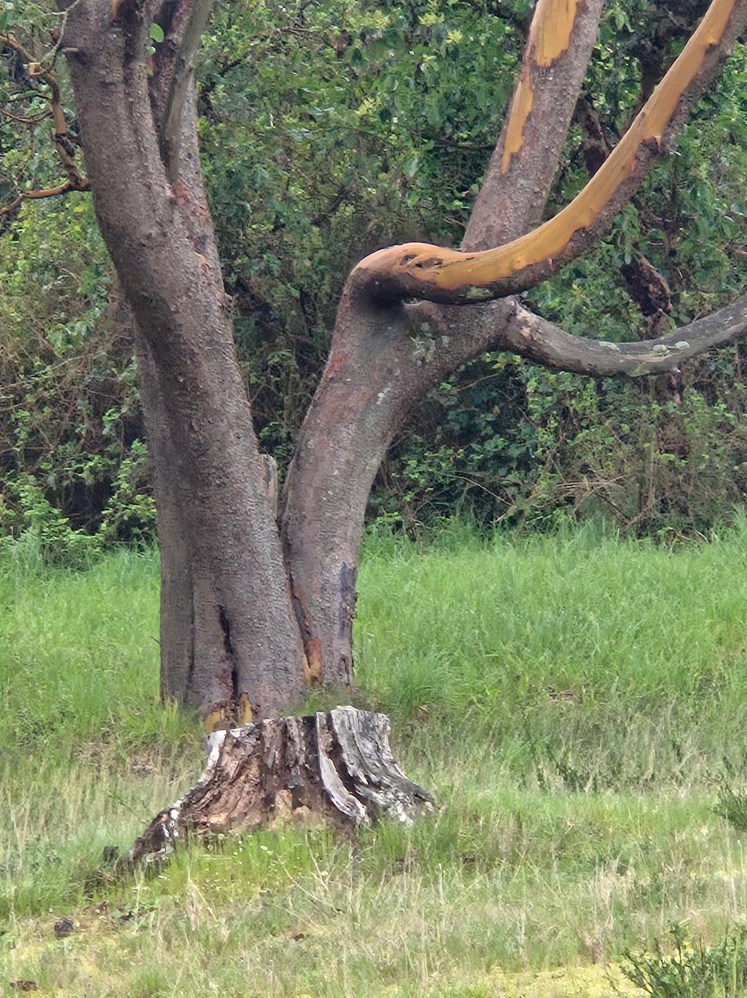
Fort Oxenfree lay about a hundred and fifty yards south of Elmo’s, directly behind the White Pig Tavern. This meant we had to cross “the gorge,” which was the only relatively bald spot on our route, yet it was partially concealed by a peeling madrone which grew sideways and at a weird angle out of the bluff. Tess deftly crossed the short chasm, which stood over a good long drop, by using the exposed roots of a hemlock for handholds. I hurled the bundle across the gorge, she stopped it with her foot and I crossed even more quickly than she had.

A noisome swirl of portly bluebottles greeted us upon our arrival at “Fort O.” They were attracted by a recent explosion in a flat of Shasta tiki punch, which Tess had left in the sun. Soon there would be yellowjackets.

“Your pets missed you.”

“Hardee har har.”

We had selected the site for Fort O because you’d need a Sherpa to find it. It was a wildly overgrown flat spot we’d knocked down to about the size of a jail cell. It lay at the highest point in the bluff, atop an old stone wall gone over to blackberries and feral primroses. The front and the far side of Fort O were protected by a very long and sticker-bush laden fall to the concrete below. Entry from the bluff required a five foot climb up the side of the stone wall and through a trapdoor that Tess had made sticks and switchgrass. No friendly way in from behind, either. The alley side of Wyckoff Street was mostly a redundant series of vacant lots overwhelmed by Scotch broom, discarded washing machines and tires–as well as a seemingly sentient network of hiding, grabby ground brambles that would wrap around your ankles if you forgot to lift your feet, and goddamn stinging nettles that raised such hell with your skin that you never overlooked them twice. The Jesus of that kind of vacant lot lay behind Fort Oxenfree. It was such a shitty and hazardous little hellfield that not even the stew bums dared to flop in it.

I dropped the bundle and heard the typical Saturday afternoon din of the Pig below. Our vantage point behind a wall of switchgrass placed us about fifty feet from and twenty above the Pig. As always, drunken Specks bellowed and roared, and their pig-like women squealed and roared–all of it accompanied by the unsatisfying twunk of misstruck cue balls and a steady flow of C&W music coming from the jukebox.

Tess sang along in her sweet little girl voice:

“I turned twenty-one in prison,

Doin’ life without parole–

No one could ever steer me,

But Mama tried, Mama tried…”

We’d hit Elmo’s in preparation for the upcoming school year. The boys at Charleston Elementary were by and large sick perverts to begin with, but even more so when they hit ten; it was like some kind of alarm went off in their pants. Dirty pictures sold well and for a good price in the playground; Elmo’s wares were as disgusting as it got.

“Looky here,” Tess said, showing me the latest issue of Sweet Cocksucker, after we opened the bundle. “Must be a fiver here for sure.”

“Let’s bag ‘em for now,” I said. Which was exactly what we did. We wrapped them in polyurethane and packing tape, then placed the waterproofed booty inside the cache. Although Fort O was nothing special, the three-by-three square cache hole was. We’d dug it out that spring and reinforced it with planks, and waterproofed it with the same never ending roll of polyurethane we had boosted from behind Minder’s Meats.

What made the cache special was the cover Tess had connived from discarded bamboo and endless blades of switchgrass. There wasn’t as much as a screw or a nail in it. Using what she found lying around, she’d somehow created a dead match with the ground, as she had with the trapdoor. She’d also designed a system of “drapes” in the grass wall between us and the alley, which involved pulling strings to get and keep a view of the alley instead of using your hands, but wouldn’t open so wide as to blow our cover. Just nine, Tess had already long displayed superior artistic and mechanical talents–Not that it mattered to the fossilized fuckheads who ran the City of Charleston school systems. Girls who made the mistake of getting born around 1960–welfare brats to boot–had yet to experience much in the way of Women’s Lib. Besides, the district produced more felons than intellectuals, and we’d both realized early all you had to do was show up and do a minimal amount of work to pass to the next grade. A lot of tax money is fed to hopeless causes.

Tess opened a can of tiki punch that had been properly stored (It had to be piss warm, at best; my stomach clenched at the thought of it). She saved the ring top in a baggie with many others. Years later she gave me a stunning hippy art Statue of Liberty created from a thousand or more ring tabs. She’d painted each of them an outrageous color, and had meticulously looped them together over the course of hundreds of hours. Told me it was Janis Joplin singing into the torch. People offer me money for it all the time. I always say no.

Fort O faced east, which allowed us to luxuriate in the afternoon shade cast by Torqwamni Hill, listless from our labor and the heat, shooing bluebottles.Tess drank that stomach-turning tiki punch, sang along with the juke, and kept sneaking peeks at the Pig through the drapes because she found entertainment in the frequent sight of a Speck taking a leak in the alley (I later learned that the heads were one seaters–so you saw a lot of that). I began to fiddle with the slingshot I had reluctantly accepted in trade for a copy of Juggs during what you might call our “End of School Sale.”

I was three months shy of twelve; I’d get my first period for Christmas. Yet throughout that last year of my childhood something had already begun changing in my mind. It was a feeling especially keen during the progression of late summer afternoon shadows; a causeless anxiety underscored by the incessant cracking of broom pods in the quiet moments; a forlorn certainty that all was lost though hardly begun.

And there were times when I’d look at my gifted little sister and feel guilty about what I was doing to her.

I had plenty to feel guilty about. You see, every last thing–from the dirty magazines right on to the can of tiki punch Tess was drinking was stolen, even the returnable soda and beer bottles we had hidden in the grass because there were too many for the cache had been lifted from one place or another. If something could be boosted from a loading dock or a car in our little realm, we had it up there at Fort Oxenfree. Besides a substantial amount of hardcore porn, we had filled empty pickle jars with parking meter change we cleaned out of car ashtrays, some folding money, endless amounts of penny candies and gum lifted from a dozen different stores, several packs of cigarettes, lighters, a box of shotgun shells, sunglasses galore, prescription pills, lids of grass. We also had a bunch of cameras we didn’t know what to do with because we weren’t old enough to pawn stuff. Tess got the notion to “Robin Hood” them. We’d walk around and stick them in front of doors and in mailboxes of the shittiest looking places. We even left one for Mom and Anna Lou. They both pawned theirs.

And shoplifting was a scream. We’d dress for school and go into a store downtown (never shit in your own yard), and while Tess charmed the clerk, I’d get after everything that wasn’t nailed down and shove it in my pockets and underwear. Then we’d buy some stuff to make it look good. Alas, even the slingshot had been paid for with stolen titties. Only an incredibly gross 14-inch dildo that somehow oozed out of Elmo’s and just lay there in the alley had been gained in an honest finders-keepers sort of way. (I eventually tossed that beaut through the open window of my teacher’s car and hid in the bushes for the payoff.)

And it was all my idea.

If discovered and linked to us, the contents of the cache (especially the dope and porn) probably meant two tickets to the Mission Hill Academy for Girls. My guilt figured that I had it coming, but since none of it had been Tess’s idea, and since I was supposed to protect her, I figured I’d better try to do something.

“Tess?”

“Huh?”

“If we ever get busted, you don’t know shit about the stuff in the hole.”

“Half’s mine, Sarah.”

“I’m not sayin’ it’s not,” I said. “Just sayin’ if Mom or the cops or some other fucker we can’t do nothing about comes round and has a look in the hole, then there’s hell to pay. Just act like you know nothing about it. Let me do the talking. Don’t be such a molecule.”

Tess sometimes got shitty about being called a molecule, even though she heard it plenty. She handled the situation by fetching at least six Bazooka Joe’s from the cache and sticking them in her mouth. So gross. She sucked on them until they got soft enough to chew. That was her way of making certain she could give me the silent treatment. Pink drool dribbled down her chin.

I sighed. So much for the high road. Anyway, it must’ve sounded pretty cheap coming from me. There was something people saw in me that was different from “just a girl.” I was tall, strong and as unnecessarily violent as I needed to be. Some called me “Psycho” behind my back, but I didn’t discourage it because it added weight to the “Tell and I’ll kill you” I dispensed at the end of every porn transaction.

Tess never stayed mad at me long. Even when the years came that saw me extract her from one shithole squat to drag her to rehab for the God-only-knows-how-manyieth time, she’d be quick to forgive me. I’d strong-arm her to the car and she’d be screaming just how much she hated my faggot guts, and that for a hummer she could have my dyke cunt raped and murdered. Then she’d cry and promise it would be different this time. And I’d say my lines, those sincere there for you words that were never enough.

She tapped me on the arm, trying not to choke on the wad of gum in her mouth because she was laughing. I was rooting through the cache for a handful of the thousand or so shooting marbles we got hung with that spring (marbles as a game was always around, but sometimes it rose to a faddish level as it had that April. We stole untold dozens of bags from several drug stores and sold them at half price. Couldn’t give the fucking things away come May). I had gotten real good with the slingshot and could take a blackberry off its stem from twenty yards.

“What?” Then I saw.

Tess had parted the grass to check on the wild side of life and sure enough there was a Speck urinating behind the Pig. There were an inordinate amount of Specks in Charleston. All were skinny creeps who brylcreemed their hair into a pomp as though it was still 1950-something; and they had boney faces and small muddy eyes that conveyed an overall dullness of mind. Still, even a Speck usually had the decency to piss on the wall, but he was facing us. It wasn’t the first dick we’d ever seen. On the top floor of our building was a grown man yet forever a child with Down syndrome who lived with his aged mother. He’d see kids, and if his mother wasn’t around, he’d ask “Wanna see my elephant?” His name was Eddie but we called him Dumbo. Sometimes there was talk about sending Dumbo away to a “special school.” But that never happened partly because he never touched anyone and mainly because he was retarded.

“I’ll shoot him in the weiner,” I said, taking aim with the slingshot.

A horrified expression raced with consent to fill Tess’s face. She was that way. Her eyes and face were extremely expressive and often contained contradictory messages vying for control.

I was just playing around–I’d no more shoot the Speck in his elephant than yell out our secret location. For I may have been antisocial but I wasn’t reckless; I reckoned that even a Speck could figure out where the shot had come from. But Tess would have done it; she wasn’t big on thinking ahead.

INRI: Chapter One

-1-

Tess nagged me into visiting our father’s grave. She said it was the sort of thing that daughters should do. While she arranged a handmade wreath composed of daisies, bluebells, buttercups and dandelions on his tombstone, I stood there and felt stupid–thus more inclined to be a pain in the ass than acting the part of a dutiful daughter. Naturally, I had to get on her case about the inclusion of dandelions:

“Those are weeds, molecule.”

“So? People don’t grow the other stuff on purpose, either, Sar-duh.”

He died when I was two, shortly after Tess’s birth, thus destined to be just another smiling ghost in the family album and little more than the source of our surname. It never occurred to us to visit his grave, or even ask where it lay. But that changed on the first day of the 1971-72 school year, when at ages eleven and nine, we finally learned how he’d filled his grave. Suicide. One of Tess’s subnormal classmates had teased her about not having a dad. Said ours shot himself in the head in order to keep from knowing us–Tess especially.

“Tell me, fucker, or else,” I informed that kid, after school, in the playground, my arm locked around his neck, my knee in the small of his back, his face inexorably inching closer and closer to a mound of freshy squeezed dogshit. He told me he’d overheard his parents talking about it. I believed him because people are uncommonly truthful when faced with a high-end or else. Still, he got a bit anyway for making Tess cry–and for being stupid enough to think she wouldn’t tell me and that nothing bad would happen if she did.

Our mother was a word class liar, once in a lifetime. She capitalized on the specious notion that true sounding things are brief. “He had an accident” was her go to fiction about our father’s death on the very few occasions we brought it out. Nary a syllable more. Though characteristically terse, it depended more on a look in her eyes that told us not to fuck with it than brevity to get over. Quizzing our only other living relative, a pill head “aunt” from his side, would have been useless because Anna-Lou knew better than to cross Mom; and Mom’s best friend Nora would have just blown us off and reported our curiosity. Although it appeared to be common knowledge in some circles, Tess and I vowed to keep that we knew a secret. For me it was something I could use to fuck with it at leisure; my sister’s reasoning is harder to explain.

Tess had a secret word for the beauty she saw flashing in ugliness, like panning for gold in shit creek. I don’t recall the first time I heard her say Dreampurple, but it must have been around 1969 or ‘70–certainly no later than that time in ‘71. So, it made sense that she’d see the Dreampurple in self murder. Mom was big on labeling the things she didn’t understand about Tess us “phases.” If Mom had known about the wreath laying business she would have attributed it to yet another of Tess’s passing fancies with the same certainty she had that I’d wind up in Hell via the Washington State Women’s Corrections Center at Purdy.

At the time Tess was going through a Jesus phase. But it burned off like summer fog because you have to seek the Lord, whereas brutal reality never stops until it has killed you. It took me a long time before I realized that there was a difference between Tess’s phases and that which she held in Dreampurple esteem; Mom never got it, though sharp, for her it all added up the same. She didn’t know that the phases were temporary while the Dreampurple was for keeps. Naturally, I figured that Tess had nagged me into going to New Town Cemetery due to a newly found infatuation with Heaven. I went along because sometimes it was the only way to get her to shut up about a Big Idea.

I still wonder why flowers look natural on graves. You’d think that the two items are so far apart as concepts that they would clash in the mind. Conditioning, I suppose; the result of long term exposure to a tradition that’s formed a mental link in the species. Tess had arranged the wreath so it made a circle around the words etched on his small, rectangular cement tombstone:

DELROY DEAN SPAHR

1935 1962

I almost felt something when I looked at his shitty little poorman’s grave–a tiny cement square, not even made from natural stone, already cracking, certain to give away his name only after a few winters had leaned on it. It seemed to me that a life should add up to more than a name and two dates–all that time being a someone marked only by a small empty space between cold numbers. And the missing dash between the years you normally see on tombstones bothered me. It felt as though he’d been slighted in a way that I took personally.

This thinking didn’t go well with my baseless fear of the long shadows of late September afternoons. There’s something about September that’s death already; something that the shadows uncover rather than conceal. Ever since winter I’d been experiencing shocking, sudden mood drops; these had no triggers and are best described as an instantaneous switch from my familiar tone of thoughts to a cold, certainty that the universe and everything in it, like our parents and us, was already dead, and had been for a long time, if not always.

For the first few years of my Endless Now, I found that I could talk my way from it–even shake it off and pretend it hadn’t happened.

“I don’t want to be here,” I said. “If you’re gonna say a prayer, say it so we can go.”

Don’t think so,” Tess said in a voice that weighed more than a nine-year-old kid should have to carry. She’d only say “Don’t think so” when something was over. Don’t think so items hadn’t passed the Dreampurple test.

Jesus might have walked on water, but he’d sunk for Tess. Christianity assayed fool’s Dreampurple. Nothing ever got a second chance at the test.

End Chapter One. Chapter Two on Monday

The Continuing Rubaiyat of Saragun Springs by Dame Daisy Kloverleaf (translated by Leila)

(image has nothing to do with the post–just fond of the subject)

i

My brother Fenwick is a bit hazy

He says weed in the morning keeps him lazy

Stonily stoned from Pongrise to Pongset

Fenwick is a beatnik, not a Daisy

ii

With our half brother Buckfast he goes round

To poetry slams and other jazzy grounds

Where work is the most discouraging word

You can hear hooves clapping out happy sounds

iii

And you will see them at the trackly track

Betting on Peonies who have the knack

Racing flowers of incredible high skill

With sweet Butterfly jockeys on their backs

iv

Fi-did-lee Fenwick leads an actors’ life

And Buckfast is as keen to avoid strife

Goat and Geep worshiping Saints Cheech and Chong

Break up this rhyme scheme when they pass the bong

Saragun Springs, Latest Triumph

(Dale Williams Barrigar has big news to deliver. I for one am looking forward to hearing from the Drifter–Leila–The image provided by DWB)

Thirty-eight Years

I have wanted to write a weekly column ever since I first heard of Charles Bukowski and his Notes of a Dirty Old Man thirty-eight years ago in 1987.

I first heard of Bukowski himself through Roger Ebert’s television review of the 1987 film Barfly, for which Bukowski typed (his word) the script. And congrats to Mickey Rourke and Faye Dunaway for having done a wonderful, memorable job in the lead roles. (Buk supposedly didn’t like Mickey as Buk but I think that’s because he wouldn’t have liked anyone as himself or his alter-ego-persona.)

I lived in Chicago at the time and was aware that Roger was sitting somewhere else in Chicago and he was talking about this raw, experimental, underground writer I’d never heard of. God bless you too, Roger Ebert, for all the things you taught me through the television back in those days. I never agreed with everything you said, but I learned volumes, and you were always an inspirational figure and your ghost shall haunt my new weekly column in a number of ways, on one level especially because I still live in Chicago, your home turf, and you are inescapable in that way.

After I heard about Bukowski from Ebert, I ran out the next day to my local bookstore. In those days, many of us did that a lot. I lived within easy walking distance, literally, of at least half a dozen bookstores back then.

I bought all the books by Buk which they had, and devoured (almost literally) them all before I saw the movie. One of the books was Notes of a Dirty Old Man.

My column, at least for a while, shall have this title: Postcards from the Drifter. This column, while influenced by Buk, will not include regular graphic descriptions of sex, one reason being that I’ve been celibate for over a decade. I subscribe to the famous quote by Carl Jung: “When the body is silent, the soul speaks.” I don’t know if this condition will last for the rest of my life or not, but for now it seems to work out wonderfully for me.

SO my column shall not have lots of graphic physical sex descriptions like Buk did. BUT it WILL have lots of personal revelations, and confessions, like the kind I just made in the above paragraph.

I’m a drifter because I never sit still, metaphorically and symbolically, and sometimes literally. But any good drifter needs to have a solid center. You can’t just shift your personality for the latest political winds so you can make lots more money when you’re already loaded. To be a good drifter means to have a solid center that will keep you grounded while you’re drifting.

My center is THE ARTS. I’ve been obsessed with the arts since kindergarten when I decided I wanted to be a painter, and was influenced by all the religious art around me at the Lutheran school I attended in Michigan. Before that, I had also been obsessed with The Arts, I just didn’t know it.

So my weekly Sunday column will focus on two things: personal confessions of a universal nature that will be useful for the few, and reflections and deep recommendations on the arts that will include thoughts and other ideas about writers, painters, musicians, filmmakers, actors and actresses, and other artists, like those who are artists of life itself.

I don’t seek now, and have never sought, vast quantities of drone readers, casual and/or transactional. Instead, I seek the few who can understand me in this dehumanized and dehumanizing world.

My first column will be about the stroke I suffered last year at the age of 57, what caused it (as far as I know) and how I was able to almost miraculously recover from it so fast (at least some of the doctors have told me it was almost miraculous). This column will also include a description of a knife incident that left me bedridden in my youth for a while, and a true description of leaving the body (not dying, just leaving the body) during surgery.

This column could never have happened without Irene Leila Allison. Everything I write now, including all of the above, is written for her first. This will continue to be true from now until my dying day. This is because I’ve never found another artist (except for my kids) who gets me in the way she does. She is my inspiration; and then it’s meant to move on outward from there, to all of her readers on this wonderful and inspiring site called SARAGUN SPRINGS.

I hope you can join us starting soon for these weekly columns called POSTCARDS FROM THE DRIFTER. It promises to be highly interesting if nothing else.

Sincerely,

The Drifter

The Encounters (The Mantis Prays) by Dale Williams Barrigar

(Note–Moonfog wouldn’t appear today because he is moody. But, fortunately, Dale Williams Barrigar has rescued this Wednesday from emptiness and overall non-existence-Leila)

(Cool image provided by DWB)

The Encounters

      “What the white whale was to Ahab, has been hinted;

        what, at times, he was to me, as yet remains unsaid.” 

         – Herman Melville

I turned around and an exceedingly large, unbelievably green, and massively intimidating Praying Mantis had landed on the outside door handle of my door.

S/he had appeared there so suddenly it was as if s/he literally, magically appeared there, just materialized there, out of thin air, out of thin, thin air, or out of nothing.

And it was strange, because that door handle was the place I had been about to put my hand on one second ago. I had been unconsciously reaching out, planning on grabbing the handle, opening the door and entering my apartment – until I saw the massive Praying Mantis sitting there, perched on the handle, and utterly staring at me with an animal intensity which was unnerving at best, at least until I got a handle on things. This kind of animal is hard to brush off with a flick of the wrist. I almost literally couldn’t believe how BIG it was. Big, large, huge, and also gigantic, even gargantuan, at least in terms of a bug. 

Then I got a handle on things. And I realized how cool this was! It was like the time I’d been walking on a trail in Denali National Park in Alaska and I looked up and there was a lynx standing on a log staring at me with its incredibly green, intense, and wild eyes

A few old-timers in Alaska, both Native Americans and white folks, had already told me how very rare and unusual it was to see a lynx in the wild when I’d asked around a little bit about this in the bars of Anchorage and Fairbanks. Then I looked up and there was an f-ing lynx staring at me. It was one of the wildest and coolest moments I’ve ever had in a life filled, you could even say blessed, with lots of wild and cool moments. 

And now here was this Praying Mantis. Somehow, here in urban Illinois outside Chicago, this wildlife and nature encounter was just as intense and jarring and cool as the experience with the lynx in Alaska had been, even though the animal involved this time was a whole lot smaller. 

But if you’ve ever seen the eyes of a gargantuan Praying Mantis up close you know this thing can give you the chills on many levels (both good and bad). 

Their eyes are so similar to ours, and at the very same time so vastly different from ours, that anyone who’s even half awake will be freaked out by this – in both bad, and good, ways. 

I turned around again to take a picture and The Mantis was gone.

Notation: The following poem contains the scientific and cultural facts about The Praying Mantis researched after the fact of the above encounter, and all boiled down into an “awkward” and lyrical free verse style which intends to mirror The Mantis him- or herself in their incredibly uncanny, bug-like, alive, here-I-am-now selfness.

The Mantis Prays:

Written for Classical Guitar

The Mantis lays 

her eggs in fall.

Then she quietly dies.

The Mantis dives out of the air

to escape 

the haunting huntress bat.

And she sighs 

prior to dining

on the cricket’s hat.

In China they will tell you 

she is fearless.

And nothing can contain 

her spirit fair.

The eyeballs of The Mantis are 

black, and very there.

She lives 

through the air,

she hides in her own 

kind of cave.

The Mantis is a creature 

of myth

who we share this planet 

with.

She is as real as the day 

in your hair.

Her arms, legs, wings 

so greenly

and transparently 

going 

and glowing.

She lives for one year before

her race is run.

Maybe one year before

her day is done.

Only one year, before

she folds her wings, 

and tells

her eggs 

the way 

to find the sun.

Dale Barrigar, Doctor of Philosophy, is a Melville scholar from Chicago who also admires the lone wolf writer style which Melville perfected many, many decades ago in America, bestowing a future gift on all of us amidst his myriad worldly failures, which he knew he would.

Moonfog Madrone Part Three: “Something in the Needle For Everyone”

i

Moonfog Madrone is lugubrious

But that’s not news to us

He dreams below a darkling sky

Where a redrum of Crows backwards fly

ii

Moonfog Madrone recalls the druid dudes

But without dudettes they were doomed

He stands in a field of whisky rye

He has wit for a tree, sharp and wry

iii

Moonfog Malone is made of petrified wood

He shouldn’t be, but is because he could

A miracle of life, a breathing thinking stone

With needle-like leaves of crystal that always hit home

iv

Moonfog Madrone has forgiven an offensive Spruce

Beside the infidel’s old stump, a reincarnation has taken root

Like a drug his fresh sap will freely run

For there’s something in Moonfog’s needle for everyone

Saragun Verse: Moonfog Madrone (part two)

i

Moonfog Madrone formed a spell

From holy words and threats of hell

It spread across the fallow field

And got inside a church bell’s peal

ii

“Come forth my lovelies the bell sang;

Come home to whence thou sprang.”

And come they did, ghost flowers and trees

Spirits of birds and honeybees

iii

The procession lasted two days one night

The field became a phantasmic delight

Spirit birds sang cemetery songs

In an elysian spring forever long

June in Saragun Springs

Welcome to June in Saragun Springs. (Image of perhaps the last pay telephone in the northern hemisphere)

As stated long ago, the FC’s of the Springs do not work on Sundays. Here, as opposed to the real world, the “Boss” is the only one who dons the yoke on the Sabbath. The Union of Imaginary Friends and Fictional Characters (UIFFC) used to include Pennames until it was pointed out that “we” are the reason why “they” felt a union was needed in the first place.

Bastards.

But I was still bothered by the open day that I can never use. Then inspiration came out of Chicago. I asked Dale Williams Barrigar (no stranger to the Springs, yet free of UIFFC tyranny) if he would like to present a weekly Sunday column of his design. And my luck was in, he said yes. The column, which I think Dale should introduce, soon, will begin this month, and I for one look forward to it.

Last month featured the first ever Guest Writer Week. Dale was the guest artist and he set all kinds of site records for views. This month the final full week of the month, Monday through Friday the 23rd to 27th, is reserved for Mr. Douglas Hawley.   If any of you would like to get material out into the world, mainly poetry, I invite you to put in for a Guest Week. Email saragunsprings@gmail.com and maybe that can happen.

Currently, other than the newly minted Sunday and Guest Weeks, other days will feature poetry by members of the realm M-W (with further help from Dale) and novel length works by yours truly prsented in a serialized fashion.

Every Saturday in May I presented a novel in progress called You Remembered Everything. I have decided that I need more breathing room to do it right. Further half-assed chapters will not do. Tentatively, chapters five through eight should be ready for July.

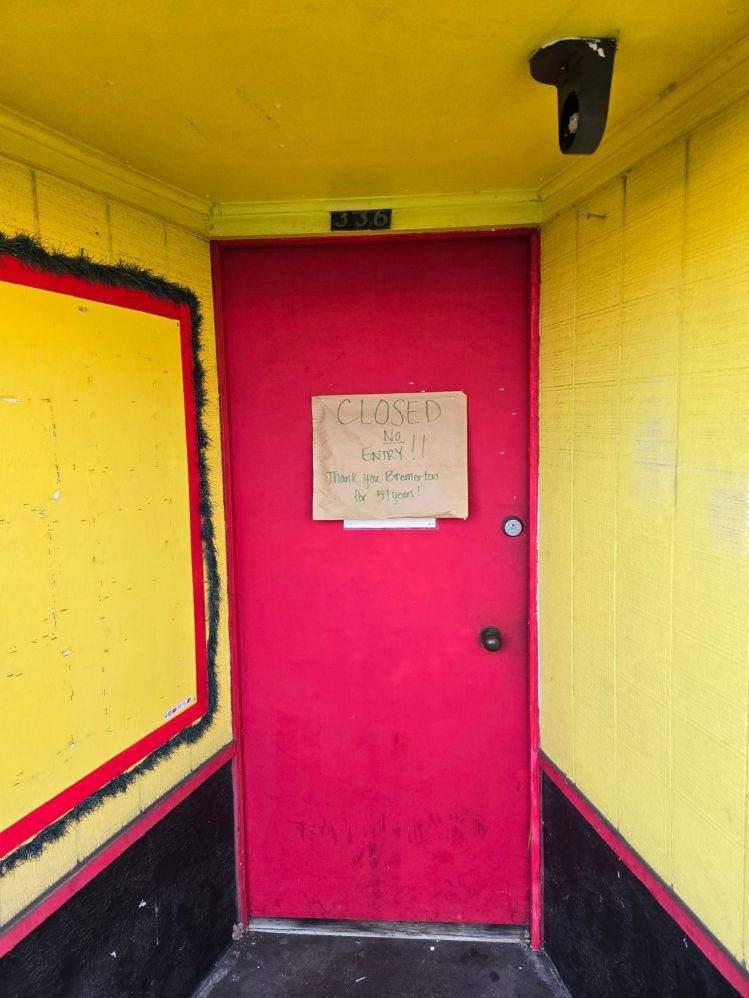
But in the meantime, I will be running two novellas that are already completed. The first, INRI will appear this coming Saturday 7 June. It is based on material published on Literally Stories UK, with new material and a different structure. It is the first little “book” in a series that (I hope) will make one big book. It will be published one chapter at a time, every other day until completion. This should buy me the needed hours for the current project.

Once again, an invitation to everyone (preferably everyone who follows the site) is extended to appear on the site one week during future months. July is the next opening. Send your poems, stories, essays to saragunsprings@gmail.com and I will be happy to share you with my dozens of readers (well almost that many).

Again it goes without saying, but it will be said anyway, hateful stuff that touts the KKK, Nation of Islam or celebrates the anniversary edition of something like Mein Kampf will be shown the trash button so fast it will be like the stuff never was. Same goes for pornography and Unabomber-esque manifestos.

Good Sunday to all,

Leila