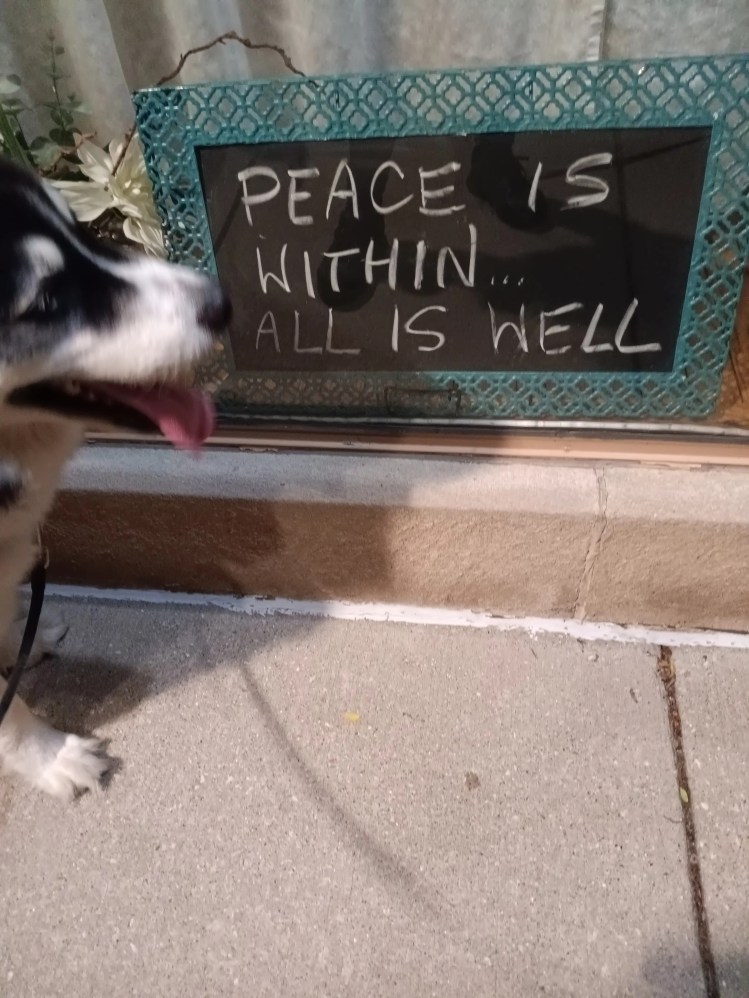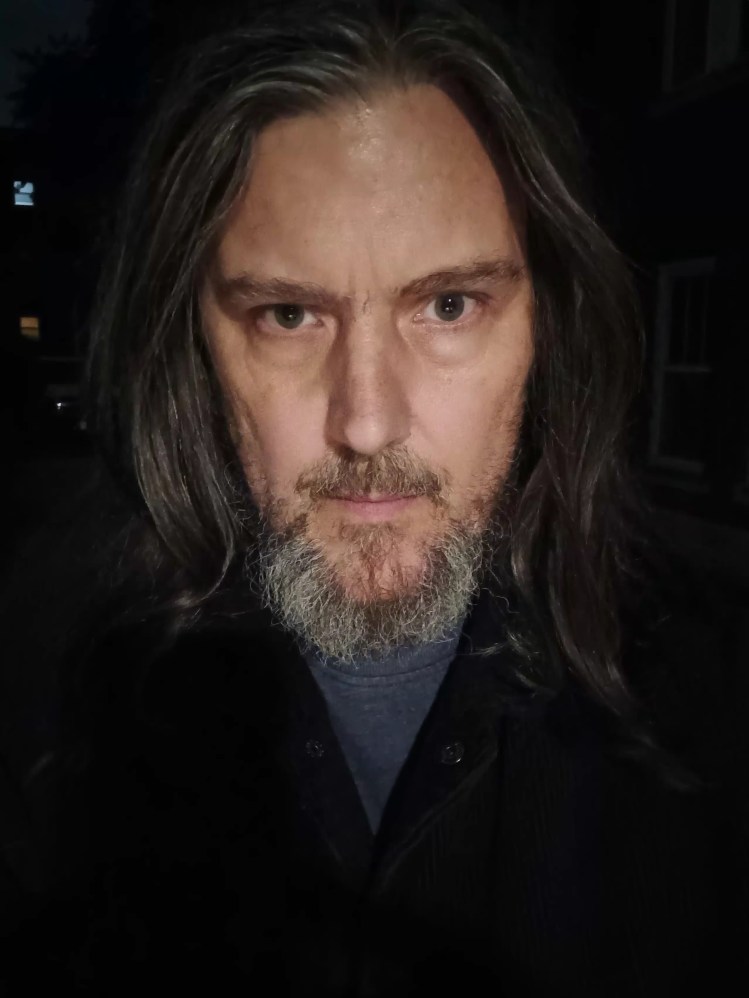

The Drifter: Johnson’s Jesus’ Son

(Images by The Drifter)

“All things are full of weariness; a man cannot utter it.”

– The Preacher, Ecclesiastes

“I don’t know just where I’m going / But I’m gonna try for the kingdom /

if I can.”

– Lou Reed, “Heroin”

When I was a graduate writing student in the Midwestern USA in the 1990s and early 2000s (I was a graduate writing student in the Midwestern USA for nine years) there was one book of contemporary fiction that was almost universally acclaimed by all the best students I came in contact with, from Kansas to Missouri to Iowa to Chicago and a few points not in between; and it was not Infinite Jest by David Foster Wallace, that son of Illinois.

The book was Jesus’ Son, by Denis Johnson.

Jesus’ Son is a collection of interlinked short stories with the same unnamed narrator (he has a nickname: Fuckhead) that rounds out at 160 pages. Infinite Jest is a novel that rounds out at over 1,000 pages.

It is my literary prediction, here and now, that Jesus’ Son, that slim, thin, small book, will last far longer than the fat, door-stopper tome of Wallace (and many other fat, temporary, door-stopper tomes that are currently seen as important literary works).

A triumph of brevity and concision, of saying the most in the fewest words (as opposed to piling on the words willy-nilly and ad infinitum), just like Edgar Allan Poe (the most famous American writer of all time, even more famous than Twain, although not while he lived) told American writers to do.

Kahlil Gibran’s The Prophet, a masterpiece that will be around as long as humans read, rounds out at 15,000 words. The book of Ecclesiastes is around 5,000 words.

In the old days, when Dickens and Dostoevsky and Tolstoy composed 1,000 page novels, these books were published one short chapter at a time, serialized over years.

A recent literary critic recently opined that probably no one has actually finished reading Wallace’s tome, however much they may claim to have liked it.

Wallace is a fascinating writer for other reasons. I’ll have more to say on him in future columns.

Denis Johnson died “suddenly,” at the age of 67, in 2017, of liver cancer, sort of in the manner of two of his heroes, Lou Reed and David Bowie.

Writer and critic William Giraldi said of Jesus’ Son that it’s about “transformative spiritual seeing,” that its sentences have “a deathless beauty that sings of possible bliss.” J. Robert Lennon said the book is about the main character and narrator’s “aspiration toward holiness.”

To some of us, that would sound odd, given the fact that the main character is a down-and-out, unemployed, couch-surfing heroin addict AND chain-smoking alcoholic who doesn’t even turn his friends in to the police when they commit murder.

But it isn’t odd. In fact the same could be said for many down-and-out addicts and alkies in the real world. And that is what Jesus’ Son is really about.

The stories in Jesus’ Son are set in Chicago, Seattle, Arizona, Iowa, and Missouri. Johnson went to college in Iowa and took classes from Raymond Carver, even though Carver was famous for not really teaching his classes much of the time because he was drunk in the bars with people like John Cheever instead.

And Johnson himself ended up being an alcoholic and drug addict for most of his twenties and thirties, until he supposedly cleaned himself up in later years.

He knew whereof he spoke, or wrote what he knew, which is what William S. Burroughs (and many others) said to do.

And Jesus’ Son is a collection of tales about the underbelly, and the underdogs, of vast America. They are the people nobody cares about, except God.

It’s about the losers, the lost, the law-fleers, the last-at-the-party people, the failures, the falling-apart ones, those who vote with their feet, the revelers, the hitchhikers, the road followers, the bus-riders, the drifters, the wanderers, the bar flies, the borderlines, the busted, the broken, the broken-down, the broken-hearted, the out-of-pocket, the homeless, the desperate, the derelict, the depressed, the disabled, the demented, and deformed, and defeated, the mad, the horrified, the hypomanic, the unemployed, the unable-to-be-employed, the collapsing, the incapable-of-handling-It, the addicted, the smokers and tokers, the insulted and injured, the drunkards, the hermits, the underground men, women, and children, the street peeps, the dispossessed, the outcasts, the outsiders, the invisible ones. And they are everywhere: especially in America.

And all these people are SEERS; and they all believe in Jesus – even those of other religions: because he’s the only one who can save them.

The only one. The only One. (“How high that highest candle lights the dark,” said Wallace Stevens.)

Johnson himself was a non-church-going believer in Jesus after almost dying from all his life experiences – many times.

Bob Dylan said of American pop music that it’s “not enough,” that it “isn’t serious and doesn’t reflect life in a realistic way.”

The “original vagabond” and scruffy Nobel prize winner said he vastly prefers folk music because “the songs have more despair, more sadness, more triumph, more faith in the supernatural, much deeper feelings.”

Cast your eyes over the fiction best-seller lists in America today and decide whether all those popular, cookie-cutter books are more like pop music or more like folk music, in Dylanesque terms.

Then ask yourself which you prefer, and why.

You don’t have to answer to anyone but yourself.

It’s the kind of thought experiment hardly anyone in America ever tries, these days. And THAT is the reason why this country is in the position it’s in right now.

This is written from Chicago on October 17, 2025. There were flash bomb midnight door crashing ICE raids against children in my neighborhood just the other day.

And the persons ordering and doing all of it call themselves Christians (except for the biggest cheese of all, who seems to know very clearly that he isn’t a Christian, no matter how much he sometimes tries to pretend, when he thinks it will benefit him).

Harold Bloom, greatest literary critic in the English Language since Samuel Johnson himself, Bloom, a writer as great as Hemingway, and maybe as great as James Joyce, too, wrote of the real Jesus: “Even among Jews he seeks only a saving remnant” (meaning while Jesus lived).

Bloom wrote: “So complex is his stance as a teacher that he could not survive institutional review in the US of today.”

Comments from the Drifter on a contemporary heir of Denis Johnson:

There is a fiction writer writing out of the great state of Indiana right now who can match Denis Johnson in very many ways, and, in some ways, Christopher J. Ananias can overmatch Johnson, especially when it comes to the depth of individual characterization.

Ananias has published a dozen stories on Literally Stories UK, and a few on Saragun Springs (as well as other places on the internet), which contain the same kind of immediate power, the same kind of tragedy and sense of humor, the same kind of genuine, realistic sympathy for the underdog, as Denis Johnson.

From the heart of the heart of the country, Ananias has quietly created a fiction-writing style that is an original hybrid and fusion of Raymond Carver, Anton Chekhov, and Stephen King.

Carver’s etched prose, Chekhov’s wide-ranging human knowledge, King’s intuitions about everyday horror that is sometimes hilarious, sometimes not, are all present in the work of CJA.

His prose is some of the most imaginative and vital being written in America right now.

He, like Johnson, like the Drifter, has had his share of troubles, dead ends, and addictions.

And unlike so many of us, he has learned from them, deeply and profoundly.

Watch out for this writer. And read his work.

I don’t know how, and I don’t know when, but I do know that this writer is a writer who deserves to gain the kind of audience he deserves to gain!

The corporate fiction-making machine these days latches on to a few “name” writers; and it pays them well to repeat themselves with the same cookie-cutter formulas; and it promotes what has already been done before (badly, and then badly again, many times); and it thinks the fat, fake-plot-driven, sensationalized, tv-influenced, Hollywood-rip-off, unrealistic (some fantasy writing is more realistic than much of what passes itself off as realism), novel is the way to go.

A writer like Ananias TELLS THE TRUTH, like Johnson, Carver, Chekhov, and like King (in his best work, which haunts practically all of us, whether we know it or not).

Ananias, like the Ananias who opened Paul’s eyes in the Book of Acts, is also a believer.

I offer just seven single-sentence examples of Ananias’ writing style. His work is filled to bursting with this kind of thing.

Like Denis Johnson’s, these sentences both do, AND do not, echo those of Raymond Carver. The notion, or magic trick, of both imitating, and NOT imitating, simultaneously, is how the best is written.

See Ernest Hemingway – Dashiell Hammett; William Faulker – Flannery O’Connor as examples; even as Hem did and did not imitate Twain; and Faulkner did, and did not, imitate Conrad. (Or as Shakespeare did, and did not, imitate Ovid and Plutarch. ETC…)

“This was the day I lost my soul and I suspect Stu did too, considering…”

– “Where Everything Got Broken,” Literally Stories

“Roger went overboard into an almost fervent spiel of religiosity.”

– “Eclipsing Indy,” LS

“I follow the funeral brigade into the cemetery.” – “The Footnotes,” LS

“Spanish moss dangles from the trees in a green veil of silence.” – “Still Speaking,” LS

“I took long walks into the insomniac’s night.” – “A Starless Street Corner,” LS

“The new neighbors invited me to a party, so I climbed the hollow staircase of the apartment house.” – “Potato Salad and Mixed Drinks,” LS

“Earlier, we stood around looking at this Ernie as he gave birth to the delirium tremens.” – “Our Lunatic Uniform,” LS

Thanks very much to the intrepid Eds. of Literally Stories: Leila, Hugh, and Diane.

Saragun Springs Presents: The Gas Station Incident by The Drifter

(Images provided by The Drifter, and, I would like to think, Boo)

“I am an American, Chicago-born…” – Saul Bellow

Somewhere around the year 2017 A.D., when I was around fifty years of age, something happened to me that was so dramatic and traumatic it caused me to collapse that very day into a severe nervous breakdown right in the middle of the really bad nervous breakdown I was already having.

When I look back on those times now, sometimes I wonder how I even survived at all. And yet I did survive. And, lately, I even appear to be thriving.

The gas station involved in this story is what is known around here as a super-shady place.

Not as in shaded with lots of trees. There are no plants there at all, except the weeds sticking up through the cracks in the pavement.

Shady as in lots of shady people hanging around.

“Shady people” means folks who look like they just crawled out from the bottom of the barrel to look around at the world and get themselves some.

The people involved are of all colors, shapes, sizes, genders, sexual preferences, political persuasions and so forth.

The one thing they all seem to have in common is their shadiness.

“Disreputable” is a more fancy term for the same thing.

Turns out I looked a bit disreputable myself that day, at least to some folks, although I wasn’t quite aware of it in the way I maybe should have been.

This gas station is still there, on Roosevelt Road in the far West Side of Chicago, on the other side of Cicero (Al Capone’s hometown) and Oak Park (hometown of holy Hemingway and the great Frank Lloyd Wright) and right near Berwyn (humble home of yours truly).

The gas station sells gasoline and also other items. Like lots of hard liquor, cheap beer and hobo wine, sickening food loaded with horrible chemicals, countless amounts of smokable things, various sex toys and safe sex items like condoms randomly displayed in wide array all over the place, and, I was soon to learn, other things as well. It also has a “rest room” around the corner I’ve never had the courage to approach.

I wasn’t at this gas station because it was shady.

I was there because shady places generally don’t bother me too much (and even fascinate me when I’m in the right mood), and I was mostly there because I live in the area and I needed gasoline, and I didn’t have much money and this was the cheapest gasoline around.

At the time I was the proud owner of an ancient black mini-van, a vehicle that felt to me like a family member almost, I was that fond of her.

So I was standing there filling her with gas so I could continue drifting around town in that inimitable way I have.

(I haven’t been on an airplane in over twenty years and, for the record, flying on an airplane in any fashion is much worse for global warming than any kind of driving is: much, much worse. The driving I do is required for my artistic profession (and disposition), but I do limit it too, as much as possible, taking days off from driving and walking instead much of the time, etc. As well, I usually drive slowly, which also burns much less fossil fuel. This is to the future.)

I was there putting gas in my beloved black mini-van.

A shady-looking person suddenly walked right up to me – out of nowhere, as the saying goes.

Out of nowhere, suddenly, fast, and rapidly, too.

He was so shady-looking that I have to say he was a very scary-looking guy, who was also much bigger than me (even though I’m almost five feet eleven inches tall and weigh a hundred and ninety pounds).

I’ve been jumped before several different times in my life under various circumstances, and this guy made me nervous, bouncing up into my face like that.

But then I saw he was only asking for a small hand-out.

I had a few coins in my pocket, maybe a dollar’s worth, so I dug around, located these, and handed them to him because I now realized he looked hungry, very hungry.

My desert island book, other than The Bible, is The Imitation of Christ by the shady German monk Thomas a Kempis. And I remembered Jesus’ tale of The Good Samaritan. And that was why I handed him the money; even though I knew it wasn’t doing much, it was something.

At the time, you could buy an entire hamburger at McDonald’s for that amount of change, and this fellow was clearly hungry like he said he was.

If he were to spend the pittance on liquor or drugs instead, I figured he needed those as well. Looking as rough as he did, he probably needed more than one thing to help him make it through another day.

According to my private religion, turning my back on him would’ve been a sin.

He seemed happy to get the money even though it was such a small amount, almost overjoyed, actually.

But as he walked away I seemed to notice a strange glint in his one good eye and a weird twitch at the corner of his bleeding lip. He limped badly, was of indeterminate race, and was dressed in rags.

And I thought the matter had ended there.

The next thing I knew I was slammed up against the back of my van from behind so hard it would turn out that the bridge of my nose was broken, a scar that still shows on my face.

And I was slammed up against the back of my van so hard from behind that everything went black for a second and it took my breath away.

Until I came to again and realized with instantaneous horror, terror, and nightmare fear that my arms were pinned up against the back of the van by two gigantic, horrifically strong men, one on each arm on either side of me and neither of them in a good mood.

And I was literally pinned there, like the Christ, in the crucifixion position, standing with both of my arms pinned down straight out at my sides.

It turns out the two gigantic men were undercover police.

They had been watching me from their undercover vehicle the whole time, wondering what I was doing around here.

When they saw me hand the man the dollar in coins, they thought they saw him hand me something back.

When they rifled through my pockets, they found out that wasn’t the case.

But when they slammed me up against the back of the van like that, they thought I’d been purchasing crack cocaine, meth, opioids, whatever, from the man.

When they realized I hadn’t been doing so at all, and that I’d only been handing the fellow a dime, as the saying goes, they began to apologize so profusely that I almost instantly forgave them, even though I was still extremely angry at them and sometimes still get angry at them to this day, when I drive by that gas station.

They told me there were many, many gang bangers frequenting that area who carried assault rifles and machine guns in the trunks of their cars, pistols on their own persons, switchblade knives in their pockets, clubs beneath the seats of their low-riding vehicles, and so forth.

That was why they felt compelled to attack me from behind and slam me up against the van in the crucifixion position.

They were both well over six feet tall and huge as far as muscles go, each of them outdoing me by several sizes in that regard (gym rats, they call them). One of them was probably six feet four.

But they were sorry about what happened when they found out I was just out going about my regular, legal business.

And as they let me go on my merry way, they apologized again, slapped me on the back, and told me to have a nice day.

END NOTE: The Drifter continues to drift through some of the most dangerous neighborhoods in Chicago: fearlessly.

He does it because he’s an American and this is America.

Saragun Springs Presents The Drifter

Neighbors

Will will fulfil the treasure of thy love…”

– William Shakespeare

Mr. Friendly

An elderly Mexican man, about five feet tall, with a gigantic, huge, massive, perfectly white, and amazingly long, drooping mustache, and also wearing a gargantuan-sized sombrero and sometimes a poncho or sometimes just a bright red shirt with collar, depending on the weather, brown pants, and sandals in summer, cowboy boots in winter time…who roams and stalks through and across the streets, the sidewalks, the alleyways, the yards, the side lots, the vacant lots, the parks and parking lots of Berwyn, Illinois, USA, in all weathers…in the middle of the night, or the middle of the day, seemingly 24/7, 365, in rain, in too-hot heat, in blizzards, in nice weather, he walks, steadily and slowly, and never stops walking, not like he’s looking for anything, but more like he’s registering everything…

And sometimes when you pass him on the sidewalk he says, in clear and strong English, “Hello! Nice dog…” but more often he just keeps going, because there is something going on, in his mind, in his eyes, and in his soul…something he doesn’t need to share with anyone, but is also sharing, in the way he walks through his, and our, windy world…

And a woman, a beautiful, gorgeous, ravishing, rough-edged black woman, who always used to approach my car while I sat in the Burger King drive-through waiting for my food (I was teaching fifth grade at Saint Leonard Parish School at the time even though I’m not Catholic which is a long story unto itself and it seemed like I was always starving and had about twenty-three minutes to procure and consume my lunch which was often the reason for the convenient Burger King)…she was always alone, always working that parking lot, and would pop out of the bushes and say “Hey baby! How you doin’!?” as she walked up to the car…and we never shared anything but eye contact, fist bumps and dreams so that she knew by now (and knew it anyway) that I wasn’t about to become a customer but she always wanted to just say “HI!” anyway…and sometimes I wonder where she is now, and hope she’s okay.

And a white guy named Charlie. I was walking my Siberian Husky, Boo, along a near-Chicago suburban river trail when I looked up and saw a massive white bird skimming right by me over the river, and wondering what kind it was…Charlie, a medium-old (or an old middle-aged) man with a gigantic gray beard like Walt Whitman’s (or Herman Melville’s) zipped by me on some sort of automatic bike contraption and called out joyously, and exactly as if he’d read my mind, “WHITE HERON!” as he rode on past myself and Boo…Later we met up farther down the trail, and he struck up a conversation. “I’m supposed to be a biologist but that’s of micro-organisms…maybe I’ll just throw in the towel and look for white herons around here instead.”

Later as I was heading back to the car on foot with Boo, a gigantic, huge, massive, gargantuan-sized monarch butterfly flew straight toward me on the trail; it kept on coming, didn’t stop, flew straight at my eyes it seemed, then flew straight into my forehead before I could do anything, and bumped me directly in the middle of the forehead, paused there as if landing for a second, bounced off, glanced off, brushed my hair delicately, and, flapping his wings, flew off and away, over and above me, over and above my head, and away down the trail (where he veered off and disappeared into the summertime greenery)…

All these people and creatures are my neighbors…

Walt Whitman wrote, “You will hardly know who I am or what I mean, / But I shall be good health to you nevertheless, / And filter and fiber your blood.” (And no one else wrote like that in the 1850s.)

Such things as all these neighbors don’t change; have never changed; and will never change (or not for a very, very, very, very, very long time).

It’s we, us modern people, who have changed.

And why are we always in such a hurry to get nowhere important again?

And what are we missing when we never really stop to notice where we truly are (no matter where it is)?

Concluding Post-note by “The Drifter”: The Drifter, sometimes known as Dr. Dale Williams Barrigar, could say a lot more, and describe many more characters he’s met on his daily travels on foot and by car through his own neighborhoods, with or without (mostly with) his canine companion/s.

But he’s determined to let it rest for now. He can’t think of anything better to end on on this second Sunday of August, 2025, than the two questions he wishes to leave hanging in the air like the butterfly who bumped him in the forehead on purpose (he’s certain it was on purpose, and has something mysterious to do with natural energy, no matter what else anyone else thinks or doesn’t think about it) before it flew off on its merry way again.

Astonishing Natural Fact: The monarch butterfly lives a life that is, on average, four weeks long.

When we consider this astonishing natural fact in depth, it can serve as a symbol for the precious, precarious nature of EVERYTHING in this always-passing, ever-changing, never-to-return (that we know of so far) world.

Do it now while you’ve still got the time (whatever “it” is that’s eating at you), as long as you’re good, and as long as it’s difficult – and real.

(Both images provided by The Drifter)

Saragun Springs Presents: The Drifter

(Header image “Mary” by the Drifter and “Drifter” by the Drifter)

Thinkings Upon Hermione, Shakespeare’s Queen; Or

A Phantom of Delight

“She was a phantom of delight / When first she gleamed

upon my sight; / A lovely apparition, sent / To be a moment’s

ornament…” – William Wordsworth

This week The Drifter offers thoughts upon one of Shakespeare’s heroines in honor of Leila Allison, a poet who keeps a large picture of Shakespeare in a prominent spot in her workspace, and sometimes can feel The Bard’s eyes following her around the room as she creates.

Such a fact is not paranoia nor hubris; it is a full-on engagement with The Bard that is a rare thing these days, despite The Bard’s continuing presence seemingly everywhere. Despite the fact that he is “everywhere” as the Western World’s preeminent writer, there are few creative writers these days who have the courage, the ability, or the dedication to engage with The Bard in the way Leila Allison has, and does.

The following reflections concern one of Shakespeare’s lesser known major characters (overshadowed by Cleopatra and Juliet, among others) who would have won her author immortal literary fame of a certain species all on her own, even if Will had never written a line about Juliet, or Cleopatra.

Now bring on the Queen.

Specifically, Queen Hermione.

Shakespeare’s Hermione is a beautiful queen, and a beauty

queen, filled with virtue (overflowing goodness), steady and true (and pregnant).

But her goodness makes her vulnerable to other, less good, people.

She becomes a total victim of her husband’s crazed jealousy.

She does him a favor. Talks his friend into staying over, like he asked her to.

Next, because he got his wish, the king gets paranoid.

He starts thinking the two of them (best friend and wife) must be up to

something together, if the friend agreed that fast.

The king’s paranoia undergoes the snowball effect.

Her odor and her very beauty begin to scream inside him; soon he even starts believing that his friend is the father of his own child; which may be as twisted as it gets on that level.

This king’s self-centered, power-hungry delusions (believing things that

aren’t true) lead him to the basest cruelty.

To wanting to crush whoever won’t do what he says. And so he does all kinds of nasty things to Queen Hermione. Up to and including putting her in chains, throwing her in prison, killing her son, and taking away her daughter right after she’s born. The Queen dies from grief.

But at the end of the play, William Shakespeare gives his good queen her due, as if he couldn’t let her go just yet.

Some of her fans and followers have constructed a statue of her. She rises from this statue of herself, in front of everyone: resurrected, which means brought back from the dead.

Brought back to life.

This is how she said goodbye to the King when he sent her to prison:

Adieu, my Lord:

I never wished to see you sorry; now

I trust I shall.

Anyone who can remain that calm when falsely accused and sent to prison for it has got style in Bukowski’s sense of the term; and can stand out; is one of the best.

We all get falsely accused at times (maybe not sent to prison for it; maybe so).

Someone like Queen Hermione can show you how to act when “they”

are coming down on you.

This is one thing Jesus meant when he said to turn the other cheek.

When they’ve got you, whether you did it or not, your best bet is to play it cool.

Both inside yourself AND with them.

Shakespeare is also saying there are resurrections that happen to us WHILE WE ARE STILL ALIVE, IN THIS WORLD, LIVING OUR NORMAL LIFE.

We get reborn every single day (we have another chance tomorrow) or even every second that ticks by in some cases.

(Sometimes time speeds up; other times, it goes way more slowly…but who here has ever seen it stop…)

And the gentle Bard surely seems to be implying there will likely be another,

very different, resurrection at the end of our own earthly lives.

Crucial END NOTE from The Drifter: This bare bones retelling of Queen Hermione’s life was written from memory; as such, The Drifter takes no responsibility for any minor (and likely meaningless) little things he may have gotten wrong in briefly recounting this narrative.

The Drifter first read THE WINTER’S TALE, by The Bard, well over thirty years ago, when he was a student at Columbia College Chicago, in a class conducted by the great Shakespeare scholar Peter Christensen.

Thirty years later almost to the day, The Drifter espied Professor Christensen, an old man now, sitting alone in a coffee shop in a northside Chicago neighborhood not far from the lake, intensely engaged in the reading of Shakespeare’s Sonnets. (The Drifter waited around until he could see what the book was, without ever approaching the professor.)

Since The Drifter read the play over thirty years ago (twice) and hasn’t looked at it since, he takes no responsibility for the tiny meaningless things he may have gotten wrong, but he does thank Professor Christensen, for reading The Sonnets alone in a coffee shop as an old man; and for his dramatic readings from Shakespeare’s HAMLET, THE MERCHANT OF VENICE and THE WINTER’S TALE well over thirty years ago, in a seventh-story, industrial-looking classroom on Columbia College Chicago’s downtown campus.

I don’t know if you are still here with us; but I remember looking out the high windows, watching the blues of Lake Michigan, and listening to your voice bringing Shakespeare alive.

Sunday With The Drifter: Three Dogs

For Mary Ann; good luck with your surgery!

(image provided by the Drifter)

It was during the darkest, deepest heart of the covid pandemic in the early part of the 2020s. My daughter and I were driving along on Roosevelt Road just outside Chicago, USA. I was in the front seat behind the wheel and she was sitting in the back seat on the other side of our modest automobile (Lou Reed was singing from the speakers). It was wintertime, so the sun had sunk very early, too early, it seemed; the darkness around us was the coldness of a northern Illinois winter post-holiday season, with the wind battering the car.

That was when she told me that herself, my other daughter (her twin), and my ex-wife (their mother) had recently met nine brand-new puppies.

The dogs had been discovered in an alley somewhere in Texas, with their mother, and shipped north to Chicago by the rescue agency. The woman who was fostering these animals had run into my daughters and ex on the street. Somehow they got to talking and she told my daughters about her new rescue project, which was to foster these nine new dogs and their mother.

The nine new pups were half Siberian Husky and half pit bull, with the Husky side of the appearance and personalities being much more prominent, for some reason, than the pit bull side, even though their mother looked like a one-hundred-percent pit bull.

Their mother’s name was Margaux. She was one year old. All of her fur was of the purest, cleanest white imaginable, and she had bold, bright, brilliant, very blue eyes.

As soon as I saw her she reminded me of my dog, Cowboy, who had passed on four years before. Cowboy was about twice Margaux’s size, brown and white with brown eyes (he was born with blue eyes that later turned brown), but there was something about the two dogs that seemed uncannily familiar.

When I met Margaux she immediately walked over to me and started nuzzling my leg, asking for petting. It was as if we already knew one another. And I felt like we really did know one another. The second I saw her I knew I would be adopting at least one of her puppies.

The nine puppies were like watching 101 Dalmatians. They had a habit of all rolling in a pile all at once, wrestling with one another. They would tussle, toss, nip, bounce, yip, zip, wag, fang, bite at each other, flounce, jounce, jump, prance, dance, charge into each other, fall down, dart around, jump into your lap if you were sitting on the floor among them, look up at you, stretch, flop onto their backs, stick their tails in the air, shake themselves off, scratch their ears with their back paws, howl, yowl, laugh, smile, grin, pant, bounce around some more, crash into each other some more, flop around, jump up, run, walk, jog, teeter, totter, fall, spread, splay, spoon each other, roll over, box each other with their paws like cats, leap, jounce, bounce, and jostle all over the floor while you sat in the middle of them. And this was all during the first five minutes.

One of these little dogs was the biggest of them all. When the other pups would sleep in piles on top of each other, he would always go off into a corner of the room to sleep by himself, mostly half sleeping while watching the rest of them from a distance from the corners of his amazingly alert eyes. He had the longest fur, the most human expressions and was the pushiest, biggest, happiest, strongest, most intelligent dog of them all. He was the pup who started challenging his mother for dominance, in a friendly way, while all the other pups were still following her lead.

And he often had his sidekick with him. This other pup was “lean and mean” in a good way. His one shockingly blue eye and his other startlingly brown eye were prophetic and symbolic of his inherently split (not to say schizoid!) disposition. As a full-grown dog, he would be able to nail a squirrel and even a rabbit, much less an opossum, with a deadly accuracy, skill and ease that would stun the viewer of such an event (we always try to stop him but are not always able). And yet, he is one of the sweetest and most gentle dogs, otherwise, you could ever care to meet, someone who is even afraid of little children, when he isn’t trying to guard them, which he usually is whenever they’re around.

The reason we didn’t adopt Margaux, their mother, along with these two pups was waiting at home. Her name is Bandit, a pit bull with the greatest sense of humor of any dog you ever saw, and the strongest jaws you can probably imagine.

Bandit stepped in out of the blue when Cowboy, my beloved pit bull, passed on over the Rainbow Bridge (where he is waiting for us; I am sure of it). Bandit helped save my life by her presence during one of the toughest periods of my life I’ve ever gone through (I’ll skip the details about that for now). She tends to get a bit aggressive with other female pit bulls, especially when they’re on her own territory, so we had to let Margaux go. I heard Margaux is now living with a friendly family on a farm somewhere in Iowa where she has lots of room to run and play with other dogs. I hope so.

We named the leader Boo, after Bucephalus (Alexander the Great’s favorite horse), and the Sancho Panza dog we named The Colonel, after Elvis’s pal (and manager).

Bandit, Boo, and Colonel are all black and white, with almost exactly the same markings, almost like a miracle.

Life with these three animals in it is infinitely enhanced, endlessly better than it could ever be otherwise without them. It’s probably fair enough to say that I would die for any of these animals if I had to (like I would jump in front of a car to try and save them, if it ever came to that). They would do the same for me and my kids, and I know this for a fact because I’ve seen them try to do it when they thought we were in danger.

A few years ago I heard a story in the local news about a teenaged boy who ran back into his burning-down house to try and save his dog who was trapped inside. He wasn’t able to make it back out and both himself and his animal met their end together in the flames, and mostly the smoke. Their bodies were found side by side. The news reporter talked about it like it was the most tragic thing that ever could have happened, a bad decision made by a naïve child.

My heart goes out to the boy’s family in every way you can possibly imagine, but that news reporter was deadly wrong. Only the good die young. If there is a heaven (and I’m almost certain there is, I don’t even know why), that boy and his dog are in it. And they are together: forever now.

THE DRIFTER sometimes calls himself Dale Williams Barrigar, MFA, PhD.

Saragun Springs Presents The Drifter

(Image provided by the Drifter)

Seven Virtues of Studying the Great

“Goodness can be found sometimes in the middle of hell.”

– Charles Bukowski

This Sunday in honor of the American holiday weekend, The Drifter is offering a brief take on a vast topic. These are the opinions of The Drifter and perhaps are not set in stone; but at the same time, none of these suggestions originated with The Drifter himself. They drifted into his mind and through his keyboard via many other figures of the past who are smarter than The Drifter.

Thus, all who read this should know that The Drifter does take responsibility for this, but at the same time he’s doing nothing other than channeling the wisdom of the ages in the form of a brand-new vessel. Very little (or none) of this can be argued with in any rational way. All of it will peak your interest if you are interested in the creative arts AND/OR in the creative living of life (or both).

Now to the list. Seven is chosen because seven is a chosen number. There is a second list at the end which helps explain what The Drifter means by “the great.” Skip down to there if you wish to and come back to this afterward.

Seven virtues of studying the great:

One: You will learn how to do what you need to.

Two: You will come to understand how much it takes.

Three: Your own pain will be eased even as you come to a greater understanding of the eternal truth that “pain is the name of the game.”

Four: You will see how fun the game can be through the eyes of others who are related to you because they are also humans.

Five: When your enthusiasm wanes because of your energy levels (until it comes back again) you can lean on them.

Six: Not studying anyone will very surely and very shortly turn you into a kind of (unhealthy) human vegetable and one should always study the great first because they deserve it. They deserve it because they tried harder than the vast majority of the population (even while “not trying” like Buk said to).

Seven: What could be more worthy of our human study here on Planet Earth than the human and all it entails? (which in my case involves Siberian Husky and Pit Bull spirit dogs; look around you for your own spirit things because they are there).

List Number Two.

The following list is an example of what The Drifter means by “the great.”

In honor of the future-classic, cutting-edge short stories of Irene Leila Allison, the list is comprised of twenty American short story writers.

These are all Americans because I’m writing this on THE FOURTH OF JULY, 2025, A.D., and because I happen to be an American myself, straight from the heart of the heart of the country, as William Gass called it.

All of these short story writers are what is sometimes referred to as “passed on.” At other times referred to as “no longer among the living.”

These people still live. IF nowhere else (which I doubt) than among the literary immortals in the spirit world of the American pantheon.

Washington Irving.

Edgar Allan Poe.

O. Henry.

Shirley Jackson.

Eudora Welty.

Richard Wright.

Ralph Ellison.

Katherine Anne Porter.

Kate Chopin.

Flannery O’Connor.

Langston Hughes.

N. Scott Momaday.

Ernest Hemingway.

William Faulkner.

F. Scott Fitzgerald.

John Cheever.

Raymond Carver.

Barry Hannah.

Larry Brown.

William Gay.

“The Drifter” will return next Sunday with seven more philosophical reflections on the Arts or one more narrative exploration of an artist’s life based on personal experience. Thanks for putting up with this.

Column 1 Dale Williams Barrigar: The Other Side

(Note–I am certain that this will be the first of a great many enlightening Sunday columns for Dale in the Springs. He has the talent and determination; therefore the sky is the limit!–Leila)

The Other Side

Study yourself frequently in the mirror, without vanity.

It is a profound self-portrait.” – Socrates

“…Before I am old / I shall have written him one / Poem maybe as cold / And passionate as the dawn.” – William Butler Yeats

“The bird that flies in front of you is not for no reason.”

– Chingachgook

In September of 2024, I saw the 91-year-old Willie Nelson walk out onto a stage somewhere outside Chicago and wave at the large crowd in the seats and spread out farther back all over the green, sprawling hills of this midsized stadium.

You could see Willie pretty clearly from where I was on the hills with my family, and you could see him even more clearly on the screens that were elevated above the stage like they are everywhere now.

Great waves of goodhearted cheers and applause went up from the crowd in spontaneous honor of iconic Willie. My guess is that Willie always receives that kind of welcome, except not quite so enthusiastic and dramatic as now – because it was well known in Willie Land that Willie had almost passed out of this mortal sphere – again – recently.

And yet now here he was – again – standing on the edge of the stage holding Trigger (his guitar) and waving with great strength, resilience, friendliness, and Willie-style openness at this hugely appreciative – even tearful in some cases as I looked around – Illinois crowd.

Four months earlier, my humble self had also come very close to biting the dust of this mortal world, not for the first time, so the reappearance of Willie this way held a certain magic for me, especially since he is a lifelong hero of mine.

At the age of 57, in May of 2024, after a sleepless night previously, then staying up all day (no naps), arguing for several hours with everyone around me about all sorts of things (we’re all a bit bipolar or more), and then after lots of excessive celebratory activities with my kids on my ex-wife’s birthday, I suddenly found myself sitting in a chair alone a bit before midnight, completely unable to speak. (I had been thinking about calling out to one of my kids about something even though we’d already been talking to each other all day long.)

Not only was I unable to speak.

I was even unable to think of a single word, at any level of my mind, no matter how hard I awkwardly tried, and kept on desperately trying – and this was after a lifetime of words, words, words, and the Word, obsessive, nonstop reading and writing, life as an English teacher in college, and the ability to speak so rapidly and for so long, at times, that I’d been known to talk nonstop for 24 hours, or more, to a lucky few (and generous) souls (who must’ve spent a lot of time tuning me out, as well, during those interminable, adrenaline-fueled, sometimes chemical-fueled, half-mad monologues about anything and everything under the sun).

(It was like the tale of the apostle Paul talking all night long, until one of his listeners fell asleep, and then fell out of the window. Paul was able to pull it off and save the young man’s life only because of the faith of everyone around him.)

I couldn’t think of even a single word.

And suddenly I very much, and very deeply, realized the fact that – I couldn’t think of even a single word!

My mind was a blank vaster and whiter, and more elusive, than Moby Dick.

My daughters walked into the room together (twins).

I tried to rise from the chair.

I collapsed and hit the deck very hard – but when I heard the fear in their voices, something helped me bounce right back up again.

Amid the confusion, terror, and total horror, worse than what Mr. Kurtz talked about perhaps, of not being able to find the words, something had buoyed me up – when I heard my daughters’ sweet voices in fear and dread for me.

After an ambulance ride with some chill kids who looked like they were about sixteen years of age doing everything they could to help me out, I found myself in the emergency room staring into a screen hanging above me, where the distorted face of a concerned doctor with technological eyes like Lex Luthor, and pale, dark, glistening skin, was weirdly informing me (his mouth seemed to be going every which way), in his echoing, distorted voice, through the screen, that I was in the middle of having a stroke.

That was the moment when I realized it felt like the White-Light Fingertip of God Himself had reached out earlier, out of nowhere (or out of air – out of thin, thin air) and TOUCHED ME on the brain (or in the brain) in a very biblical way.

I knew now that this was some kind of wake-up call.

Twenty-three years before, in September of 2001, two weeks after the terror attacks on the Twin Towers, I’d fallen on a switchblade knife while doing tricks with it in the yard in the middle of the night after a long day (and night) of drinking.

I’d almost killed myself with a switchblade (and not on purpose). The feeling of being stabbed (perhaps especially by yourself) is almost impossible to describe.

The horrific irony there was that two weeks before the Towers were brought down, I’d been doing nothing other than standing on top of one of them with a close writer friend from Brooklyn and looking down, in awe, at the skyline of Manhattan.

September 11, 2001, means many things to all of us, and different things to every one of us, whether we were alive at the time or not.

To me, 9/11 will forever be tied up with that bizarre, drunken, fateful incident, in which I fell on the switchblade knife in a drunken, manic, and exhausted glee, and almost killed myself without meaning to; and the time two weeks before the Towers were brought down, when I had stood, literally, on top of one of them.

(Falling on the knife like the Towers had fallen.)

(Stabbed in the side like Him.)

When I arrived at the hospital after the knife accident and took the rag away from the wound in my side to show the nurse, great gouts of blood literally SPAT and SHOT out of my body and SPLATTERED all over the wall – straight out of the worst horror movie ever made, so much so that the nurse immediately ran from the room in terror to go get a doctor – and somehow I survived.

And not only did I survive the stroke as well; but I also began somehow to THRIVE, very quickly after it ended.

When the stroke came, I’d just been starting to emerge from a wicked, vicious, six-months-long melancholia, one of the worst in my life in a life of long, horrible, periodic depressions.

After I had the stroke, after I “woke up” in the hospital, I realized that the depression was gone – it had vanished; had lifted; had disappeared, like the morning mist suddenly going away off the face of a beautiful lake.

One moment you look and it’s there – then when you turn around again, it’s just gone.

I had a lot of bad habits before the stroke which contributed to it (none of which shall be gone into here for various reasons).

But it also turned out that I had something going on with an artery in the right side of my neck, a small but very significant abnormality that had caused the stroke, something so rare that only less than three hundred, three hundred, cases, have ever been documented.

It required an endless-seeming series of tests to discover the problem, then surgery to take care of it.

In the middle of the surgery, I left my body.

I didn’t die – but I, quite literally, left my body and wandered around the surgery room (my spirit did), watching the surgeons, doctors, and nurses perform their work, but mostly watching myself, lying there on the table.

I was studying myself very closely while hovering in and among the people who were working on me.

And I realized that there were and are two me’s, one of whom resides solely in this body made of dust, this mortal coil – and one of whom does not.

That brings me back to Willie. I don’t recall all the circumstances off the top of my head, but I do know that he’s almost died before many times.

And I do know that this summer, so far anyway (which is way more than enough), he’s back out on tour – at the age of ninety-two.

Every moment we breathe on this side of the Grim Reaper’s scythe is another chance at living our lives to the fullest, maybe for the last time here.

One thing I know for certain – we will all find out what happens to us, even if that is only peaceful sleeping (which I doubt) – on the other side.

Sign-off: “The Drifter” is bowing out for now, off to walk his sidekicks and assistants, two Siberian Huskies and one Pit Bull whose names shall remain anonymous in this place (for now), in a local forest preserve outside Chicago along the Des Plaines River, where Hemingway used to hunt as a kid, and John Wayne Gacy used to dump bodies; an area filled with deer, coyotes, foxes, birds of prey, snakes, river otters, and lots of other wild creatures, including more than a few of the humans who hang out there.

“The Drifter” shall re-emerge next Sunday with a plunge into his personal relationship with the life and work of Bob Marley, as well as wild tales from his honeymoon with his ex-wife all over the island of Jamaica in the Year of Our Lord, 1994 (thirty-one years ago at the age of 27).

The title of next week’s column is (unless it gets changed) “Jamaican Flashbacks Extraordinaire.”