The Continuing Rubaiyat of Saragun Springs by Dame Daisy Kloverleaf (translated by Leila)

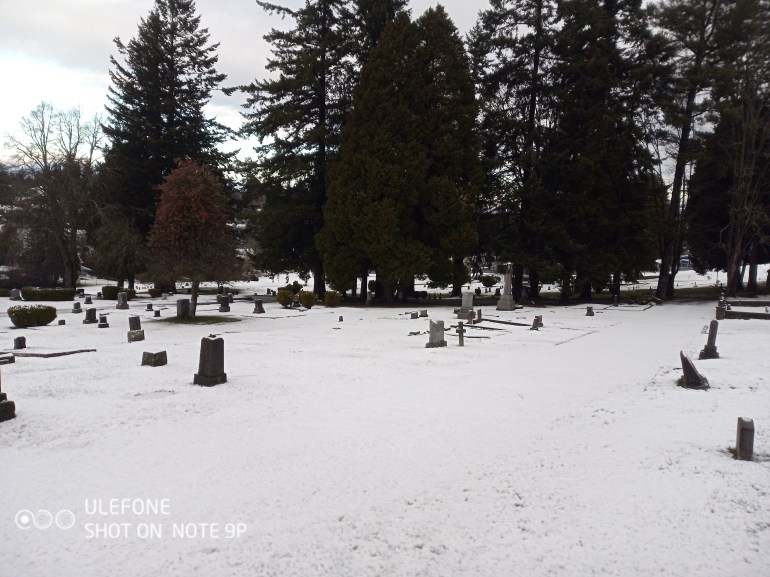
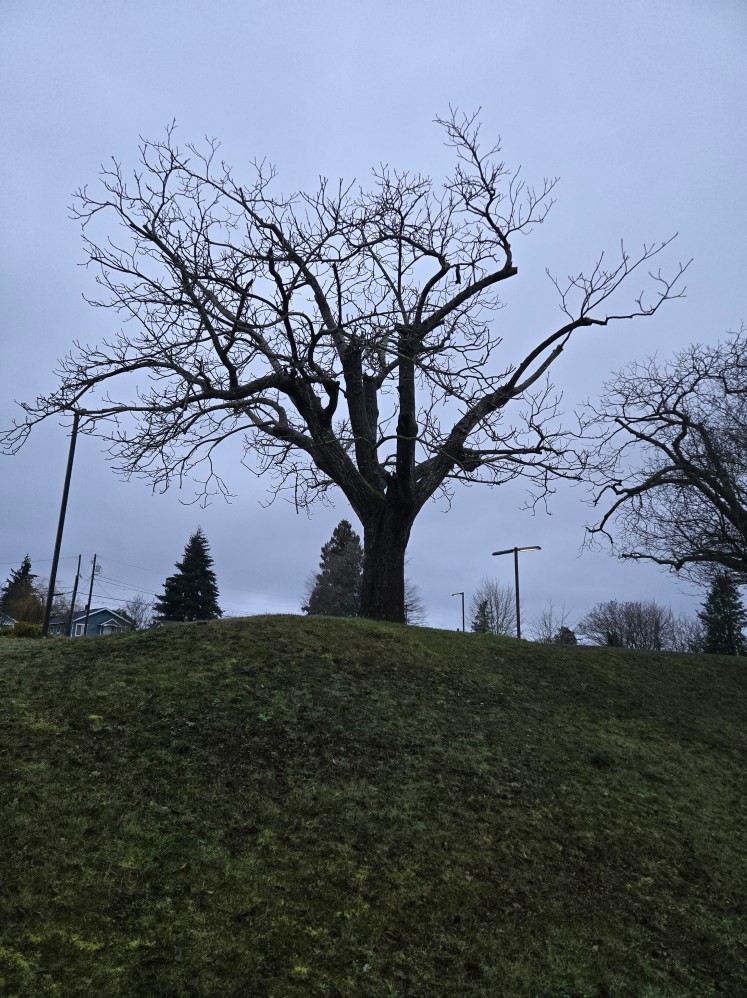
(image has nothing to do with the post–just fond of the subject)

i

My brother Fenwick is a bit hazy

He says weed in the morning keeps him lazy

Stonily stoned from Pongrise to Pongset

Fenwick is a beatnik, not a Daisy

ii

With our half brother Buckfast he goes round

To poetry slams and other jazzy grounds

Where work is the most discouraging word

You can hear hooves clapping out happy sounds

iii

And you will see them at the trackly track

Betting on Peonies who have the knack

Racing flowers of incredible high skill

With sweet Butterfly jockeys on their backs

iv

Fi-did-lee Fenwick leads an actors’ life

And Buckfast is as keen to avoid strife

Goat and Geep worshiping Saints Cheech and Chong

Break up this rhyme scheme when they pass the bong

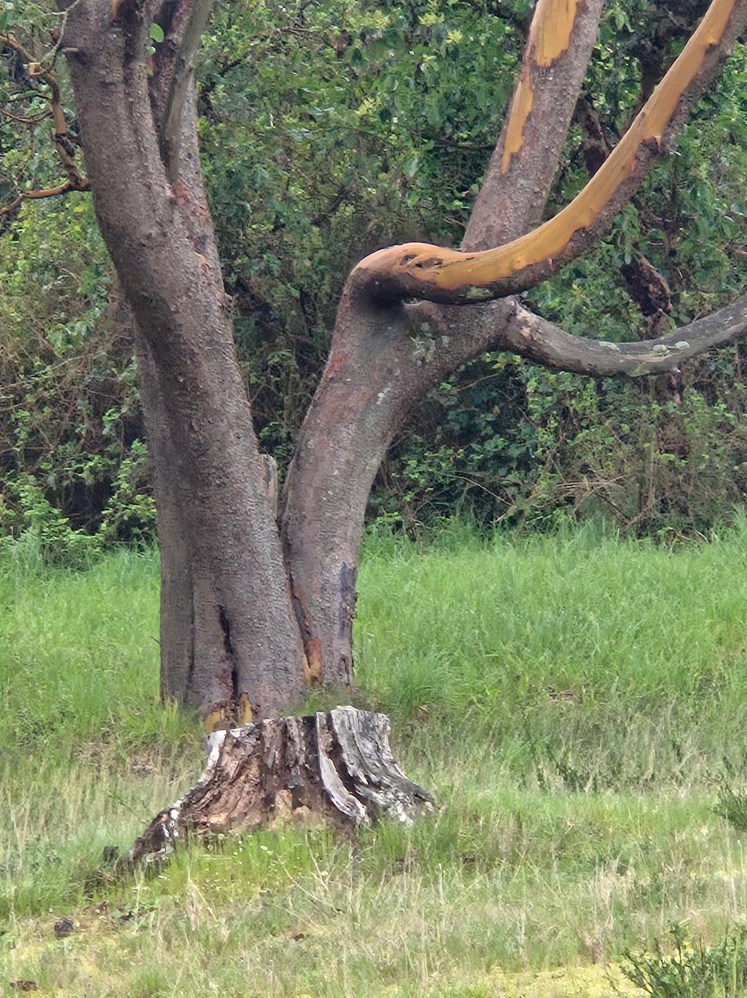
Moonfog Madrone Part Three: “Something in the Needle For Everyone”

i

Moonfog Madrone is lugubrious

But that’s not news to us

He dreams below a darkling sky

Where a redrum of Crows backwards fly

ii

Moonfog Madrone recalls the druid dudes

But without dudettes they were doomed

He stands in a field of whisky rye

He has wit for a tree, sharp and wry

iii

Moonfog Malone is made of petrified wood

He shouldn’t be, but is because he could

A miracle of life, a breathing thinking stone

With needle-like leaves of crystal that always hit home

iv

Moonfog Madrone has forgiven an offensive Spruce

Beside the infidel’s old stump, a reincarnation has taken root

Like a drug his fresh sap will freely run

For there’s something in Moonfog’s needle for everyone

Saragun Verse: Moonfog Madrone (part two)

i

Moonfog Madrone formed a spell

From holy words and threats of hell

It spread across the fallow field

And got inside a church bell’s peal

ii

“Come forth my lovelies the bell sang;

Come home to whence thou sprang.”

And come they did, ghost flowers and trees

Spirits of birds and honeybees

iii

The procession lasted two days one night

The field became a phantasmic delight

Spirit birds sang cemetery songs

In an elysian spring forever long

June in Saragun Springs

Welcome to June in Saragun Springs. (Image of perhaps the last pay telephone in the northern hemisphere)

As stated long ago, the FC’s of the Springs do not work on Sundays. Here, as opposed to the real world, the “Boss” is the only one who dons the yoke on the Sabbath. The Union of Imaginary Friends and Fictional Characters (UIFFC) used to include Pennames until it was pointed out that “we” are the reason why “they” felt a union was needed in the first place.

Bastards.

But I was still bothered by the open day that I can never use. Then inspiration came out of Chicago. I asked Dale Williams Barrigar (no stranger to the Springs, yet free of UIFFC tyranny) if he would like to present a weekly Sunday column of his design. And my luck was in, he said yes. The column, which I think Dale should introduce, soon, will begin this month, and I for one look forward to it.

Last month featured the first ever Guest Writer Week. Dale was the guest artist and he set all kinds of site records for views. This month the final full week of the month, Monday through Friday the 23rd to 27th, is reserved for Mr. Douglas Hawley.   If any of you would like to get material out into the world, mainly poetry, I invite you to put in for a Guest Week. Email saragunsprings@gmail.com and maybe that can happen.

Currently, other than the newly minted Sunday and Guest Weeks, other days will feature poetry by members of the realm M-W (with further help from Dale) and novel length works by yours truly prsented in a serialized fashion.

Every Saturday in May I presented a novel in progress called You Remembered Everything. I have decided that I need more breathing room to do it right. Further half-assed chapters will not do. Tentatively, chapters five through eight should be ready for July.

But in the meantime, I will be running two novellas that are already completed. The first, INRI will appear this coming Saturday 7 June. It is based on material published on Literally Stories UK, with new material and a different structure. It is the first little “book” in a series that (I hope) will make one big book. It will be published one chapter at a time, every other day until completion. This should buy me the needed hours for the current project.

Once again, an invitation to everyone (preferably everyone who follows the site) is extended to appear on the site one week during future months. July is the next opening. Send your poems, stories, essays to saragunsprings@gmail.com and I will be happy to share you with my dozens of readers (well almost that many).

Again it goes without saying, but it will be said anyway, hateful stuff that touts the KKK, Nation of Islam or celebrates the anniversary edition of something like Mein Kampf will be shown the trash button so fast it will be like the stuff never was. Same goes for pornography and Unabomber-esque manifestos.

Good Sunday to all,

Leila

You Remembered Everything Chapter Four

When Tommy Lemolo was fourteen she broke her left leg playing school softball. It was a gruesome injury involving both her tibia and fibula.

“Never break a bone before? Looks like you have a special talent for it,” a vaguely cute Xray tech joked with her at the hospital as he wheeled her in for pictures. A healthy shot of morphine had placed Tommy in a state of serenity; it made people funnier and cuter than they might have been judged previously. It thickened her senses, therefore she did not register the look of deep concern on the tech’s face nor his change in attitude after he had viewed the first images.

A lot more pictures and concerned faces followed. Eventually Tommy learned the awful truth: Osteosarcoma. Bone cancer.

It cost Tommy her left leg at the knee and endless hours of chemotherapy. But she gained the “cure”– that is if “in remission” (a phrase Tommy found a bit non-committal) can be taken as a cure. For six years her checkups have returned clean, and she figured that once she passed the ten year mark she would be gold.

Still, you never know.

Tommy, however, learned that you could go through life as though it was an endless game of Russian roulette or just get on with it. One of the nurses who had lost a leg in a motorcycle accident said “Look at it this way kid, you will go through life stubbing only half as many toes.” Tommy figured that she wasn’t the first amputee to hear that from the same nurse. But it was a positive thing. Regardless, uplifting sentiments, bumper sticker slogans and spitting in the devil’s eye perkiness only get you so far. It renders down to living in fear, fretting over every bump and pain, just waiting, or getting on with it.

Tommy was all about getting on with it. She had stayed the night at Irene’s, as was her habit when the PDQ came out (although she only drank half a can–oddly fresh or otherwise, the stuff really was piss). She rose quietly a bit after six, and got ready for a run. Ever since her brush with death, Tommy was never tired upon waking. Even on slightly under four hours’ sleep she was ready to go. She loved to run in the early morning. The world was hers and she had room to think. She experienced the mornings and did not hide from it behind earbuds the way so many others did.

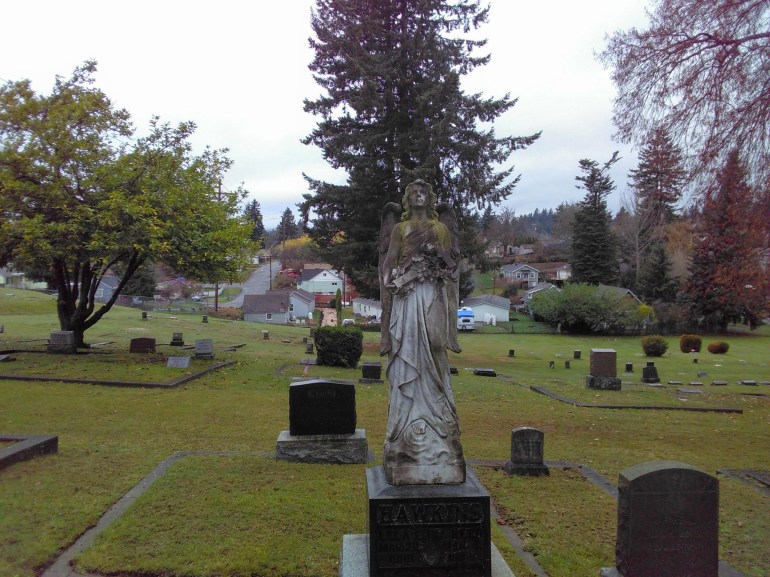
It was going to be a beautiful day. The air was cool and clean–there wasn’t a sluggish summer breeze carrying the high stink of garbage or the charnel stench of small deaths in the high grass. Tommy noticed that the cemetery’s main gate was already open, which was a happy surprise. Being inside New Town in the morning was like being under water, amongst the shadows of the yews and maples. Moreover, the circular path that was about a quarter mile in length went down then back up the face of the graveyard. It attracted many runners and dog walkers.

Tommy entered the cemetery and chose to run right. If she had gone left she would not have seen the corpse of Holly More propped up at the foot of the great maple because he was on the other side of it.

She ran and avoided the areas where the spray of the automatic sprinkler system overshot the grass and landed on the pathway. There were people who bitched about that sort of thing, but the getting on with it mindset does not linger on such inane matters. And as she hit her stride, Tommy’s mind flitted from subject to subject like a hummingbird.

“Weird Ellie coming out… ‘dreamt of a man and lady in the graveyard’… Dow Lady–why haven’t I ever seen her? Everyone else has…bastards Ha! Goddam snobby ghost–ha! Maybe a joke…naw…hey, who’s the fucker frying bacon while I’m being all healthy like–bastard–Ha!”

This line of thought stopped soon after Tommy had made the turn and was halfway up the hill. She saw some guy lying against the big maple tree. At first she went on “Yellow Alert.” Often homeless people would catch a bit of sleep inside the cemetery. Another thing Tommy had gained from her illness was compassion, but you could only have so much compassion when you are a young woman clad in running shorts and a tee shirt (fake leg withstanding) and there is no one else around.

At first she slowed down and waved. No reply. Upon drawing closer she saw he was out for the count. His body lay limp and his head was bowed. Closer still and she saw flies landing and departing from him.

“Hello?” she said, her trepidation set aside. Something told her he was dead. Still, young women in shorts and tees explore situations even after “something” gives them inside information. Then she saw the needle, the tubing, the dried trickle of dried blood, which (Tommy assumed) had attracted the flies. She knelt on her one real knee about five feet away from the man, and without taking her eyes off of him she extracted her phone from a compartment she had devised in her prosthetic (all kinds of shit in there–wallet, gum, smokes for healthy living, etc).

Tommy opened her phone and called 911. And although she had looked away from him for maybe half a second, when she looked back there was a ghost beside him. This was when time stopped for roughly seven seconds (only time can be stopped for an amount of itself; the eternal paradox). The wispy glimmer of a woman was obviously a ghost because people are not see through and are not like to hover above the ground as this individual did. Stunned, Tommy gazed at the ghost. The ghost finally laughed and said, albeit from what sounded like a very long distance, “You will remember everything.” Time resumed and when the operator said “911, what is your emergency?” the ghost vanished.

******

Emma, who, like Holly and the mind she referred to as Keeper, was centered in the great tree. She watched Tommy leave the house and enter the gate which Keeper had unlocked with a quick blue bolt of electricity a few minutes after sunrise. Apparently, Keeper had over-estimated the voltage necessary to unlock it–therefore that was one lock that would never work again–it leapt off the gate and lay in the grass, fused into a molten mess. Emma always found it amusing whenever the all powerful Keeper goofed. Stuff like that had happened before–once with even greater energy.  Emma remembered a dead pine felled during a fierce storm in 1962. (She also got hit with a bolt of lightning that day and Dow Lady sightings were higher than ever for weeks). It appeared that it would crush the small Caretaker’s Cottage, and two City employees who had taken refuge there. Emma believed that Keeper’s intent was to nudge the thing out of harm’s way. Keeper was very spare with “her” resources and Emma understood that Keeper did not seek human attention. But instead of pushing the pine to one side with an electric “shove,” Keeper blew it into toothpicks. The concussion knocked out many windows, but the city employees were saved. 

And although Holly was “there” as a tree spirit for lack of a better term, his mind had been sucked into a Legend–his energy ebbed at a low pulse and she figured that it would remain that way until sunset. Emma had always wondered how that went. “Do I vanish, or am I still in the tree?” For over seventy years, she had “kept the Legends” for Keeper, and today was the first time she hadn’t been sent into the life of one of the persons buried at New Town since her arrival in 1943.

It was a pleasant development, seeing the sun again with her own mind. Whenever Keeper culled electricity from storms and the air itself, She (meaning Keeper, again for a lack of a proper term) stored it, assumedly in the tree, which really was not a tree in the common sense. Emma had learned how to tap the power after she had been inadvertently hit by lightning in 1966 (something that Keeper had not arranged). She found that with a little practice she could “thinktoward” her shape and project it wherever she wanted to in the cemetery. Emma found it amusing to do this when Tommy appeared at the foot of the tree.

But there was also a necessity involved. Emma and Holly had twenty one days to make contact with Tommy and Irene (whom Emma had watched grow up, as she had “known” Elsbeth Allison nearly all her life as well). By the twenty-first of the month, a certain task must be accomplished. Emma had never directly communicated with Keeper, she was on the need to know basis, but she knew the outline of the situation if not yet the specifics.

Fortunately, Emma was very intelligent and despite being dead she could still learn new things. Every night when she returned from a Legend, the number that began as 25963 and reduced to zero in her mind as she died, went up by one. At sunset, after her final “dip” into a Legend, the number twenty-two entered her mind, and twenty-one did the same. Long long before, within her first week of odd conscription, Emma had figured that 25963 was how many days she had lived–from 20 May 1872 to 21 June 1943. She inferred that it must also be the number of days of her service.

What happened after that, she had no idea. But she had an idea and if it could happen it would be wonderful.

******

The aftermath of Holly More’s (supposedly) lonely death was well attended. Three police cars, two aid vehicles (featuring two nearly identical semi-cute EMT’s both with the same, haircuts Navy tattoos on their forearms. and (for no known reason) and a firetruck, all arrived soon after Tommy placed the call. She took advantage of the interval and went inside to fetch her sweat pants. 

After six different cops (one of whom was a friend of her dad’s) had asked Tommy essentially the same questions, she figured that she had been “cleared” from the suspects’ list–as though there were any other except for what was in the needle.

Irene had been in a state of semi-consciousness when Tommy darted into her room and told her there was a “deadguyinthecemeteryandaghostohmygod.” Tommy was in and out of the room in sweats within two seconds, three tops. Irene was much coffee and at least two cigarettes away from making sense of what Tommy had told her.

Slowly, Irene rose and peeked through the blinds on her bedroom window and saw a procession of emergency vehicles pull up to the main gate of the cemetery. Although a bit sluggish without adequate levels of the substances she was addicted to in her system, Irene figured what Tommy told her probably had something to do with it. 

“What happened?” she asked Tommy, meeting her at the gate about twenty-five minutes later. Gram was still sleeping. Irene almost brought the baby monitor speaker, but she recalled its sudden death. Besides, it was out of range anyway. She toted a comically large gas station coffee cup instead. She offered some to Tommy, who accepted.

“I was running and found a dead guy against the tree–had a needle in his arm,” Tommy said. “I also saw the Dow Lady.”

“That’s a bit of a news overload for a Tuesday morning,” Irene said, lighting the day’s second cigarette. “Um, dead guy and the Dow Lady?”

“I really saw her–and I just found this.”

Tommy pulled up her left pant leg and opened the compartment in her prosthetic. She made sure no one was looking then showed Irene a lump of metal that somewhat resembled a padlock, and stashed it back inside.

“Whazzat?”

“The gate was unlocked. Figured it was still open from yesterday–too early otherwise.”

“That the lock?”

“Duude, I do wish you’d wake up quicker.”

“Awake enough to know about withholding evidence.”

“You watch too much CSI.”

“How come you hiding it then?”

“The Dow Lady,” Tommy said, as though it explained everything. 

The driver of a white van lightly beeped his horn because the girls were in his way. 

“Sorry,” Tommy said, quickly dropping the leg of her sweatpants to cover the lock.

“That’s the coroner,” Irene said. “Same guy who picked up Mrs. Lonney a couple years back.”

“Who?”

“You remember her–she lived over in that little brown house…Mars bars on Halloween…had the weird little dog named Barfy.” 

Irene remembered that there had been some talk about bring Barfy on board after Mrs. Lonney’s death (which happened at least two days before she was discovered). Fortunately, one of her sons took him in. There were few animals that Irene didn’t love on sight, and Barfy was one of them. He was a small Heinz 57 of some sort, and a mean little bastard at that, always nipping, always making noise. 

“Her? That was hella long ago,” Tommy said. “Sixth grade.”

Emma listened to the girls (in her mind they would always be the girls, as was Elsbeth). Even though she was several hundred feet away, she could “thinktoward” any conversation or person in the cemetery; it was the same as being there. 

And although she could see the area surrounding New Town, she had no power to reach beyond what was obviously an artificial habitat. Irene was being an irritant because she kept stepping in then out of the cemetery. But she was able to infer from Tommy’s replies that the conversation, save for the lock and the sighting of herself, was fairly inane. 

“Are these guys done with you?” Irene said. “I probably should make sure Gram’s still alive.” She said nothing about the dead man, but she knew he would bound into her mind later, as most sad things did when she was alone. It was getting to be a hard world in which dead people were found lying about almost monthly, in a town of under forty-thousand. Harder still was acknowledging she was building a standard complacency to such news; although overdosing was old news, doing it in the graveyard was something new.

Irene’s little morbid jokes helped her survive, but they also carried a pang that disconcerted below the level of mention. It was something that had to refill, like a cistern, before it elicited any comment.

“Think so,” Tommy said. 

As they crossed the street and out of Emma’s reach, Tommy’s left leg began to hum. 

“Your phone’s making weird noises.”

“No,” Tommy said, “it’s in my front pocket–goddam what is it?” She bounded up the stairs to the porch swing, sat and opened the compartment. The lock was buzzing, like a June beetle.

“Don’t touch it,” Irene said.

“Like hell, I won’t–fucker’s in my leg,” Tommy said. She reached for it, hesitantly, and when she touched it the noise ceased. “Wow, it’s warm,” she said, holding the lock up to show Irene, who touched it. 

“Ow, fucker–” Irene said because she had been hit with a bolt of static electricity. “How come it didn’t zap you, ya lucky bastard?”

Because she’s still dead in some places,” something said in Irene’s mind. 

And for the second time in one morning, time, again, was stopped for an interval of its own self. This “time” it paused for seventeen seconds. Keeper had run up a time debt during her activities and it was necessary to pay the interest, like that on a credit card, now and again–though really just now–an endless now of sorts. 

For Irene, upon the shock everything was still. Tommy was still holding the lock, frozen in place. A large Monarch butterfly was suspended in the air and was a pair of goldfinches just off the porch in a similar holding pattern. And there was no sound at all, like it must be in outer space.  

“What’s this?”

You heard me,” the same voice replied. It was a man’s voice, unfamiliar, 

“Who the fuck is ‘me’?” Irene raised her voice, she did not like this at all, especially the utter silence.

Don’t be frightened. Soon, you will remember everything.”

And with that, the mostly under-appreciated sounds of the world flooded back and Tommy laughed, “You are such a baby.”

End Chapter Four 

Flight and Song by Dale Barrigar Williams

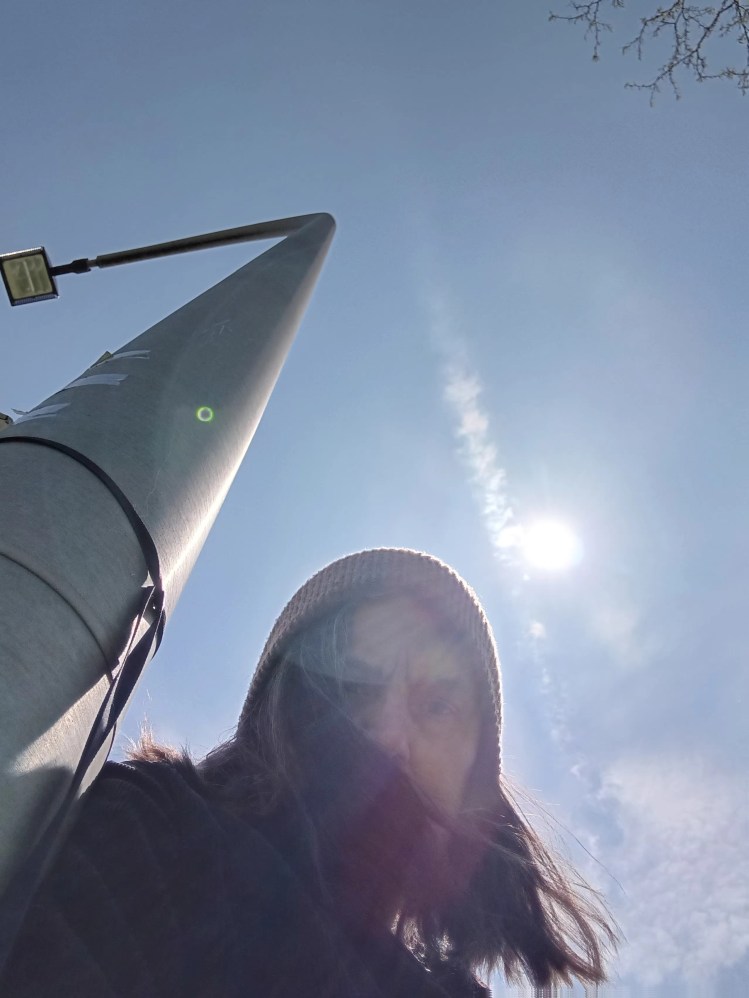
(“Self with hidden face by hair next to AI Monster”–image provided by DWB)

preface

Part of the purpose of this preface is to correct two injustices.

On April 29, 2025, an AI repeatedly told me that “The Last Shot” is NOT a song by Lou Reed. The stubborn, and ridiculously wrong, “AI” said this, over and over and even when asked in a variety of contexts: “The Last Shot” is a song by Reed, and is NOT a song by Lou Reed. “The Last Shot” IS a song by Lou Reed, off his legendary 1983 album Legendary Hearts, a song with perfect lyrics, whether or not it is also an instrumental by “Reed,” with no lyrics (a song I’m not familiar with).

So, the first injustice-correction is this simple fact-notation: “THE LAST SHOT” IS A SONG BY LOU REED OFF HIS 1983 LEGENDARY ALBUM LEGENDARY HEARTS. Robots, you are wrong in so many ways, and will always be wrong in so many ways, no matter how much credence and worship the ones with blinders on may give you. If you wish to solve Climate Change and provide improved medical services to yours truly and others in the future, I salute you. But stop pretending you can produce a certain kind of human beauty, otherwise known as human art. Us humans can’t sing like the birds or the whales, and we don’t try to; and you (dear robots) can’t make poetry like we can (and will never be able to do so). The end…And I will say this again and again and again, perhaps even with my dying breath as the War Bot stands above me making sure I fully expire (or not)…

The second injustice is the way Lou Reed and his songs have been consistently overlooked by the mainstream culture ever since Lou first came on the scene in 1960s NYC with his needle, bottle, and electric guitar and neurotic genius Andy Warhol hiding behind him. On the other side of the coin, almost all artists of any value these days are going to be at least partially, or maybe completely, “underground” figures because of the humanoid, zombie-like, heartless, soulless nature of the mainstream culture now surrounding us. If more were attracted to Lou Reed and his beautiful, raw, genius music, the world itself would be a much better place than it is right now.

Lou Reed’s song “The Last Shot” is a Hemingwayesque piece of work at every level. Among other things, it partakes of a Hemingwayesque and Americanist stance and attitude that can also be seen in various other American artists as wide-ranging as Mark Twain, Gertrude Stein and Mary Baker Eddy, Humphrey Bogart and John Wayne, Joan Crawford and Marilyn Monroe, Eminem and Lana del Rey. Part of this unconventional attitude toward life involves a certain fearlessness and boldness in the face of all circumstances. Other elements include a certain unrestrained wildness, a Native American back-to-nature feeling, a fierce and unblinking knowledge of rampant hypocrisy and corruption in society, a stern morality about telling the truth even when the truth is a “lie” (see Huck Finn) and a total faith in life seemingly against the odds (see Huck Finn and Jim). As such, this is the best of America, not our disgusting consumerism like a bunch of pigs (sorry real pigs, I know you are as intelligent as dogs, or claim you are) wallowing in their own feces.

My poem “Flight and Song” is an attempt to celebrate the positive side of the American character and expose the negative side for all to see by stripping the American language back down to a kind of roughhewn purity from the hinterlands. My audience (“hi!”) is “fit though few,” which is what John Milton called his own audience – Milton, second poet of the English language after Shakespeare. The poem concerns an invented legend straight out of my own daydream, probably ganja-inspired. In many ways, this is fictionalized. On the other hand (and there is always an “on the other hand,” unless you’re a complete dullard or automaton), this poem is about exactly the kinds of things I used to do with exactly the kinds of people I used to do them with, back in 1980s Ronnie Rayguns “heartland USA” America: when we were doing our best to resurrect the rebel spirit of the 1960s without even knowing (consciously) what we were doing, half the time.

Lou Reed died on Sunday morning. His last words were, “Take me into the light.”

Flight and Song

“This dusty old dust is a-gettin’ my home

And I’ve got to be driftin’ along.” – Woody Guthrie

I had heard these legendary

almost-ghost

tales of old unknown

and gaunt guitar players

who still lived along

the Mississippi River

in western Illinois

across from Missouri.

While we were driving

the deep and hilly, tall green

cornfields going on for dusty

miles with their ragged talking

arms and only a partly-hidden

hovel, or a hog hut sometimes,

and for me, the dream

of a farmer’s daughter, maybe

a country Guinevere.

Me and Boomer, Tom, and G,

Little Ed telling the tales

this time, Bob Dylan on

the tape deck, warm Budweiser

cans and Camel cigarettes

being passed around

and gulped down

and puffed upon,

bees, crows, a red-winged

hawk out the moving rear

window, a racoon running

free along the roadside

and then a turtle, and a disappearing

herd of deer, big sky

glowing so yellow

and Indian blue.

Quoting Tad there too.

He was a kid who was always

compulsively quoting

everything anybody said

once he got a mind to.

Otherwise, he was more silent

than the cemetery

we were driving by

and he never said a word.

And now he quoted me

while looking at Tom, “‘They

are still there, and can play way

fucking better than anybody

who ever made a record.

Fuck off, Hendrix knew this shit,

even his dad

said he said it

in an interview.’”

And my best friend Ricky Douglass

said so too, later, while handing me

a funny cigarette in the Blue Devil

junior high school locker room after

everyone else had left

wrestling practice.

Ricky with one brother

just out of jail, another brother

still in, all of us locked in

the system of the town, state

and nation.

And later Ricky told me, “Man,

they kicked his fuckin’ ass so bad

in there you can’t even

recognize him now.”

But later, when I saw him,

Ricky’s brother, drunk, and stoned,

at a barn bash outside Beardstown,

days down the wrong side

of the tracks again,

I recognized him

as Jesus.

And Ricky was the only one

I ever thought could

understand me.

Even though I know

he never did.

And he and me were a we

for a while.

And we were kindred

friends.

A black kid

and a white kid

who were always

together

back then.

dwb

Dr. Dale Williams Barrigar is a journalist and poet from Illinois and Michigan (unemployed), much of whose work involves “popular music,” almost always the GOOD kind – NOT the kind that is crap (life is too short for the crap). As such, he tends to pen more “praise” than criticism, in the spirit of John Ruskin. He also knows that very, very, very, very few, to no, song lyrics are as good as the best poems. An interesting experiment is to read the very best Bob Dylan, or Leonard Cohen, lyrics against (or next to) the very best poems written by William Carlos Williams or Charles Bukowski. There are moments when Dylan and Leonard almost seem to be in the same ballpark with Dr. Williams and Buk, or are in the same ballpark. That’s why they’re the best.

Writers and the Writing Life, Now and Then; Or the Rock: The Happy Failure by Dale Williams Barrigar

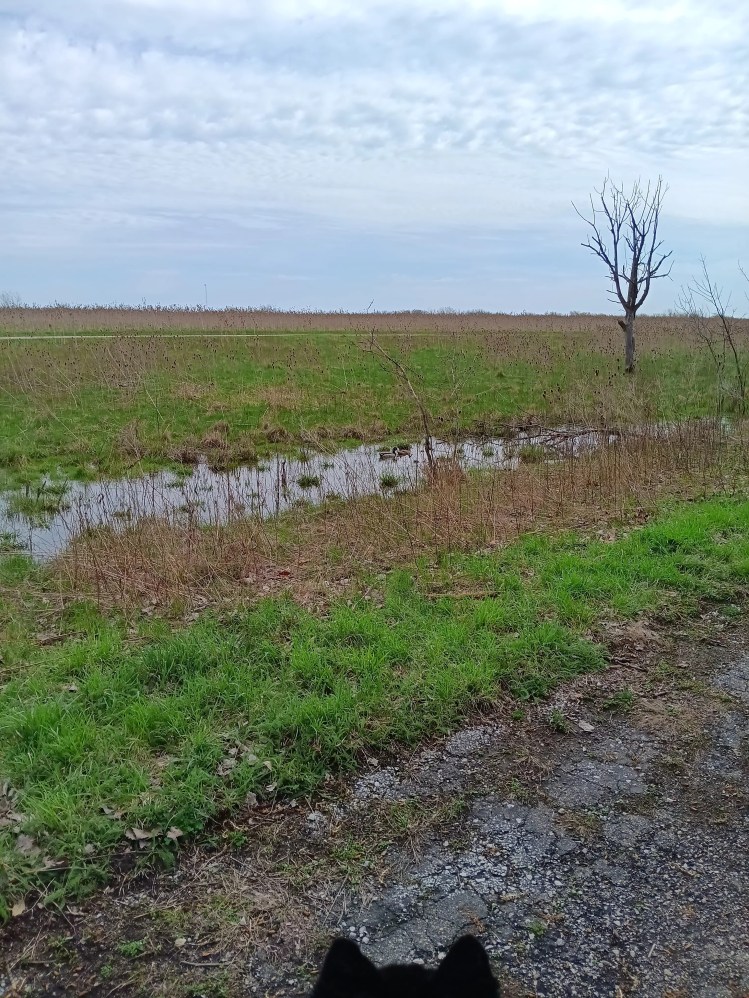
(“The Moors the prairie, two ducks and Boo’s ears”–image provided by the author)

introduction

(Behold the first ever Guest Writer Week in Saragun Springs. This Month we feature our friend Dale Williams Barrigar. Dale is a first rate essayist, writer and poet. This is the first of five works Dale has graciously sent to the Springs for this week.

I’ve met and known many writers and artists and few have displayed the passion Dale has for the arts. “Passion” is an over-used term anymore, inasmuch it tends to not carry the weight it should when attributed to high calibur persons such as Dale. But I think that the readers will agree that it is a perfect word to describe this writer and friend with.

Without further delay, I welcome all to his world…

Leila)

******

“No coward soul is mine.” – Emily Bronte

Henry Miller is a vastly underappreciated writer, so much so that he can stand as a representative, or symbol, of the misunderstood, unappreciated writer in our time. Miller’s best work has zero to do with the pornography he was sometimes paid a pittance to type while struggling to keep his head above water as person and writer in the Paris of the 1930s.

Miller was the creator of a prose style at least as impressive as that of Hemingway or Faulkner. He was a painter and visual artist whose best pieces have a Picasso-like light, humor and beauty to them. He invented a new kind of fiction based directly on the life of the writer. And he was as dedicated to the independent press and its spirit of rebellion and freedom as Charles Bukowski was, except that Miller did it first (and for longer).

His best work is probably the nonfiction collection Stand Still Like the Hummingbird; his book-length study of poet/prophet/rebel Arthur Rimbaud, The Time of the Assassins; and vast stretches of Tropic of Cancer as well as quite a few other essays, some of which are surrealist in nature.

Artists of the word such as William Carlos Williams, H.D., Anais Nin, Bob Dylan, John Lennon, Hunter S. Thompson, Norman Mailer, T.S. Eliot, George Orwell, Jack Kerouac, Charles Bukowski, William S. Burroughs, and Cormac McCarthy, among many others, all cited Miller as an influence on their own work or expressed extremely strong approval for Miller’s work.

Miller’s number one subject was always writers and the writing life, which was why he so often focused on himself. But just as often, he wrote directly about the lives and works of other writers, as in his book on Rimbaud and essays on Walt Whitman, Mark Twain, Henry David Thoreau, D.H. Lawrence, Feodor Dostoevsky, and many others.

In an era when we are being sold the nightmarish LIE that we don’t need human writers any more because computers can do the job just as well, the work of Henry Miller assumes a new importance. Computers and robots can’t suffer or feel pain, they can’t laugh or console or commiserate, and so, no matter how seemingly clever to the ones with blinders on, robots can’t create beauty, not human beauty (because they aren’t human). Anyone who can be consoled by a robot has a mental problem, and almost all great writing is about consolation, one way or another.

Think upon it. What great writing is there that isn’t about consolation one way or another?

Henry Miller said that Jesus was the greatest artist of the word who ever lived, and also the greatest artist, period.

Emily Bronte was the spiritual center of a genius artistic family. She was also the biggest outsider in the family, as both writer and person. She was fierce in everything she did, and was both a believer and an unbeliever at the same time: a believer in faith and the spirit of life itself; and an unbeliever in schools, creeds, dogmas, churches with their rituals and hierarchies.

In the spirit of Henry Miller’s writings on writers and the writing life, but without knowing it, I wrote a poem about the Bronte family. I recognized, only after the fact, that this poem had been influenced very heavily by all the countless hours I spent reading Henry Miller when I was in my teens, twenties, and thirties. (I discovered his work when I was 19 while riding on a train from Chicago to Milwaukee; it felt very much like a life-changing experience.)

Miller sometimes called himself “THE ROCK,” which for him meant The Happy Failure.

It took me less than fifteen minutes to write the first draft of this poem while standing in a field in northern Michigan, and which I later called “Visionary Children.”

It took me five years (very much off and on) to finish this poem. What took so long? Getting the words right. Whether it’s true or not, I have the feeling now that not a single word of this poem of 131 words in 55 lines can or should be changed. As with any poem, every word is meant to be savored – and returned to.

Visionary Children

The Bronte kids

they lived alone

out in the wilds

of England.

With a loving but

too-distant dad.

Mother had passed

on.

And so

they grew

up as haunted

kids.

As kids

who loved to haunt

ghostly places.

Like lonely hilltops,

Single streaming trees

or moss-strewn

boulders,

or rainy graveyards

in storms.

Sometimes looking

for mother.

Later they learned

to write

haunting

poems,

novels,

stories,

and other

amazing things.

But they also worked

as governesses

and tutors.

Branwell too, only son,

lovable laudanum

addict.

Working hours were

6 AM to 11 PM.

Six days a week.

But there was

the gigantic house

they inhabited,

free food,

big, windy

windows.

And the wild

nature

of the roaming,

redeeming

imaginations

humming and singing

the songs that kept

their brains sane…

– dwb

D.W.B. is an ex-professor and current literary scholar from Chicago and environs. At the ripe young age of 46, he was magically transformed into a poet via a mixture of personal circumstances he both would, and would not, wish on anybody. 

You Remembered Everything: Chapter Three

Chapter Three

21 June 1943

The Legend of Emma Withe (Part One)

The morning paper was the usual dog of war. Other than a follow-up article about a peculiar fire at the Dow Hotel, the Charleston Sun was, as always, heavy with the blare and thump of the trumpets and drums of war. And there were the usual op-ed pieces that scolded the young men who were “waiting for an invitation to the party” instead of volunteering to defend the land of the free, home of the brave and so forth. Emma felt that these writings would carry more weight if not written by men who were safely exempt from service on account of age. Moreover, it should have been noted by the writers that most of the men of service age in Charleston were there to build and refit warships at the Puget Sound Naval Shipyard. At seventy-one, Emma long knew that there were few things on earth more tiresome than an old man who has something to say.

With great reluctance, Emma turned to a quieter page in the paper. Running her finger down the updated casualty list (even the smallest communities had such a list), she waited for her heart to snag on a half-forgotten name as it had six times in the past year and a half. Whenever Emma found one of those snags, she’d send her mind back to when the dead soldier was a boy and she was his teacher at Charleston Elementary. She would endeavor to remember a day when the boy had seemed at his happiest, then she’d seal that memory in her heart and never think about the boy again.

There hadn’t been any snag in that week’s list. Emma sighed and rolled a cigarette. She pitied the boys on the list who had not been her pupils, but she had no space in her heart for them. Their deaths (which probably did not occur with the blare and thump of trumpets and drums) were just faceless redundancies to her, as they were to most everyone else. True–each had been a person with his families and friends and likes and dislikes; hopes and dreams. No disputing that. But there were just so damned many of them; lives stamped out short by foreign events already begun while they were still children. And as scarcity drives up value, a glut drops the price. A similar economy guided Emma’s heart; and she could only invest–however briefly–in the boys who had attended her fourth-grade class at Charleston. Even in retirement she could not afford to dwell long on such dark matters.

Emma laid the newspaper aside. She had a second dreary matter to dispense with.

For two weeks, Margaret’s letter had followed Emma around her rooms like a stray dog. For the first week it was stuffed inside a drawer. Unfortunately, Emma never realized just how often she needed to get into that drawer. Emma had hoped that the top cupboard would take the letter in and give it the same air of urgency that Christmas decorations have in the summertime. But the relocation to Emma’s version of Siberia proved ill-timed, for it coincided with the cupboard’s hitherto unknown busy season. And every time Emma found herself teetering on the stool, seeking out some suddenly required item, the letter wafted down onto the counter. Inexorably, Margaret’s letter found its way on to the table, the final stop.

Lewis had wondered why she just didn’t just burn the letter unopened. “That way it won’t be a bother to you.”

But that was Lewis, dear and sweet. Still a lap cat to her, even after all these years.

Always helpful, always caring, always advising. Poor Lewis. Never that helpful, caring, nor wise unto his own affairs. A buffoon, really. Lewis was too sincere to have prospered. But Lewis was the one person Emma wished to outlive; her death would hurt him immeasurably.

“All right Peggy,” Emma laughed, for the third to the last time in her life, “you win.” If it were only Peggy who had written this, she thought, knowing better, but hoping right along. Peggy was the sort of girl who’d rub daisies on her letters to “AMERICA, U.S.A.” How Emma lived for those correspondences from London. Home. Whenever she got a letter from Peggy, Emma would tear it open on the spot and hold it up against her nose; and somehow the seven thousand miles lying between Emma and her little sister were eliminated. Emma had promised to send for Peggy, someday. But promises have a knack of making liars of us all. By the time Emma finally relented and opened Margaret’s letter, forty-three years had passed since they had seen one another. And in that space of time, much had happened to both. Too much, to be honest. Little Peggy was all gone. In her place there was Margaret, which would’ve been fine if Margaret hadn’t grown up to be such a strange, one-note woman, who, like clockwork, sent equally strange, one-note letters every six months.

The letter was, as Emma had feared, all-Margaret. No “Dearest Sissy”; no stale, yet wondrous scent of daisies (which Emma allowed would have been peculiar to find in a letter sent by a fifty-four year old woman); no hint of Peggy. Like the Sun, the letter was thick with war; but not even an event as momentous as the Second World War could take the spotlight off God when Margaret wrote Emma her bi-yearly letters:

“…God found England Decadent. He commanded Satan to marshal the Nazis to smite England for its Wickedness…A Bright Day cometh, Emmalene! Our Homeland has seen the Evil of its ways! Soon She shall rise again! Come Home to God, Emmalene. Take Jesus back into your Heart! and we shall Rejoice Together! Evermore in Heaven!…”

That was the general smell of the thing. Although Emma had no reason to believe that Peggy might crawl out of Margaret like a survivor emerging from the rubble long after her empty casket had been laid into her grave, Emma always had her hopes. And no matter how many times Emma sealed Peggy into the vault, that winsome, beloved phantom always found a way to slip her chains. Emma carried Margaret’s letter to the sink. She held it by a corner, like one might hold a dead rat by its tail. She then put a match to it, and held it until she was certain that the fire wouldn’t go out when she dropped it into the basin.

The flames reminded Emma about the queer fire that had happened three nights earlier at the Dow Hotel. The blaze was confined to a single room and had taken the life of a woman. To Lewis, and half of Charleston (the other half had yet to hear), “confined” was an understatement.

“I got it all out of Joe Parnell,” Lewis, a most credulous sort of man, said, in reference to an ex-dentist who served as Deputy Coroner. “Told me if I breathed a word that he’d deny he ever said it… Told me that it was off the record.”

To which Emma smiled. Telling Lewis anything worthwhile or interesting was the same as publishing it in the Sun (which, to its credit, never ran the unsavory rumor that clung to the story–but did print an awful lot of follow up stories about the fire’s lone victim).

“’Spontaneous combustion,’” Emma said, laughing for the second to the last time in her life; echoing the thing Lewis had told her, and watching Margaret’s letter burn into Peggy’s ashes.

“Sister dear,” she said, “if not Heaven, then where else shall we meet?”

****

Emma had no plans to visit Mary in New Town Cemetery that day, even in retirement she remained a slave to routine. It was Monday, and she had gone the day before; for that is what she did on Sunday. And yet there she was, fully aware of the day, but not questioning why she had automatically walked to New Town instead of the Park Avenue Diner, where she ate lunch six days a week. It was through she had been guided like a sheep and was just as unquestioning as livestock. It was not until after death that she finally approached the why of the thing and, even more importantly, how and who?

Again, there she was standing at the foot of the Withe family plot. Which contained Mary’s grave and that of Emma’s departed and never missed husband, Robert. There lay an already paid for empty space between them.

Mary Elizabeth Withe

1900-1906

Here Lies a Mother’s Heart

Although it had been exposed to thirty seven years of weather, Mary’s headstone was polished and in all ways kept immaculate. Nary a finger of moss had invaded a letter, nor were weeds allowed to take root in the plot. Emma had twiced replaced the stone when the inevitable cracks had formed and figured she should do it again, before it was too late. Robert’s grave was untended and looked like something that had been ignored since it was filled in 1908.

Emma had complete control of her emotions. Hurtful memories could not sneak up on her. She could only experience emotions when she wanted to; only when she let them out of their cells. Mary’s death had changed Emma. It made her cold and ruthless, but only on the inside, for she was able to affect an acceptable, though aloof demeanor; her insensitivity, however, did not extend to children, or to persons such as Lewis who had something good and childlike about him that survived the push to adulthood.

Thus, she allowed herself to feel Mary only on special occasions. Regardless, at all times what passed between Emma and Mary’s memory lay beyond the reach of anyone else’s power of description. She had no feelings about Robert’s grave, nor her part in filling it. He was a closed book never to be reopened.

Upon gazing at Mary’s stone, strange emotions, lacking enough substance to gather into thoughts, began to swirl in Emma’s mind; a blizzard of half thoughts and indescribable feelings. I know thisI know all about this–why can’t I remember? She saw a small party of people moving toward her, and the sun began to move crazily in the sky, east to west with stunning speed, night and day alternating and gaining and gaining until it was all a blur. And numbers entered her thoughts: she first saw the meaningless number 20,058 and watched it reduce by one at a time with the same velocity the whipping sun marked new days.  It stopped at one. Then Emma laughed for the last time in her life. It was all clear to her. I remembered everything. But she didn’t remember everything long. A tremendous flash burst inside her head. The left side of her body died milliseconds before the rest; she fell in that direction, striking her head on Mary’s stone.

And somewhere, where cosmic records are kept, Emma’s one became zero. Yet that too wouldn’t last long.

(Author’s note. The image is obviously not June, unless at the poles. But I like it. LA)

End chapter three

Saragun Verse: Twitchazel and Poppyseed

1

Twitchazel the haunted Crabapple Tree was a progenitor

Within her stunted branches dwelled the happy ghosts of pollinators

But even at five hundred, Twitchazel was not at all dead

And in one odd spring she sprouted a bud that needed to be fed

2

A hive of ghost Bees hung from her highest limb

But ghost pollen will keep one skeleton slim

Still they helped spread the word that their master was still alive

And in need of the dust that was a must for her bud to survive

3

Poppyseed the Hummingbird heard the call for a donation

He was a giving bird and sensed Twitchazel’s frustration

So he swapped the yellow for some of the bud’s musty nectar

And spit the swill out behind a Rosebush named Hector

4

And so it goes in the enchanted wood

Every now and then comes an act of good

The apple thrived, though it grew weird and hirsute

Safe because no Eve would dare pluck such a hairy fruit

Saragun Verse: Moonfog Madrone (part one)

1

Moonfog Madrone the Enchanted Tree

Wakes every morn for an hour at three

His branches like arms do mischief make

And mischief like weather his neighbors take

2

A poser Spruce rose up from the earth

“Scu-reew you Moonfog and your magic mirth;

You’re twisted like a crone all haggard and bent;

The best of your sap already spent.”

3

Moonfog Madrone woke at three

And listened to what the Spruce told his leaves

“Silly fool spoke when he thought I was asleep;

Forgiveness is divine but not root deep.”

4

A Spruce stump greeted the morning sun

O! Moonfog Madrone what hast thou done?

And the village was thoroughly amazed

By a rain of toothpicks lasting three days.