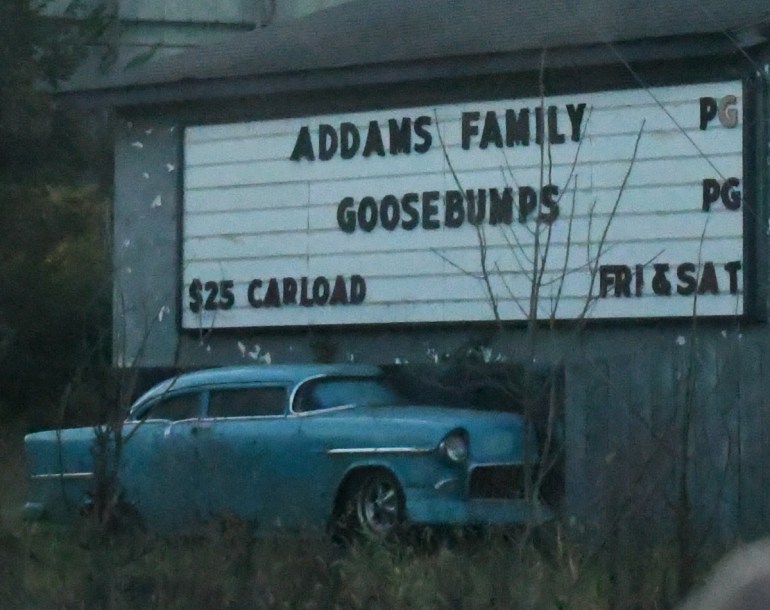
Nora in Five Acts by Leila Allison

Act One

Nora Lynn Manning was born in Tulsa, Oklahoma on 6 December 1941. Her parents, Arlene and Jay, were high school sweethearts who realized too late that they did not like each other all that much. Still, they chose to marry before Arlene began to show. Like so many hideously bad ideas, it was considered the “right thing” to do.

For Americans not named Jay Manning, the Japanese attack on Pearl Harbor, one day after Nora’s birth, was an infamous event. But those Americans hadn’t spent the last six months working nights at a gas station and arguing constantly with a perpetually petulant pregnant wife in a crappy apartment near the stockyards by day; the experience exposed a hitherto unknown silver lining in the prospect of going to war. So, Jay took advantage of his family being at the hospital and enlisted in the Army on the 8th. Then he promptly died in a bus crash on his way to Basic Training two days after Christmas (he was the only fatality in the accident). Some people are like that; they simply don’t have the wherewithal to outlast the second paragraph. It’s why God invented bus crashes.

Jay’s death did not weigh heavily on Arlene; oh, it made her sad, but she was grateful that her lack of tears was explained by “shock.” She thought she was enduring it all very well. But a reaction to her lack of a “proper” reaction germinated in her mind. A tremendous guilt took, like cancer. And from the tumor, insistent little voices, barely audible at first, rose in pitch and questioned her humanity.

But before the voices shouted down rational thinking, there was reality and an infant to deal with. Even after her mind turned on her, Arlene had sticktoitiveness. She moved in with her folks and got a Rosie the Riveter type of job. She also took stenography courses in the evening with an eye on earning a living once the war ended and the men returned. Arlene had all kinds of big plans. But in late 1944, she began to do odd things, such as stealing pepper shakers from restaurants. And then you’d catch her behaving like someone persecuted by invisible insects, which is a fair comparison to the swarms of voices that filled her mind. Two months after VJ day Arlene took a dive off Steel Bridge into an empty gulch. Along with some seventy odd pepper shakers was a two word suicide note: “I’m sorry.” They were two more children murdered by doing the right thing.

Not quite four when Arlene died, Nora had only mental snapshots of her mother; all in black and white. But for a few years she had a happy childhood living with her maternal grandparents, Ethel and Tom Anderson. (Her father’s parents, the Mannings, kept their distance; word was they somehow blamed Nora for their son’s death; a sort of sin she had inherited from Arlene. Fortunately for us, they had moved to Kansas and rate no further mention on account of being assholes.)

The only problem with the Andersons was a consumption pyramid composed almost entirely of lard fried foods, Pabst Blue Ribbon and Raleigh cigarettes (they collected the coupons, which was something that Nora did later as an adult). But they loved her and perhaps the only good times Nora had in life were in their care. But Tom dropped dead from a heart attack at fifty-three when Nora was nine and Ethel suffered a stroke the next summer; it didn’t kill her (she’d beat on for another six years), but disabled her to the degree that she spent the rest of her life in the care of an older sister, who had no room for a child. This resulted in Foster Care because no other relative came forward to claim Nora.

Maybe it is unkind to disparage the institution of Foster Care, after all the next Marilyn Monroe has to come from somewhere. But there was once a time when fostering was how some people augmented their income. They would bring in as many kids as possible and collect cash every month from the state for each one and use as little as possible on the children. Nora spent five and a half years working as a slave on a farm, ostensibly “raised” by the Ollsens (who never had fewer than six Foster kids). “That’s Ollsen with two L’s”–was what Delores Ollsen told everyone, like it was something special. “That’s Cow Cooze, with three O’s” was Nora’s estimation of Mrs Ollsen, a pushy loudmouth who often took her pick of stuff that had been sent to the children. Mr. Ollsen hardly ever spoke and Nora believed (correctly) that he saw no difference between children and livestock.

There are some seriously fucked up kids in foster homes, and the Ollsens sure knew how to pick em. They had one named Royce, who was a year older than Nora. He attacked and raped her when she was thirteen, while she was alone in the barn, feeding the Ollsen’s horse Topper. After it was over, Royce told her to keep her mouth shut, or he’d kill her. That woke something very dark and cold in Nora. She arranged to be alone in the barn again a few days later and made sure Royce saw her enter with Topper’s treat bag. Royce took the bait and the instant he arrived at Topper’s stall she whirled and blasted him in the head with a horseshoe she had stashed in her coveralls. One shot was all Nora needed.

Royce lay there, unconscious, bleeding like hell; she enjoyed seeing that. Although she was slightly disappointed to see Royce still breathing, she figured that maybe some good could come from that down the line. As planned, Nora fled the barn, and after making double-certain no one was around, she dropped the bloody horseshoe down the well. She then made herself feel the filthy shame and pain that being raped had caused so she could whip up some tears to shed when she ran crying into the house and told the Ollsens that Topper had kicked Royce in the head (no way Topper would be in danger; they liked him better than the kids; probably checked to make certain he hadn’t chipped a hoof first).

Upon the conclusion of her perfectly executed plan, Nora ran into the pasture and began to laugh and laugh until she nearly peed. She made certain that she memorized every detail of her victory, the angle of the sun, the breeze in her hair, all of it. Nora knew it was destined to be one of the happiest, most important moments in her life; a definer that would forever separate her from the weak.

Royce didn’t regain consciousness for twelve hours, and he was never quite the same after that. He could still work but he’d acquired a stammer and one side of his face appeared to be lower than the other. Nora didn’t give a shit if he told, but figured he wouldn’t, all things considered. Anyway, he said he couldn’t remember. Maybe so, but he sure gave Nora a wide berth after that. Every now and again at the supper table she’d gaze at him until he finally looked up. She’d smile, wink and mouth “whammo” then spear something off his plate, whether she wanted it or not, because it was his cost for breathing.

Act Two

Nora had common sense, but she was not strongly educated. She could read and write (most of that won while still with the Andersons), but was never allowed much time to do homework (the Ollsens grudgingly sent the kids to school because it was one of the very few foster parent requirements). Nora was able to see herself objectively. She understood that she was pretty and clever enough to do a whole lot better than the Ollsen’s farm, thus she began planning to get away from them and the dusty state of Oklahoma (which had hardly been good to her) long before she reached her majority. Running away was no good without someplace to run to. Marriage, however, would be the quickest ticket.

She found a nice enough, cute enough fella named Joe Hazzard working at the neighbor’s farm. After a few months of one way, insincere yet convincing wooing on her part, Nora eloped with Joe on 7 December 1957, the day after her sixteenth birthday.

At that time sixteen was a legal marrying age, as long as you had permission of your guardian. The Ollsens eagerly gave their blessing because, well, they had become a little afraid of Nora. Although nothing could be proven, they eventually suspected her involvement in the Royce affair. It didn’t seem coincidental that the girl’s confidence and cheerfulness should have grown vastly immediately after the boy’s downfall. Moreover, there was something about Nora that made her uneasy to be around. You couldn’t threaten her with a damn thing because of a queer light in her eyes that dared you to try; and if you dared ask her about anything, she’d just smile and wink, all disturbing like. Always smiling; always winking. Since they weren’t any further evolved than livestock, the Ollsen’s smelled danger on Nora, so they let her go. Besides, Foster kids could be had by the gross.

Nora didn’t love Joe Hazzard because she did not believe in love. But, again, he was cute and nice enough, and provided her with a cool sounding last name. She was not going to be all in for anything for the long haul. Ever since she could remember Nora knew she would die young. The certainty was always with her; it never scared her and in times of pain it was a comfort. Instead of waiting for the other horseshoe to drop, so to speak, Mrs. Nora Hazzard meant to grab as much life as she could.

Nora figured she’d have to put two years into the marriage before she could run away. Age eighteen was a magicland in her mind, tantalizingly out of reach. Until then, history tried to repeat itself; Joe took a job at an all night gas station in Norman, Kansas, where they settled because his car couldn’t go an inch farther; Nora got an assembly line job at a textile plant. But instead of stupidly “catching pregnant” Nora insisted on birth control (later in her brief life she became a firm advocate of the pill, which was not yet available in the late fifties). She gave Joe a “Free Pass” as long as he “suited up.” The last thing she wanted was a permanent connection with anyone, living or unborn.

Then Nora’s stars shone kindly, if only in the sky just once. Grandma Anderson passed when Nora was seventeen. A registered letter from an insurance company contained a check for five thousand dollars. Somehow the loot had passed through many hands that would have snatched it, but there it was. All hers. Nora was dumbfounded and grateful that the mailman hadn’t come when Joe was home. A new plan was hatched; Nora was extremely quick to adapt.

A few days later Joe came home and found that Nora had left him a goodbye letter, a thousand dollar passbook account in his name and her wedding ring. The letter was nearly as terse as her mother’s suicide note, but the message was clear: “It’s been a hoot, hon–but forever is an awful long time to spend together.” Joe knew that this day would come and didn’t look too hard for his wife. Besides, he too had found her a tad uneasy to be around.

Nora recalled the advice some dead guy gave people about heading west and figured it was as good a plan as any. After spending five hundred dollars on a solid used car and twenty on a necklace with a horseshoe charm on it that she just had to have, Nora headed west in a rambling Route 66 sort of way.

Act Three

Nora fell in love for the only time in her life in 1960, at Charleston, Washington. She had run out of west to explore due to the Pacific Ocean getting in the way. She tried Canada, but they wanted to know too much about her, so she turned south at the border and headed toward the Puget Sound that she had found to be like an enchanted fairyland, compared to Oklahoma.

Anyway, the state of Washington was a good enough place to stop; the car was used up and she was down to her last fifty bucks– earned from picking fruit in Oregon. Nora didn’t know if she was still married to Joe or not–she neither took action nor was served because she was pretty tough to find–so, she figured she probably was. But it came in handy when she wanted it to. When folks got too nosey Nora told them her husband got killed in a bus wreck in Bum-fucked Egypt while serving in the Army. But few people got nosey with Nora, because of the uneasiness she could create at will.

She sold the car to a junk dealer for twenty five bucks, took a room in a converted great house that had fallen on hard times and won a job working at a hardware store all in one day. She met a young woman who worked at the store and who also lived downstairs in the same building. A fellow sinner, one just as capable of creating unease: her name was Kaaren.

“Why two a’s?” Nora asked, thinking about Mrs. Ollsen, while they were seated in the nearby White Pig tavern. Neither were of drinking age, but pretty young women always attracted male customers, so any pretty gal who looked close enough to twenty-one was welcome.

Kaaren smiled and struck a match on the bar top. She lit a cigarette and leaned close and whispered, “Cos I fucking say so–wanna make something of it?” Then she playfully reached out and tapped the horseshoe charm on Nora’s necklace. “This means something, right?”

“Maybe.”

“Sure it does–you wear it everyday. Nobody wears the same nothing necklace everyday unless she’s a nun.” Kaaren was raised a ward of the Catholic church and openly shared her opinions on the subject of nuns.

And for the first time, Nora told the Royce story. No tears, all laughter. She never once considered telling Joe, but she knew that Kaaren would understand. She knew that there would be that right person to tell it to someday. Someone who’d understand with humor and a singular insolence that you find only in the one right person for you.

“Good thing Mr. Ed wasn’t there–the fucker would have ratted–”

The bartender brought two glasses of wine that they hadn’t ordered.

“What’s this about, Earl?”

“Guys at the second table–like you don’t know…Sure’d be nice if you’d hit the goddamn ashtray once in a while.”

Kaaren stood, raised her glass to the guys and whinnied like a horse. Then without looking away Kaaren poured her wine into the bar towel bucket, much to Earl’s annoyance.

Nora laughed and followed suit. Yes, she thought, I told the right person.

Act Four

We have arrived at the part of Nora’s story that some of you will not like much. But we should hope that there will be people who won’t like what happens to us, after the good parts have been told, when our stories reach the mandatory “The End.”

Nothing much happened to Nora after discovering love, except for a life that contained more humor than pain. How does one properly convey the passage of fourteen years with words? Which symbols does one use to make the connection? Imagine seeing snow for the first time at twenty-one. Think about five hour laughter filled all-night conversations at formica tables in avocado kitchens. Imagine speeding across the sky when it was still possible to live forever and plenty of time to hold onto foolish dreams that you know will fall apart upon touch. Maybe those images are good enough to know the second half of Nora’s story.

Then came the day when something inside her—something that perhaps wanted to avoid the shabby years of analysis and regret–threw a switch that released bad, hungry cells, which multiplied swiftly and created something that was too late to do anything about when the doctor finally let the light in.

Act Five

The fact that death comes for everyone is the only thing fair about it. When death comes suddenly from a poor decision on the freeway, it can be viewed as merciful; when it lingers in white hospital halls, indifferent to the task, then death is an unfair, lazy, cruel bastard. A life may be lived low, but death shouldn’t slouch. Nor does it compare with a cat. A cat follows her nature, death has choices.

And so it was for Nora, who lay dying of uterine cancer at thirty-three. She figured that death had to be a guy. She named him Roy.

“Roy’s coming tonight,” Nora said to Kaaren. It had been hours since she had last spoken. But Kaaren knew she’d come back because saying “No” to an enema shouldn’t be a person’s last words.

“Hi there,” Kaaren said.

“How am I looking?”

“Like Peter Cushing.”

Nora smiled. That’s what she loved about Kaaren. “Fuck you.”

Those were her last words; much better, poetic, thought Kaaren.

After it was over, Kaaren fastened the horseshoe necklace around her friend’s neck. Nora had given it to her when Roy became a sure thing.

“I can’t keep this. Show God your medal.”

Guest Writer Times Two: Heroes by Michael Bloor

(Note: We conclude this latest guest week with Mick with two of his micro fictions, which both get a fresh look on the net today. We thank Mick and are always glad to have his work be a part of the site–Leila)

Heroes by Michael Bloor

Patrick, my friend and neighbour, and myself were arguing back and forth about our literary heroes:

is their influence always for the good? I spoke in their defence, citing Robert Burns fostering the belief of every Scot that ‘A Man’s a Man, for A’ That.’

Patrick denied that literary talent necessarily overlaps with moral courage, political acuity, or even a healthy quotum of commonsense. He instanced Conan Doyle, who believed in faeries and dodgy spiritualism, but clinched his case with Kafka’s diaries. The entry for August 2 nd 1914 reads:

‘Germany has declared war on Russia. In the afternoon, swimming lessons.’

And…

Mother and the Minister by Michael Bloor

Sixty years ago, it was still commonplace for ministers in rural Scotland to call on all their parishioners, welcome or not. Mother would seat him at the kitchen table and put the kettle on, while I listened at the door as they discussed father’s behaviour. After one particularly disreputable episode, the visitor concluded:

‘Weel mistress, you’re nay marrit. So my advice wud be just to put him richt oot the door.’

My mother pondered this a moment, ‘Aye, minister, I’ll do as ye say. Can I ask a favour though? Would ye collect his pay packet for me every Saturday?’

Michael Bloor lives in Dunblane, Scotland, where he has discovered the exhilaration of short fiction, with more than a hundred pieces published in Literally Stories, Everyday Fiction, The Copperfield Review, Litro Online, Firewords, The Drabble, The Cabinet of Heed, Moonpark Review and elsewhere (see https://michaelbloor.com).

Guest Writer: Making Chutney by Michael Bloor

(A one-hundred word gem by Mick–Leila)

I’ve been making green tomato chutney. Outside in the street, I see a woman and a small boy. He’s walking unevenly, avoiding cracks in the pavement. His mum gives his hand a mighty tug: mother and son, out-of-step.

Then, I can’t remember what weight of sultanas to add. When I find the yellowed recipe, I see it’s in my mum’s handwriting. She’d spelt ‘tomato’ with an ‘e’ at the end, which upset me a little.

I used to say my mum was a difficult woman, but perhaps she wasn’t all that difficult. Maybe it was just that we were out-of-step?

Michael Bloor lives in Dunblane, Scotland, where he has discovered the exhilaration of short fiction, with more than a hundred pieces published in Literally Stories, Everyday Fiction, The Copperfield Review, Litro Online, Firewords, The Drabble, The Cabinet of Heed, Moonpark Review and elsewhere (see https://michaelbloor.com).

Guest Writer: A Misapprehension by Michael Bloor

(This little one was published on 7 September 2018 by The Drabble–Gotta love them Ponies–Leila)

Beyond the barren rubble of an antique lava-flow, a herd of Icelandic ponies graze on rough pasturage among rashes and dwarf birch. A stallion sniffs the breeze; mares and foals snuffle among the grass and herbs. The stirring and shifting of their manes and tails seem all of a piece with the jagged mountain silhouettes on the horizon and the jumbled lava – a wild, young, restless country. I turn to Guðmundur: ‘Those horses … they’re almost an emblem of freedom.’

Guðmundur paused, smiled and shook his head: ‘My grandfather made his living selling them to work down the Scottish mines.’

Michael Bloor lives in Dunblane, Scotland, where he has discovered the exhilaration of short fiction, with more than a hundred pieces published in Literally Stories, Everyday Fiction, The Copperfield Review, Litro Online, Firewords, The Drabble, The Cabinet of Heed, Moonpark Review and elsewhere (see https://michaelbloor.com).

Guest Writer: The Great Book of Angharad by Michael Bloor

(Note: I forgot to mention yesterday that this week features pieces Mick had published on sites that have since fallen into the ominous black hole that publishers do our best to avoid. Still, no longer is is not the same as never was; therfore this highly entertaining work was published by Occulum in 2017–Leila)

     They keep asking me why I did it. Then, as soon as I start to explain, D C Grainger butts in with: ‘Was this on the morning of June 11th?’ I deal with that and then D C Singh chimes in with: ‘Did you tell anyone that was where you were going?’ I struggle past that, and then as soon as I get to the bit about the Holy Spring, I see ‘em exchanging those ‘Has he escaped from the funny farm?’ looks. A dispiriting business for a university professor accustomed to a respectful audience. So I’m setting it all down on paper. And then I’m not telling the police another bloody word.

     I live in Scotland now, but most years I manage a visit to my mother’s country, the Welsh Borders. When I was a child, I used to spend every summer holiday in the Abergavenny house of my grandparents, Harry and Gladys Cecil. The little town is surrounded by seven hills, but for a child the hill that holds the greatest glamour is the Sugar Loaf (its Welsh name is Pen y Val), which looms over the north of the town. Every summer, I would pester Grandad Cecil to re-tell the story of how Buffalo Bill brought his Wild West Show to Abergavenny in the summer of 1903. Grandad had been one of the children in the audience when Buffalo Bill vowed to his audience that he would walk up the Sugar Loaf. And that’s just what he did the next morning, accompanied by half the adults and all the children of Abergavenny.

     Bear with me. I’m trying to explain that the mountain exerts a strange pull – even a hard-bitten old-timer like Buffalo Bill could feel it. It remains a big draw today and the most popular routes have carparks at the foot of them. For sentimental reasons I take a less travelled route, setting out from Deriside (where my grandparents lived), crossing the ford by Harris’s farm, round the foot of Rholben, and up St Mary’s Vale. Just like the Sugar Loaf/Pen y Val, St Mary’s Vale has both an English and a Welsh name. Granny Cecil said that the Normans conquered the broad lowlands, but the Welsh always held the hills, and the head of the Vale is known by its Welsh name Cwm Trosnant, which means the valley of the three springs. St Mary’s Vale starts out as a gentle valley covered in beech woods. In June, the leaves are a dizzying, iridescent green, squirrels dart up the towering grey tree boles and scold you – ridiculously – from the upper branches, the stream splashes over sandstone pebbles. Again, I’m telling you this because you need to understand the pull of the place.

     As you make your way up the Vale, it narrows and the great beeches give way to stunted oaks and thorn trees – you’ve crossed an invisible border into Cwm Trosnant. Near the head of the cwm, the path strikes off steeply to the right and the hidden summit of the mountain. Just a few metres onwards and upwards, the path passes by one of the three springs from which the cwm gets its name. It issues, cold as your fridge, from the roots of a thorn tree. As a child, sixty years ago, I often stopped to watch the mysterious welling of the waters out of the earth and into the light. I would dangle my hand in it, but I never drank from it, mindful of my mother’s frequent warnings of the dangers of polio – the great child killer of the 1950s. The springs of the Welsh hills were holy places, a source of wonder, even before the coming of Christianity. Hermit saints understood the mesmeric attraction of the springs and built their churches beside them. Even today, there’s an isolated, ancient church beside a spring a few miles from Abergavenny, where pilgrims still leave spring-side offerings. Sixty eight years old and no longer bound by my mother’s injunctions, on that June day I bent down and cupped my hands to drink.

     Bending down to the clear, bubbling water, tasting it on my parched tongue, I had a sensation of the world behind me being progressively suffused with brilliant light. As I lifted my head, I was entranced to see the cwm transformed. It was still a narrow upland valley, but instead of the bracken, thorns and stunted oaks, there was a miraculous pleasance. I say ‘pleasance’ rather than garden, because I knew instinctively that this was no modern landscape. There were roses, lupins and hollyhocks; the thorn above the spring had been replaced by an apple tree suffused with blossoms. It was as if I was in Tennyson’s ‘island valley of Avilion… fair with orchard lawns and bowery hollows’ where King Arthur was carried by barge after the Last Battle. Enchanted, I turned to see a woman in the middle distance, walking towards me. Her beech-green dress, which swayed about her body as she walked, was long and trailed among the daisies at her feet. Her red-gold hair was coifed above her brow but fell about her shoulders. Her face was solemn and ageless.

     She spoke to me in what I took to be Old Welsh (as a child, I learned Welsh from my mother), but I could make little of it. She switched to English, spoken clearly but with the punctilious correctness of a foreigner:

     ‘Well met, Michael, son of Mary, daughter of Henry. Long have I waited for you here beside the great spring of Taliesin Ben Beirdd. We are kin, you and I, because I am Angharad, wife of Sitsyllt ap Dyfnawl.’

     I knew the name. The slaying of Sitsyllt is a well-known piece of Abergavenny local history. In 1177, William de Braose the new Norman Lord of Abergavenny, invited around seventy leading local Welshmen to a Christmas feast in his Great Hall. Among them was Sitsyllt of nearby Castell Arnallt, a formidable warrior. As was the custom of the time, the Welsh nobles, surrendered their weapons before entering the dining hall. Once the Welsh were all assembled, they were set upon by de Braose’s men-at-arms and slaughtered to a man. The men-at-arms were then dispatched to Sitsyllt’s Castell Arnallt, which they destroyed and took Sitsyllt’s wife, Angharad, back to Abergavenny as a prisoner. Sitsyllt’s kin eventually anglicised their name to Cecil, my mother’s maiden name.

     ‘Those of Sitsyllt’s kin who drink at Taliesin’s spring receive the gift of true sight, but they are also honour-bound to strive to remedy the dishonour done to Sitsyllt’s house and name. Do you accept the obligation I shall lay upon you?’

     I nodded. I could scarce do otherwise.

     ‘Very well. I know you are a scholar; I give you a scholar’s task. Among the booty from the sacking of Castell Arnallt, the Normans took away my Great Book. The court of my brother, the Lord Rhys of Deheubarth, was the greatest centre of learning in all Britain: bards and sages, harpists and holy men were all welcomed there and competed in the recitation of the laws, the lineages, the ancient wisdom and the holy truths. By the bidding of my brother, I wrote down all that was good and true, and I bore that book as a love-gift to my husband, Sitsyllt. The Great Book has passed through many foolish hands since the Norman theft. Finally, a drunken sot of a clergyman willed it to his old college, Dodson College, Oxford.’

     She saw my look of surprise. ‘Yes, it lies in the library of your old college, unexamined and uncatalogued, stored as the bequest of the late Reverend Pugh. You must right the wrong and return the book to me, here on Midsummer’s Eve. Take this ring: when you come back with the book, throw the ring into Taliesin’s spring and I will return to you, with my thanks and the thanks of all our kin.’

     The ring was of a curious, twisted, gold-filigree design. It was too small to fit on my finger. I slipped it into my pocket and went back to the pub where I was staying. I checked the Dodson College website on the internet. I was dismayed to find that the college librarian was an elderly, retired party who had been a don in the college when I was an undergraduate there fifty years ago. A colourless individual who had adopted a pipe in lieu of a personality, but nevertheless possessed a certain capacity for mischief and fussy cantankerousness: his nickname was Gollum (I know, I know: first a gold ring and now Gollum turns up – where have you read this before?). I realised then and there that there would be no sense in appealing to the college authorities to restore The Great Book to the Cecils: I would simply be alerting the college to the fact that they had overlooked a valuable asset which they could flog off. Instead, I’d have to steal it, albeit knowing that I had justice and history on my side. I checked out of the Black Bull pub that evening and before ten o’clock I’d checked into a bed-and-breakfast in a village outside Oxford.

     I went for a reconnaissance the following morning. I was amazed to discover how little the college had changed. The library was still housed in the same cramped quarters and contained the same out-of-date texts, translations and bound periodicals. There was no space to store uncatalogued volumes. I guessed that they would have been dumped in the cellars. There were two different sets of cellars: the wine cellars beneath the dining hall appeared to have a formidable door and lock; the other cellars, in the same bloc as the library, had a neglected appearance and a simple clasp lock on a fragile-looking door – child’s play, I thought.

     I bought a jemmy and a powerful torch and waited for dark. I confess that I was rather enjoying myself. The college gates were no longer locked in the late evening, but the porters’ lodge still housed a night porter, so I decided to climb in using the same route that I’d used fifty years ago, via the bike sheds. This proved more difficult than I’d anticipated: the spirit was willing, but the flesh had withered. I sustained a nasty graze, a sprained ankle and a ripped jacket, but I got over. In contrast, the hasp on the cellar door was a breeze and came away like cobwebs.

     There was lighting in the cellar, but it wasn’t working: I hunted for a mains switch in vain. In the torchlight, the crowded cellar contents looked as a chaotic as an earthquake in Legoland: there were piles and piles of discarded furniture, tea chests filled with the abandoned possessions of past generations, some old lead piping, tied bundles of papers, ancient chemical apparatus, a battered croquet mallet… It seemed that, unless I was very lucky, the search would take more than one night. My dust allergy kicked in right away, but I stuck to the task. After an hour or so, I did come across an open tea chest full of books, but they proved to be the abandoned private library of past undergraduate, seemingly someone of my generation – I recognised ‘Zen and the Art of Motorcycle Maintenance’ and RD Laing’s ‘Divided Self’. Underneath it, was a closed tea chest, which I assumed contained more of the same, but when I jemmied it open I saw it contained hardback books from an older period. I flicked open the topmost book – a collection of sermons – and on the flyleaf I read ‘Ex Libris Reverend Augustus Pugh.’ Oh Joy.

     The Great Book of Angharad was right at the bottom of the chest. It was a massive thing that looked to have been re-bound at some point, with metal-edged leather covers and a clasp. I heaved it out the chest and opened it up at random – a foolish thing to do, because the eight-hundred-year-old pages were very brittle. Part of a page broke off as it was opened. I shut the book and closed the clasp, but not before I’d satisfied myself that the writing seemed to be in Old Welsh.

     ‘Well, well, if it isn’t Guy Fawkes!’ Two torches snapped on. In surprise, I dropped The Great Book back in the tea chest. I then dodged behind some derelict desks, deeper in the cellars, but the two police patrolmen quickly picked me out again. It seemed I’d been betrayed by my dust allergy: the night porter on his rounds had heard the sneezes, found the broken lock on the cellar door, and called the cops.

     The charges I was facing were ‘breaking and entering’ and ‘criminal damage’ – the college authorities claimed I’d destroyed the roof of the bike sheds. At first, I refused to say anything, beyond giving my name and address. But the duty solicitor at the station persuaded me to explain what I’d been doing in the cellar, saying it would look better in the magistrates’ court. So I told him. A few hours later, I told the same story to the two detective constables in the interview room. They plainly thought I’d lost a marble or two when I fell off the bike sheds, but they sent a constable round to the cellars to see whether there was indeed a big book in the bottom of the tea chest. He found Gollum, the librarian, there ‘checking whether there was anything missing or damaged.’ The tea chest was empty.

     Well, maybe I have lost a marble or two, DC Grainger and DC Singh. But how would you explain Angharad’s celtic ring, safely hidden in my washbag at the B&B? And it’s plain to me who has snaffled The Great Book. I sense a second family connection here: Gollum’s surname is ‘Pugh.’ I suggest you get a search warrant.

Michael Bloor lives in Dunblane, Scotland, where he has discovered the exhilaration of short fiction, with more than a hundred pieces published in Literally Stories, Everyday Fiction, The Copperfield Review, Litro Online, Firewords, The Drabble, The Cabinet of Heed, Moonpark Review and elsewhere (see https://michaelbloor.com).

A Conversation at Pisgah by Michael Bloor

(This week Michael Bloor returns to the Springs. We are always pleased to run stuff by Mick. This one shows his wonderful ear for language-LA)

As I crested the ridge, I saw the figure in the middle distance, staring out eastward. I thought at first he was watching the hang gliders: Hatterall Hill, on the eastern edge of the Black Mountains of South Wales, is a favourite weekend haunt for these enthusiasts, if the winds are favourable. And the hang gliders cater for two kinds of spectators – those who admire the graceful and those who love the comic. I’m afraid I used to belong in the latter category, happy to eat my lunch watching these masochistic individuals launch themselves and their wings off the ridge and into the wind, only for the iron law of gravity to assert itself, so that man and machine would tumble into the bracken and scrub on the lower slopes of the hill. I never witnessed any of these poor souls coming to serious harm. Instead, they would laboriously disentangle themselves from their machines and the scrub, drag themselves back up the slope, lurch momentarily into space again, and then plunge earthwards once more, for my further entertainment. I would find myself wishing that my old Dad could have seen the show: slapstick was his favourite form of comedy.

However, familiarity has lately dulled my own appreciation of the hang glider spectacle and so I pressed on, past the Iron Age ditch and rampart, towards the summit of the ridge and its solitary occupant. The nearer I approached him, the more attractive he became: a sturdy guy of medium height, with a longish grey beard and tousled grey hair, a great cloak, negligently worn – he reminded me of photos of that eminent Victorian poet, designer, and revolutionary, William Morris.

Quickly, I confirmed my impression that he wasn’t studying the varying fortunes of the hang gliders. He was looking way out to the eastward, taking in a view of a verdant landscape that familiarity can never dull: the mile-after-mile-after-mile of patchwork, rolling, Monmouthshire and Herefordshire countryside – fields and woods and wandering streams, all miniaturised for a Giant’s delight.

He turned at my approach. I nodded. ‘A fine day and a fine view.’

He nodded in turn. I asked if it was his first visit to Hatterall Hill. The ridge attracts quite a few holiday walkers, being on a well-known, long-distance footpath, The Offa’s Dyke Path.

‘No sir, I am not a visitor to the hill. I dwell in its shadow, though I call it “Pisgah”, not Hatterall.’

The slightly formal speech and his clear enunciation made me think that English was not his first language: he was a native Welsh-speaker, a minority in this part of South East Wales. I recognised his Biblical reference too, having been raised as a Chapel-going Methodist, and I responded: ‘I understand. We are standing at Pisgah, and like Moses, I take it that you’re privileged to gaze upon The Promised Land, but you’ll never have it for your own?’

‘Correct, my friend. But perhaps you think my claim would be extravagant. Allow me to introduce myself, I am Owain Glyndwr, the last native Prince of Wales. The English know me as Owen Glendower. At one time, with my battle-hardened archers and men-at-arms beside me, I thought I could win back all those fair lands – fields, orchards, and pastures – snatched from us by the hordes of Saxons, Danes and Normans that bore down on my ancestors like plagues.’

I imagine that you will find it pretty odd that I didn’t, for one minute, think I’d met a mad man. On the contrary, I was attracted: he had far more than a famous name, he had bearing of a great man.

I knew a fair amount of the six-hundred-yearold Glyndwr backstory: after some very considerable early success, in battles and sieges, Owain’s revolt against English overlordship had eventually petered out. Despite a large reward being offered, he was never betrayed and Owain’s death was never announced. He simply disappeared and he has no known grave. Some authorities, I understand, have suggested that Owain, in defeat, went to stay quietly in his daughter’s and son-in-law’s house, a successor of which is still visible from this very hill.

I also knew that Owain was widely believed by his enemies to be a Mage, with esoteric knowledge and strange powers. I’m afraid that all I can truthfully repeat is that I didn’t take him to be mad. From the very first, I found him utterly believable, albeit six hundred odd years old.

He did not ask me to pledge my silence. And I feel a duty now to set down what I can remember of our conversation…

Glyndwr: ‘There was a time when all the land you see below us seemed about to fall to my arms. We had driven King Henry’s invasion force from the field at Stalling Down, nearly all Wales was under my control. I was crowned Prince of Wales as a direct descendent of Llewelyn the Great. I convened a Parliament at Machynlleth: we re-established traditional Welsh Law, and declared an independent Welsh Church. We drew up the Tripartite Indenture with Henry Percy (‘Harry Hotspur’), Earl of Northumberland, and Edmund Mortimer, claimant to the English throne. Percy and Mortimer would divide England between them. And all these Welsh Marches at our feet, all the lands west of the River Severn and the River Mersey would revert to the Principality.

‘If only Hotspur had brought his forces to join with mine outside Shrewsbury, instead of attempting (and failing) to defeat King Henry independently, then it might have all ended very differently.

‘So the chance, and the land, was lost. I was already long in years when the thieving and treachery of the occupying Norman overlords drove me at last, against my will, into revolt. So I was weary indeed, like Moses, when I came at last here to Pisgah.

‘But I am being discourteous, sir. I have seen you on Pisgah, more than once. Is your house nearby?’

I nodded: ‘I live down the valley in Abergavenny, Prince.’

Glyndwr: ‘Ah, Abergavenny. You will know that I seized Abergavenny castle and burnt the town to the ground. I burnt all the towns of the merchants that had grown up in the shadow of the castles of the Norman overlords. My own people counted their wealth in cattle, not in coin.’

‘I understand. You wished to return Wales to the world celebrated in the old songs of the bards. And you almost succeeded, Prince. Your skills as a commander were legendary. Your enemies called you a wizard, able to control the elements on the battlefield…’

He laughed deeply: ‘That was foolish talk of men who knew nothing of the weather lore in the Welsh mountains. But it is true that I had a fine library of many strange subjects before my enemies burnt it down. And the bards, like my old friend Iolo Goch, were welcome at my home with their tales of the old wisdom. In the old stories, did not the wizard, Gwydyon, fashion a living bride out of flowers for his nephew, Lleu? Summoning storms would have been a small matter to Gwydyon. The same old wisdom told that the greatest of the old heroes, Arthur among them, did not die. They are only sleeping. But, alas, much of that old wisdom was lost long before the Normans came to Wales.’

He was silent then, I hoped to draw him out a little further: ‘Much of it was lost, you say. But perhaps not all of it, Prince?’

Glyndwr: ‘Perhaps…’

He smiled, nodded, and turned to descend from the ridge. A sudden breeze ruffled his hair and beard. I knew better than to try to follow him.

Michael Bloor lives in Dunblane, Scotland, where he has discovered the exhilaration of short fiction, with more than a hundred pieces published in Literally Stories, Everyday Fiction, The Copperfield Review, Litro Online, Firewords, The Drabble, The Cabinet of Heed, Moonpark Review and elsewhere (see https://michaelbloor.com).

Old by Doug Hawley

The Perfect Couple

Everyone thought that Janet and Mike Wilkie were the perfect couple, and with good reason. Both of them were as close to physically perfect as imaginable. Janet was a tall Filipina – Irish mix and Mike was Italian – German. She was 5’8” and model attractive and he was 6’3” and could have done ads in Esquire. Both were athletic, she was a distance swimmer who had swum the Bosporus and he had been drafted as a point guard for the Boston Celtics, but decided to start his own business.

While Mike was perfecting his electronic empire, Gold, which rivaled Apple or Microsoft, Janet had moved from local showings of her paintings to achieving huge success in New York and other world capitals. Many of her works of neo-impressionism, or as they came to be known to those who lusted for neologisms, heightened reality, appeared in the halls of major corporations. Her paintings, according to one critic “looked more real than real”.

Continue reading