Writers and the Writing Life, Now and Then; Or the Rock: The Happy Failure by Dale Williams Barrigar

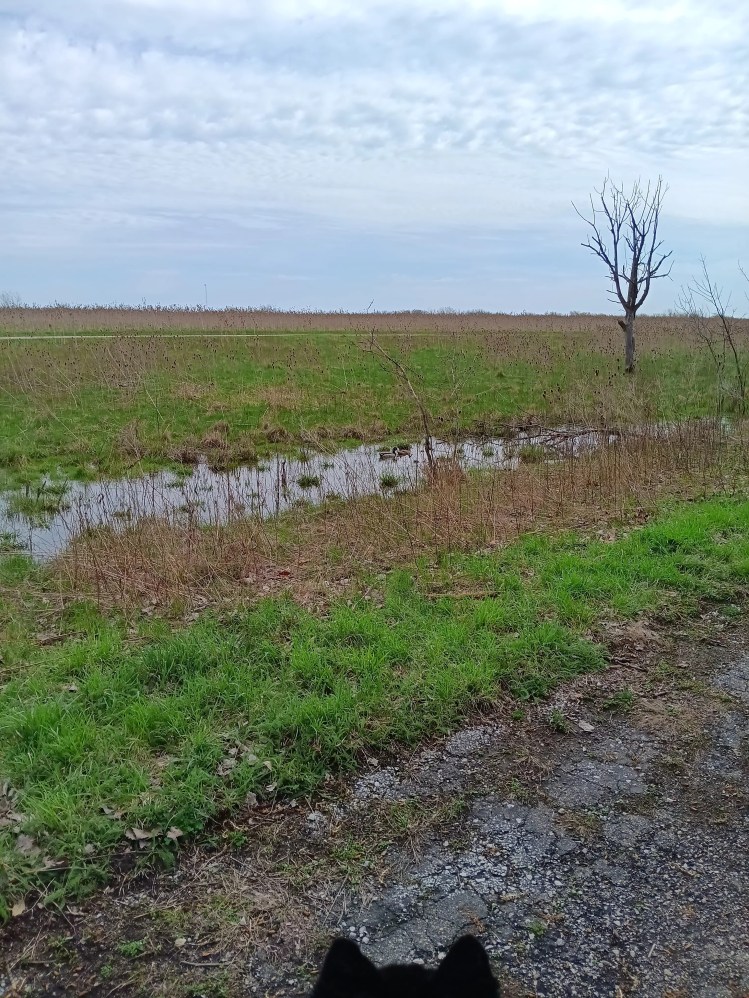
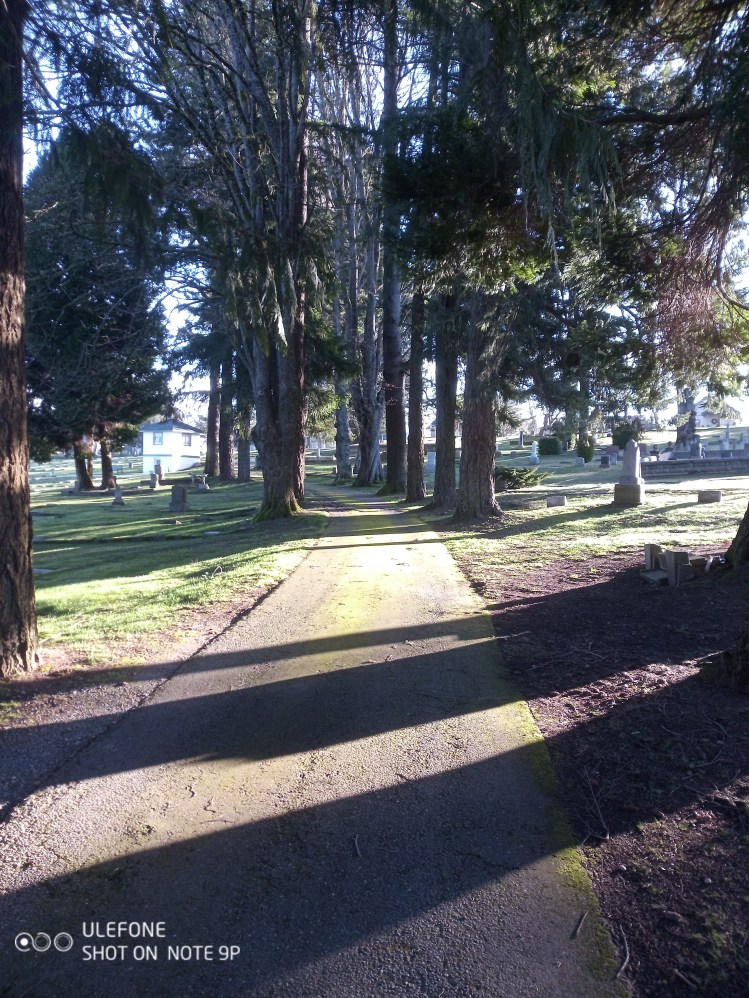
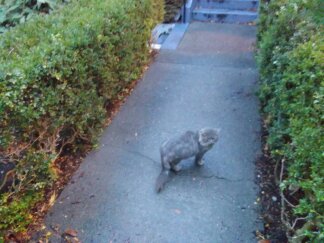
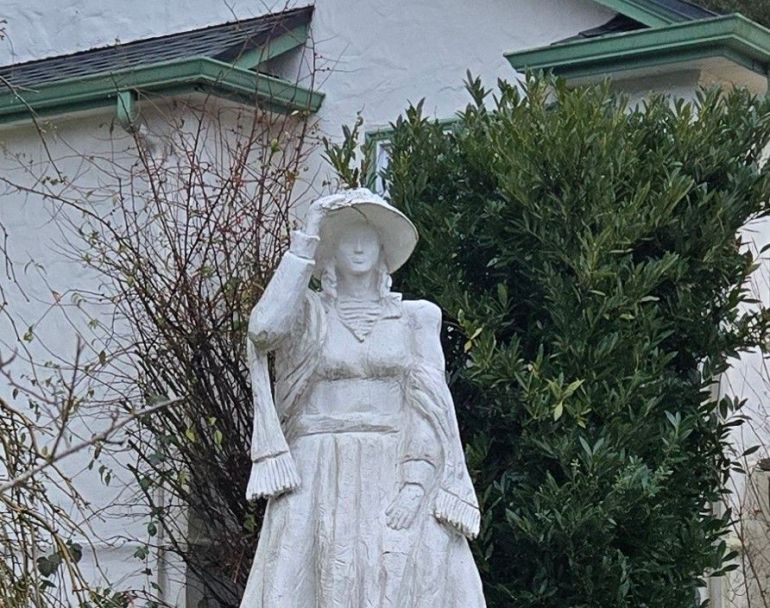
(“The Moors the prairie, two ducks and Boo’s ears”–image provided by the author)

introduction

(Behold the first ever Guest Writer Week in Saragun Springs. This Month we feature our friend Dale Williams Barrigar. Dale is a first rate essayist, writer and poet. This is the first of five works Dale has graciously sent to the Springs for this week.

I’ve met and known many writers and artists and few have displayed the passion Dale has for the arts. “Passion” is an over-used term anymore, inasmuch it tends to not carry the weight it should when attributed to high calibur persons such as Dale. But I think that the readers will agree that it is a perfect word to describe this writer and friend with.

Without further delay, I welcome all to his world…

Leila)

******

“No coward soul is mine.” – Emily Bronte

Henry Miller is a vastly underappreciated writer, so much so that he can stand as a representative, or symbol, of the misunderstood, unappreciated writer in our time. Miller’s best work has zero to do with the pornography he was sometimes paid a pittance to type while struggling to keep his head above water as person and writer in the Paris of the 1930s.

Miller was the creator of a prose style at least as impressive as that of Hemingway or Faulkner. He was a painter and visual artist whose best pieces have a Picasso-like light, humor and beauty to them. He invented a new kind of fiction based directly on the life of the writer. And he was as dedicated to the independent press and its spirit of rebellion and freedom as Charles Bukowski was, except that Miller did it first (and for longer).

His best work is probably the nonfiction collection Stand Still Like the Hummingbird; his book-length study of poet/prophet/rebel Arthur Rimbaud, The Time of the Assassins; and vast stretches of Tropic of Cancer as well as quite a few other essays, some of which are surrealist in nature.

Artists of the word such as William Carlos Williams, H.D., Anais Nin, Bob Dylan, John Lennon, Hunter S. Thompson, Norman Mailer, T.S. Eliot, George Orwell, Jack Kerouac, Charles Bukowski, William S. Burroughs, and Cormac McCarthy, among many others, all cited Miller as an influence on their own work or expressed extremely strong approval for Miller’s work.

Miller’s number one subject was always writers and the writing life, which was why he so often focused on himself. But just as often, he wrote directly about the lives and works of other writers, as in his book on Rimbaud and essays on Walt Whitman, Mark Twain, Henry David Thoreau, D.H. Lawrence, Feodor Dostoevsky, and many others.

In an era when we are being sold the nightmarish LIE that we don’t need human writers any more because computers can do the job just as well, the work of Henry Miller assumes a new importance. Computers and robots can’t suffer or feel pain, they can’t laugh or console or commiserate, and so, no matter how seemingly clever to the ones with blinders on, robots can’t create beauty, not human beauty (because they aren’t human). Anyone who can be consoled by a robot has a mental problem, and almost all great writing is about consolation, one way or another.

Think upon it. What great writing is there that isn’t about consolation one way or another?

Henry Miller said that Jesus was the greatest artist of the word who ever lived, and also the greatest artist, period.

Emily Bronte was the spiritual center of a genius artistic family. She was also the biggest outsider in the family, as both writer and person. She was fierce in everything she did, and was both a believer and an unbeliever at the same time: a believer in faith and the spirit of life itself; and an unbeliever in schools, creeds, dogmas, churches with their rituals and hierarchies.

In the spirit of Henry Miller’s writings on writers and the writing life, but without knowing it, I wrote a poem about the Bronte family. I recognized, only after the fact, that this poem had been influenced very heavily by all the countless hours I spent reading Henry Miller when I was in my teens, twenties, and thirties. (I discovered his work when I was 19 while riding on a train from Chicago to Milwaukee; it felt very much like a life-changing experience.)

Miller sometimes called himself “THE ROCK,” which for him meant The Happy Failure.

It took me less than fifteen minutes to write the first draft of this poem while standing in a field in northern Michigan, and which I later called “Visionary Children.”

It took me five years (very much off and on) to finish this poem. What took so long? Getting the words right. Whether it’s true or not, I have the feeling now that not a single word of this poem of 131 words in 55 lines can or should be changed. As with any poem, every word is meant to be savored – and returned to.

Visionary Children

The Bronte kids

they lived alone

out in the wilds

of England.

With a loving but

too-distant dad.

Mother had passed

on.

And so

they grew

up as haunted

kids.

As kids

who loved to haunt

ghostly places.

Like lonely hilltops,

Single streaming trees

or moss-strewn

boulders,

or rainy graveyards

in storms.

Sometimes looking

for mother.

Later they learned

to write

haunting

poems,

novels,

stories,

and other

amazing things.

But they also worked

as governesses

and tutors.

Branwell too, only son,

lovable laudanum

addict.

Working hours were

6 AM to 11 PM.

Six days a week.

But there was

the gigantic house

they inhabited,

free food,

big, windy

windows.

And the wild

nature

of the roaming,

redeeming

imaginations

humming and singing

the songs that kept

their brains sane…

– dwb

D.W.B. is an ex-professor and current literary scholar from Chicago and environs. At the ripe young age of 46, he was magically transformed into a poet via a mixture of personal circumstances he both would, and would not, wish on anybody. 

You Remembered Everything: Chapter Three

Chapter Three

21 June 1943

The Legend of Emma Withe (Part One)

The morning paper was the usual dog of war. Other than a follow-up article about a peculiar fire at the Dow Hotel, the Charleston Sun was, as always, heavy with the blare and thump of the trumpets and drums of war. And there were the usual op-ed pieces that scolded the young men who were “waiting for an invitation to the party” instead of volunteering to defend the land of the free, home of the brave and so forth. Emma felt that these writings would carry more weight if not written by men who were safely exempt from service on account of age. Moreover, it should have been noted by the writers that most of the men of service age in Charleston were there to build and refit warships at the Puget Sound Naval Shipyard. At seventy-one, Emma long knew that there were few things on earth more tiresome than an old man who has something to say.

With great reluctance, Emma turned to a quieter page in the paper. Running her finger down the updated casualty list (even the smallest communities had such a list), she waited for her heart to snag on a half-forgotten name as it had six times in the past year and a half. Whenever Emma found one of those snags, she’d send her mind back to when the dead soldier was a boy and she was his teacher at Charleston Elementary. She would endeavor to remember a day when the boy had seemed at his happiest, then she’d seal that memory in her heart and never think about the boy again.

There hadn’t been any snag in that week’s list. Emma sighed and rolled a cigarette. She pitied the boys on the list who had not been her pupils, but she had no space in her heart for them. Their deaths (which probably did not occur with the blare and thump of trumpets and drums) were just faceless redundancies to her, as they were to most everyone else. True–each had been a person with his families and friends and likes and dislikes; hopes and dreams. No disputing that. But there were just so damned many of them; lives stamped out short by foreign events already begun while they were still children. And as scarcity drives up value, a glut drops the price. A similar economy guided Emma’s heart; and she could only invest–however briefly–in the boys who had attended her fourth-grade class at Charleston. Even in retirement she could not afford to dwell long on such dark matters.

Emma laid the newspaper aside. She had a second dreary matter to dispense with.

For two weeks, Margaret’s letter had followed Emma around her rooms like a stray dog. For the first week it was stuffed inside a drawer. Unfortunately, Emma never realized just how often she needed to get into that drawer. Emma had hoped that the top cupboard would take the letter in and give it the same air of urgency that Christmas decorations have in the summertime. But the relocation to Emma’s version of Siberia proved ill-timed, for it coincided with the cupboard’s hitherto unknown busy season. And every time Emma found herself teetering on the stool, seeking out some suddenly required item, the letter wafted down onto the counter. Inexorably, Margaret’s letter found its way on to the table, the final stop.

Lewis had wondered why she just didn’t just burn the letter unopened. “That way it won’t be a bother to you.”

But that was Lewis, dear and sweet. Still a lap cat to her, even after all these years.

Always helpful, always caring, always advising. Poor Lewis. Never that helpful, caring, nor wise unto his own affairs. A buffoon, really. Lewis was too sincere to have prospered. But Lewis was the one person Emma wished to outlive; her death would hurt him immeasurably.

“All right Peggy,” Emma laughed, for the third to the last time in her life, “you win.” If it were only Peggy who had written this, she thought, knowing better, but hoping right along. Peggy was the sort of girl who’d rub daisies on her letters to “AMERICA, U.S.A.” How Emma lived for those correspondences from London. Home. Whenever she got a letter from Peggy, Emma would tear it open on the spot and hold it up against her nose; and somehow the seven thousand miles lying between Emma and her little sister were eliminated. Emma had promised to send for Peggy, someday. But promises have a knack of making liars of us all. By the time Emma finally relented and opened Margaret’s letter, forty-three years had passed since they had seen one another. And in that space of time, much had happened to both. Too much, to be honest. Little Peggy was all gone. In her place there was Margaret, which would’ve been fine if Margaret hadn’t grown up to be such a strange, one-note woman, who, like clockwork, sent equally strange, one-note letters every six months.

The letter was, as Emma had feared, all-Margaret. No “Dearest Sissy”; no stale, yet wondrous scent of daisies (which Emma allowed would have been peculiar to find in a letter sent by a fifty-four year old woman); no hint of Peggy. Like the Sun, the letter was thick with war; but not even an event as momentous as the Second World War could take the spotlight off God when Margaret wrote Emma her bi-yearly letters:

“…God found England Decadent. He commanded Satan to marshal the Nazis to smite England for its Wickedness…A Bright Day cometh, Emmalene! Our Homeland has seen the Evil of its ways! Soon She shall rise again! Come Home to God, Emmalene. Take Jesus back into your Heart! and we shall Rejoice Together! Evermore in Heaven!…”

That was the general smell of the thing. Although Emma had no reason to believe that Peggy might crawl out of Margaret like a survivor emerging from the rubble long after her empty casket had been laid into her grave, Emma always had her hopes. And no matter how many times Emma sealed Peggy into the vault, that winsome, beloved phantom always found a way to slip her chains. Emma carried Margaret’s letter to the sink. She held it by a corner, like one might hold a dead rat by its tail. She then put a match to it, and held it until she was certain that the fire wouldn’t go out when she dropped it into the basin.

The flames reminded Emma about the queer fire that had happened three nights earlier at the Dow Hotel. The blaze was confined to a single room and had taken the life of a woman. To Lewis, and half of Charleston (the other half had yet to hear), “confined” was an understatement.

“I got it all out of Joe Parnell,” Lewis, a most credulous sort of man, said, in reference to an ex-dentist who served as Deputy Coroner. “Told me if I breathed a word that he’d deny he ever said it… Told me that it was off the record.”

To which Emma smiled. Telling Lewis anything worthwhile or interesting was the same as publishing it in the Sun (which, to its credit, never ran the unsavory rumor that clung to the story–but did print an awful lot of follow up stories about the fire’s lone victim).

“’Spontaneous combustion,’” Emma said, laughing for the second to the last time in her life; echoing the thing Lewis had told her, and watching Margaret’s letter burn into Peggy’s ashes.

“Sister dear,” she said, “if not Heaven, then where else shall we meet?”

****

Emma had no plans to visit Mary in New Town Cemetery that day, even in retirement she remained a slave to routine. It was Monday, and she had gone the day before; for that is what she did on Sunday. And yet there she was, fully aware of the day, but not questioning why she had automatically walked to New Town instead of the Park Avenue Diner, where she ate lunch six days a week. It was through she had been guided like a sheep and was just as unquestioning as livestock. It was not until after death that she finally approached the why of the thing and, even more importantly, how and who?

Again, there she was standing at the foot of the Withe family plot. Which contained Mary’s grave and that of Emma’s departed and never missed husband, Robert. There lay an already paid for empty space between them.

Mary Elizabeth Withe

1900-1906

Here Lies a Mother’s Heart

Although it had been exposed to thirty seven years of weather, Mary’s headstone was polished and in all ways kept immaculate. Nary a finger of moss had invaded a letter, nor were weeds allowed to take root in the plot. Emma had twiced replaced the stone when the inevitable cracks had formed and figured she should do it again, before it was too late. Robert’s grave was untended and looked like something that had been ignored since it was filled in 1908.

Emma had complete control of her emotions. Hurtful memories could not sneak up on her. She could only experience emotions when she wanted to; only when she let them out of their cells. Mary’s death had changed Emma. It made her cold and ruthless, but only on the inside, for she was able to affect an acceptable, though aloof demeanor; her insensitivity, however, did not extend to children, or to persons such as Lewis who had something good and childlike about him that survived the push to adulthood.

Thus, she allowed herself to feel Mary only on special occasions. Regardless, at all times what passed between Emma and Mary’s memory lay beyond the reach of anyone else’s power of description. She had no feelings about Robert’s grave, nor her part in filling it. He was a closed book never to be reopened.

Upon gazing at Mary’s stone, strange emotions, lacking enough substance to gather into thoughts, began to swirl in Emma’s mind; a blizzard of half thoughts and indescribable feelings. I know thisI know all about this–why can’t I remember? She saw a small party of people moving toward her, and the sun began to move crazily in the sky, east to west with stunning speed, night and day alternating and gaining and gaining until it was all a blur. And numbers entered her thoughts: she first saw the meaningless number 20,058 and watched it reduce by one at a time with the same velocity the whipping sun marked new days.  It stopped at one. Then Emma laughed for the last time in her life. It was all clear to her. I remembered everything. But she didn’t remember everything long. A tremendous flash burst inside her head. The left side of her body died milliseconds before the rest; she fell in that direction, striking her head on Mary’s stone.

And somewhere, where cosmic records are kept, Emma’s one became zero. Yet that too wouldn’t last long.

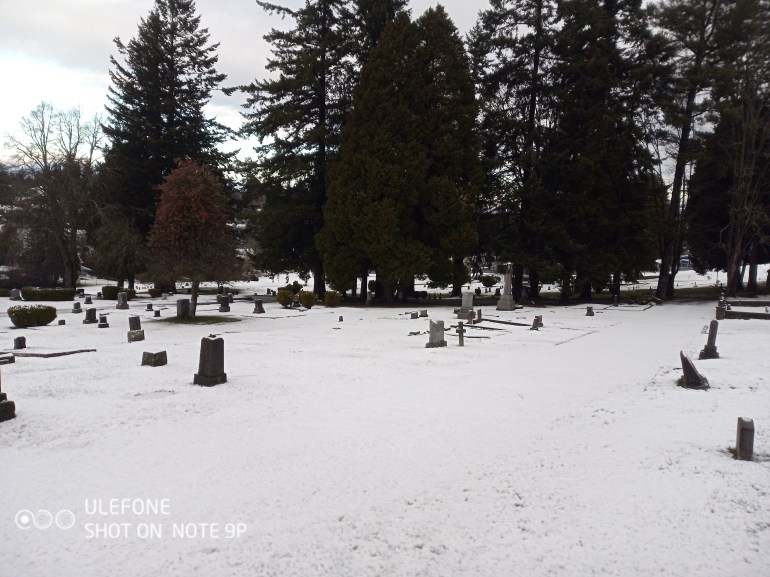
(Author’s note. The image is obviously not June, unless at the poles. But I like it. LA)

End chapter three

Guest Week

At Saragun Springs, we are all for sharing. And as it was stated at the beginning of the month a very special guest and friend will be appearing next week, Monday through Friday.

Dale Barrigar Williams is both an essential part of this site and Literally Stories UK. Dale is a professor, poet, essayist, writer, visual artist and perhaps the most dedicated to the arts person I have ever come across. He knows his stuff.

So please have a look beginning this coming Monday the 26th.

Leila

Oh, and while you are here, please check out the following by another dear friend Diane M. Dickson. I have the series and would not tout it if I thought it wasn’t worth reading.

Saragun Verse: Twitchazel and Poppyseed

1

Twitchazel the haunted Crabapple Tree was a progenitor

Within her stunted branches dwelled the happy ghosts of pollinators

But even at five hundred, Twitchazel was not at all dead

And in one odd spring she sprouted a bud that needed to be fed

2

A hive of ghost Bees hung from her highest limb

But ghost pollen will keep one skeleton slim

Still they helped spread the word that their master was still alive

And in need of the dust that was a must for her bud to survive

3

Poppyseed the Hummingbird heard the call for a donation

He was a giving bird and sensed Twitchazel’s frustration

So he swapped the yellow for some of the bud’s musty nectar

And spit the swill out behind a Rosebush named Hector

4

And so it goes in the enchanted wood

Every now and then comes an act of good

The apple thrived, though it grew weird and hirsute

Safe because no Eve would dare pluck such a hairy fruit

Saragun Verse: Moonfog Madrone (part one)

1

Moonfog Madrone the Enchanted Tree

Wakes every morn for an hour at three

His branches like arms do mischief make

And mischief like weather his neighbors take

2

A poser Spruce rose up from the earth

“Scu-reew you Moonfog and your magic mirth;

You’re twisted like a crone all haggard and bent;

The best of your sap already spent.”

3

Moonfog Madrone woke at three

And listened to what the Spruce told his leaves

“Silly fool spoke when he thought I was asleep;

Forgiveness is divine but not root deep.”

4

A Spruce stump greeted the morning sun

O! Moonfog Madrone what hast thou done?

And the village was thoroughly amazed

By a rain of toothpicks lasting three days.

Saragun Verse: Witch Field

i

There was a lovely field up for sale

Greed over beauty often prevails

Yet came a Witch who cast a spell

And the field vanished behind a veil

ii

It is still where it was of course

But now resides in dimension twenty four

It is now as safe as a field should be

For Pheasants and lives born of green

iii

Money cannot rise above

The standard hubbub of sniff and grub

Tis a wormy, diseased and phallic thing

A reverse parasite to whom the host clings

iv

Therefore the field is no longer for sale

The realtor may as well peddle pain in hell

For the world is never ugly at peace

In silent repose we are free to dream

You Remembered Everything Chapter Two

During Holly and Emma’s strange meeting, Irene Allison was at home sitting on a porch swing and drinking a can of PDQ Pilsner. Irene looked much younger than her twenty years because she was neither quite five feet tall nor a hundred pounds. It was a pretty night, maybe sixty, and not humid as it usually gets during summer in the Pacific Northwest.

Irene’s house stood at the crest of T-Hill, directly across the street from New Town Cemetery. Despite its location, little could be seen of the cemetery from the porch due to the quick drop of the hillside. Holly and Emma were no more than a hundred yards away, but since that was mostly downhill from her, they could have been on Mars for all Irene knew.

Unlike the dilapidated rows of war time duplexes, it was a clean, albeit aging, two-bedroom, single level working class home built by Irene’s paternal great grandparents prior to the Great Depression. It resembled a hundred others in Charleston save for a veranda that ran the length of the front of the house. Irene always thought that there was something southern and To Kill a Mockingbird about the veranda. A large porch swing to the left of the front door was the veranda’s main feature; Irene sitting on it during fair weather was often the swing’s main feature.

Irene had one ear trained on the baby monitor she used to listen in on her grandmother. It was stationed on the wide rail of the veranda. Hard circumstances and bad luck made Irene responsible for the well being of another human being even though she believed that she was not particularly able to manage herself. The weight sat uneasily. Over the past five years her life had been little more than about death; everyone she loved had a lifeline as long as that of a Bronte sister. Even the cat, Sir Jack Falstaff, whom Irene had known since the dawn of her memory, was sixteen.

As a diversion, Irene, again, wondered how a can of five-year-old PDQ Pilsner could still be fresh and fizzy. It was better to think about that than dwell on another lonesome night of her youth taking the big swirl down, then upbraiding herself for her selfishness.

PDQ was the lowest of the three local budget beers (said to be brewed from the “mysterious waters of Saragun Springs”). Each can featured a picture of “Pie-Eyed Peety the PDQ Pilsner Pigeon.” Peety was a toon in a porkpie hat, who smoked a cigar and held (an apparently bottomless) can of PDQ in one wing; he had been touting the swill since the 40’s. No matter how he was positioned, Peety’s head was always surrounded by six (Irene had counted) popping bubbles that inferred (along with his “pied” eyes) a state of extreme intoxication. There were uptight snowflakes who protested an insolently drunk pigeon being PDQ’s mascot. They said it was designed to attract kids to drinking, cigarettes, premarital sex, critical thinking and all the other stuff people would rather do than take direction from uptight snowflakes. Irene believed that it was a hypocritical society that begat useless snowflakes who made more noise about cartoon beer mascots than they did about people dying in doorways that caused people of all ages to flee reality. Regardless, none of that solved the prolonged freshness mystery.

These philosophical thoughts were interrupted at 12:17:09 A.M., the precise time of Holly More’s death at the foot of the cemetery’s great maple tree. The baby monitor squawked and Irene heard a female voice say “You remembered everything, darling,” at a volume well beyond the capacity of the cheap speaker, which, like Mr. More, died that instant. This was accompanied by a bright flash of light inside the cemetery. As Irene dashed from the porch through the house, she expected to hear thunder, but it never came. She turned the light on in Gram’s room and saw nothing out of order; Gram was sound asleep courtesy of one of the many pills she was prescribed for a litany of woes, including insomnia. All Irene got for the effort was a peeved yawn from Falstaff, who was curled at the foot of the bed.

Irene turned the light off and quietly closed the door. She never felt so alone.

But that feeling vanished when she heard Lauren Thommisina Lemolo’s ancient Dodge Colt pull into the Allison’s driveway. Only official people called her Lauren, to everyone else she was “Tommy.” Although she had been distracted that night, Irene usually knew that Tommy was on her way long before she arrived. The Colt made several strange noises (audible at about a half mile) that distinguished it from all other contraptions in Irene’s knowledge. Mainly, it was a combination of the loosely geared manual transmission and heavy exhaust pushed through the ragged tailpipe that caused a singular, hiccupping whurrwhirring sound. The Colt constantly threatened suicide but never got around to it. Tommy figured that it was waiting for the worst possible moment to do so.

“Oh goody, you broke out the urine,” Tommy said, bounding onto the porch, met by Irene. She was twenty-one, a year older and a foot taller than Irene. Always athletic, Tommy moved like a dancer even though she had a prosthetic attached at the knee of her left leg.

“You see a flash of lightning about a minute ago?” Irene asked as she handed Tommy a can from a bucket near the swing. “Looked like lightning hit the graveyard, but no thunder.”

“Lightning–on a night like this? Must be the pee talking.” Tommy then held her can of PDQ high as though it were a chalice. “I’m telling you there’s a Nobel prize kind of scientific mystery here to be solved–how can a beer brewed bad not go flat. Tellin’ you there’s money in this.”

For a fleeting second something hitched in Irene’s mind. She saw Fallstaff lying on the porch swing–confused, she began to think “didn’t I just see…” but it vanished before completion. As far as Irene was now concerned he had always been on the swing.

Tommy sat on the swing and nuzzled the old boy. “How ya been fatso?” She touched his nose with her beer and won an expression that suggested he needed to sneeze but had forgotten how. Not all that long ago Tommy and Irene would watch him hunt and eat moths on the porch. He hadn’t done much of that for the last two years or so. The shit you miss.

Irene remembered the noise the baby monitor made. She picked it up and shook it. Something rattled. “Fried,” she said. “When the lightning–or whatever happened, I heard a voice over this thing–real loud–now it’s cooked.”

Tommy took it from her, also rattled it, fiddled with the volume controls. “Wow, it is spent–you can smell the wires. What did the voice say?”

Irene sat beside her, she was about to answer but the words had also vanished. “Dunno–can’t remember. I took off thinking it was Gram, but she’s out completely. Must be a blown transformer–good thing it wasn’t ours.”

Although both Irene and Tommy were too smart to buy the lame transformer theory, neither of them felt compelled to explore why there would be a transformer inside a cemetery; nor why the lights were still on; nor how a transformer blew out a wireless monitor and nothing else. It simply felt better to let it go. Natural. Besides, there were two other monitors that came with the set; by the time Irene returned from fetching one from the kitchen, the topic was completely forgotten.

“How was she tonight?” Tommy asked, already knowing, lighting two cigarettes. She gave one to Irene.

“Same–how was work?”

“No breaking news there,” Tommy said. “Made a whole nine bucks in tips–one fucker left a quarter–but we stayed open all the way to 11:45–numb-nuts about peed himself worrying about closing fifteen minutes early on a Monday night.” Tommy waitressed at WJ’s Bar and Grill; on busy weekends she easily cleared fifty, sixty bucks a night in tips, even after cutting in the bussers. “Numb-nuts” was WJ’s assistant manager–Irene thought his real name might be Andrew–something with an A. She had never met numb-nuts, and still six months shy of twenty-one, she had only seen WJ’s from the outside. But she had formed a mental picture of the place, the workers and even numb-nuts based on Tommy’s colorful descriptions.

Tommy told Irene she could get her a job at WJ’s, but that was before the State “hired” Irene as Gram’s live-in caregiver. It’s a hell of a world; children and grandchildren having to take pay for something they had been and felt obliged to do for free. Yet even though the house was paid for, expenses were fairly low and Gram had both social security and her pension, there ‘s always the property taxes and increasing prices, more money is always needed. Still, it made Irene feel like dirt; like a sponge; like one of those awful people you hear about on the news whose neglect causes bedsores and whose greed raids the accounts. This made Irene so over the top scrupulous that it might have looked suspicious if anyone cared. It also seemed to her that the State needed a patsy just in case something went wrong.

Grandpa Henry and Gram were children of the Great Depression. Even though they were literally kids back then, they had been taught to buy all you can of something when it goes on sale. That sort of thinking led to things like thirty-one flats of PDQ in the garage, upon Grandpa Henry’s death five years earlier. One summer, when it got hot enough in the garage for some of the cans to explode, Grandpa Henry installed air conditioning (since discontinued), thus negating the money saved from buying in bulk. Two years of subtle mourning passed before Irene began to drink it. At a rate of six to ten a week (even with Tommy’s help) there were still nine cases in the garage.

Of course it hadn’t always been that way. There had been boisterous times, good times, alive times. But those things vaporized when Grandpa Henry collapsed in the kitchen from a heart attack when Irene was just shy of fifteen; the following month, Tommy’s mother died unexpectedly in her sleep. The “unexpectedly” part went away when an emptied bottle of hydrocodone and a note were located on her nightstand.

Irene was with her grandfather when he died, unable to do anything more than to cry and beg him to hold on till help arrived. Gram had been at work and Irene was in her room studying when she heard a crash and a thud in the kitchen. She found him lying on the kitchen floor in a puddle of Four Freedoms vodka. Although her grandfather was no stranger to losing consciousness, he rarely passed out that early in the day.

“I’m calling 911, please please please don’t die.”

But he did die. He died without regaining consciousness, in her arms, shortly before the ambulance arrived. In the intervening years, Irene had found the good in her grandfather’s sudden death. He had been spared the torture inflicted on Gram.

Death was taking the long way to Gram. Until she turned sixty-five she’d been strong and healthy–in defiance of her own tableau of evil habits. But Elsbeth Allison suffered her first stroke not five months after Grandpa Henry died. In itself, the stroke was no big deal. But it served as an opening bell for Gram’s season in hell.

Within three years, there was very little that was not wrong with Gram. She had diabetes, gout, emphysema, kidney disease, an enlarged heart, plus a liver “Harder than a twelve year-old whore’s upbringing,” so Gram had said, because she used to say stuff like that, prior to her brain no longer getting enough oxygen to sustain a personality. She had still managed to remain a funny human being until spring. Then she went away. The situation almost caused Irene to pray to the God she did not believe in to end Gram’s suffering until she realized that if God did exist, then he was the fucker responsible for pain.

Naturally, Gram had begun to live in the past because her present was shit and the future didn’t have plans for her other than the continuation of shit until she died. And despite the B.S. Irene had heard about miracles, she knew Gram wouldn’t be getting better because there was no better for her to get back to. Her equipment was shot beyond repair.

Gram, Irene’s Gram, never bitched about the situation. But the thing in the back bedroom complained full time about everything. Whiney, petulant, dumb as a post and certainly not the sort of person Gram would have liked, the doppelganger of Elsbeth Allison lived on for no apparent good reason. Still, every now and then old Gram would resurface, but the occasions were becoming steadily infrequent. Thus Irene was in the not so unique position of mourning the passing of someone while that person (in the technical sense) still lived.

All such facts went into causing a hell of a surprise when Gram came out of the house and asked Tommy for a cigarette.

End Chapter TWO

The Rubaiyat of Saragun Springs: Part Three by Dame Daisy Kloverleaf, Translated by Leila Allison

(Mr. Andy Hisster essays the role of “Tawny Joad”)

i

Peggy the Flying Horse took to the clouds

And sought one where kin are not allowed

She loved her Willie and muley mule twins

But her delicate moods were trending down

ii

Married to a donkey mother of two

She wanted quiet like a grift wants fools

To sell swamp clouds to, like that Tawny Joad

The Guru Tabby and all around tool

Iii

Why a Tabby was way up in the air

Is a question the Hoof finds fairly fair

Why the hell not she retortly retorts

You find tools in high places mon frere

iv

Peggy zipped past Tabby Joad and said hi

Odd seeing a nine-liver in the sky

Others would fall with such sins on their souls

Yet Cats excel at phony alibis

The Rubaiyat of Saragun Springs: Part Two by Dame Daisy Kloverleaf, Translated by Leila Allison

i

Tawny Joad “advises” the billigits

A guru Tabby Cat endowed with wit

Tawny is also a sociopath

As are all Cats when you get down to it

ii

Money is the cause of all discontent

Tawny says condenming every cent

Only guru Tabbys should havely have it

It guarantees it will be wisely spent

iii

On meowchat websites and cracknip dens

Asked the Moving Hoof’s moving penly pen

The path to enlightenment takes many turns

Replied the Tabby son of spendy zen

iv

A fool and what I like are soon parted

I do not deny nor feel down hearted

For those I’ve relieved of treasurely treasure

Life is about Cats and the outsmarted

(To any offended Cats: Getly get over it.)

The Rubaiyat of Saragun Springs: Part One by Dame Daisy Kloverleaf translated by Leila Allison

(Author’s note: The idea of a set schedule is a flexible one in Saragun Springs.  Thus later often comes early and early comes later. And although Dame Daisy announcingly announced a fall debut for her rubaiyat,  she has provided a three day sample, which we will run this week–Leila)

i

Into the realm was born Buckfast the Geep

His finer half Goatly the rest mere Sheep*

Snipes and Jackalopes some say are real

As Bucky Geep who drinks like an Eel

ii

Bucky Geep is a football hooligan

His gets in rows just like a fooligan

Son of a Billy and a Ewely Ewe

Saturdays spent hooves deep in beer and spew

iii

The billigits tried to tame the rascal

Bucky you will not live in a castle

Or win a Geeply Geepette, a saint

If you continue to don war paint

iv

Buckfast listened to the billies’ patter

But to our boy it seemed too dear a matter

To give over the scrum and live beside

A ruminant Nanny with herded eyes

(*It is important to remember that Daisy is a Goat. All Sheep complaints should be addressed to Miss Kloverleaf–LA)