The Long Black Veil; or, The Hereafter in the Now By Dale Williams Barrigar
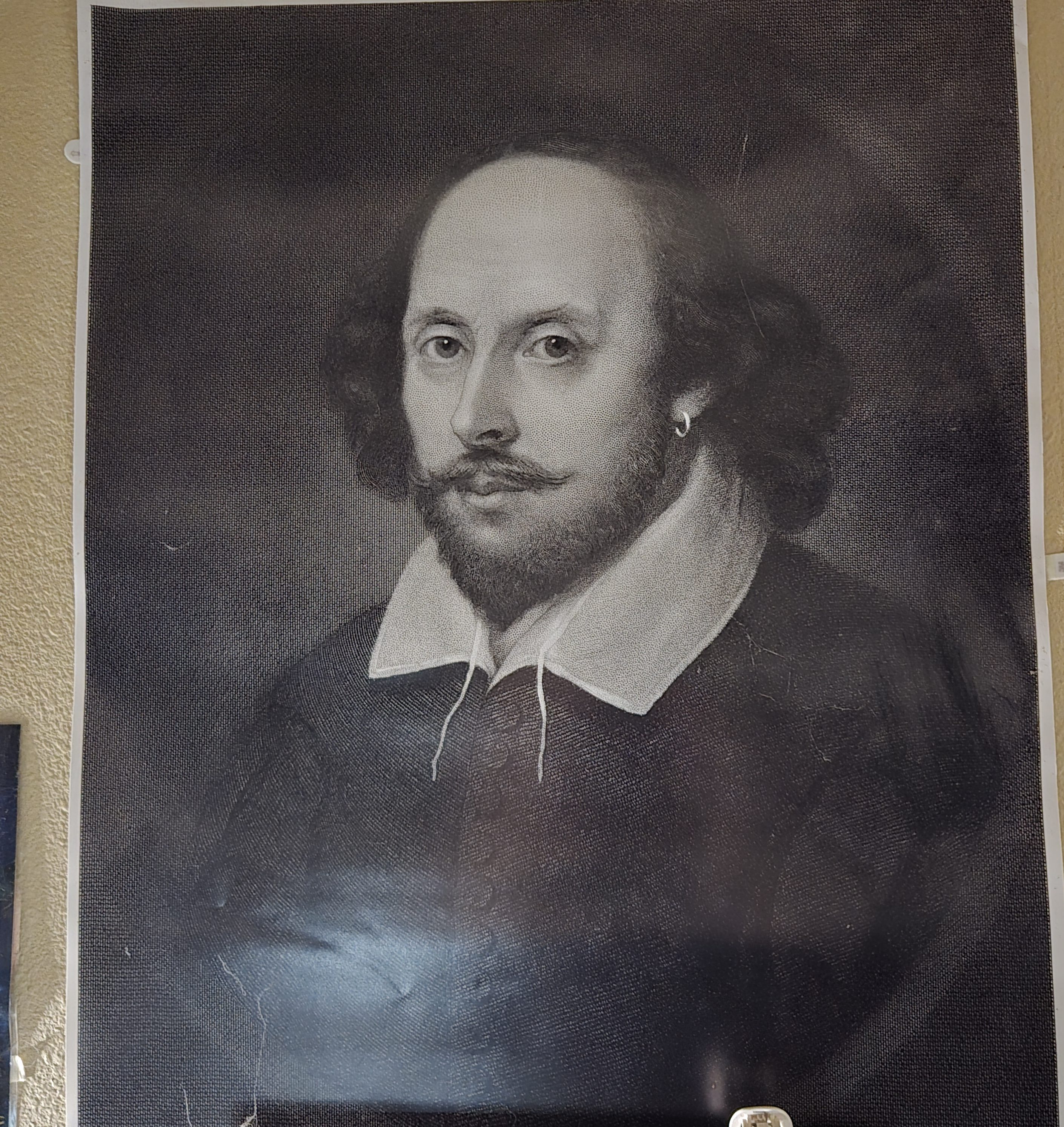
(images by Dale, the header is a poster in Leila’s office)

Every single word of this little monologue with a huge topic, a topic as big as it could possibly be, far, far bigger than anything current science or technology (AI included) can come up with, is deliberately chosen, and purposely placed exactly in the exact right place (whether awkward or not) where it magically happens to go (showing the unity of all things). When I say bigger than anything, AI included, I mean it:
I would rather rest in air (be cremated and flung to the winds over waters) but if I had to rest in earth I could do it here, as long as it’s like a Nathaniel Hawthorne story with all his beautiful women become one favored woman in the end, the platonic ideal of the human in snatches; or the song “Long Black Veil,” penned by Danny Dill and Marijohn Wilkin, as sung by Lefty Frizzell, in Nashville, in 1959.

Dale Williams Barrigar
And for a look at a similar idea…
To Be To Not to Be by Leila Allison
To Be or Not to Be is the most famous literary line in the English language. A six word statement; thirteen letters; four words (two repeats); three of the words contain two letters, one has three.
A lot can be accomplished by expressing the same thought in slightly different ways. I recall a country song from decades back that asked (I paraphrase): Should I kill myself or go bowling? That is the same question, but it contains an added touch of absurdity, which, I think, might have made the Bard smile.
The evil act called War can be viewed as a variation of the question. If you are the Leader of a nation who has declared war, you have made that choice for many people, friends and enemies. (That part doesn’t matter: the voices of the dead all scream the same.) It used to be that Leaders had the decency to “stand the hazard of the die” like Richard III, but you do not see a lot of that anymore. Anyway, in the end, War is simply organized murder and lacks much in the way of irony.
When Shakespeare wrote Hamlet there was something between 500 to 600 million people in the world. The population is close to nine billion today. And let’s not forget the 25 to 30 billion whose lives began, lived and ended since 1600. That’s a lot of To Be or Not to Be. Nature, as in the provider of our lives and maximum lifespans, of course, looks at it as To Be to Not to Be. Still thirteen letters, same word sizes, but the change of one letter that reduces the separate word count to three has much meaning, yet removes any question and, like War, it lacks much in irony. And in the case of one William Shakespeare, Nature’s version reads 23.04.64 to 23.04.16. (Even though it has a touch of symmetry, here, minus the centuries, we see where the simplicity of numbers fails to completely convey the depth of Will’s “Ago.”)
In the 335 words following the opening quotation, little, if any, irony, has been added to the concept. But today I think I’d like to thank the Ghost of William Shakespeare for giving me a lot to consider.
Leila
 Saragun Springs
A wonderful, thought provoking post. A little sad, a little spooky and very very readable and there’s dogs. What’s not to like? Thank you for this on a dreich weekend morning. dd
LikeLiked by 1 person
Diane
Bandit, Boo, and The Colonel say hi!!!
Dale
LikeLike
I learnt some interesting stuff from this double-post. I learnt that a guy called Lefty Frizzell had the original hit version of The Band’s ‘Long Black Veil.’ And I learnt that Shakespeare died on his birthday.
Listened to Lefty Frizzell’s version on Youtube (an arresting voice, but I still prefer The Band’s version). And pondered the irony of dying on your birthday. If conscious in one’s last moments, I reckon it could give one a sense of completion. But don’t try this at home.
As Diane posted, a thought-provoking read – mick
LikeLiked by 1 person
Hi Mick
Regarding your comment from yesterday, I can’t believe you saw SYD live! That is epic, iconic, awesome, and wonderful. And wild.
Johnny Cash also does a fabulous version of “Long Black Veil.” For me, it’s Lefty’s version that rises above all, but it’s hard to make an argument that his version is actually “better” than The Band’s, probably one of my top favorite bands of all time, right next to The Who after The Stones and The Beatles. Lefty’s version was also selected because of the year, 1959, and similar Leila reasons.
Dale
LikeLiked by 1 person
Hello Diane
Pictures of Dogs are good luck charms on the crappier morns–I hope Dale’s gang works for you!
Leila
LikeLike
Hi Mick
I guess no one can say for certain which days Will was born and died in–but since his baptism and burial dates are so close to his ins and outs, it just has to be.
One of my mom’s boyfriends (she actually had a couple she did not marry) used to run a pavilion in Tacoma Washington in the 1950’s and 60’s and he knew people like Loretta Lynn, Hank Snow, Buck Owens and Lefty Drizzell. He had nothing but good things to say about them (he liked Loretta a lot)–Lefty too, even though he was not left handed and was pretty much drunk all the time.
I believe Merle Haggard also died on his birthday!
Leila
LikeLiked by 1 person
Dale
The expression on Boo’s face conveys a degree of non-plussedness. Your words soar truthfully and again I thank you for filling another week with quality stuff.
Leila
LikeLike
Leila
The Pack sez thanks!
You personally released the floodgates on a river of prose that will keep me and the Drifter going for a very long time!!!!!!!!!
It reaches the level of “saved my life.”
Dale
LikeLike
Hi Editors
Cremation seems the better route. I like “the winds over water.” Ethan Brand,” is a good one by N.H.
Such a parade of souls all with some kind of hope, I think. One leader causes much sin. Not a lot of leading from the front anymore. Hitler, as bad as he was, had the courage to fight in the war–not this guy.
CJA
LikeLiked by 1 person
CJA
My only consolation in this war (and I take partial responsibility for it as an American) is that THIS IS THE THING THAT WILL BRING THE FAT MAN DOWN. He’s in way, way, way over his head now. And I think even he knows it sitting around alone in the Big House in the middle of the night in his underwear eating Filet of Fish sandwiches from Mickey D’s. The Emperor has no clothes indeed!
The Iranians weren’t bothering anyone (except their own people) and all we’ve done is make a bunch of fresh enemies for the rest of all of our lives.
At least the Chicago Pope is honestly preaching The Gospel and he ain’t scared at all!
Dale
LikeLike
DWB
Hilarious about the fat man eating Filet of Fish sandwiches! Great image of a lunatic King. That caught me off guard and I really did laugh out loud!
I’m not certain the Iranians are at all innocent, but it was not a well conceived war (a high crime–a dictator move), and yes this will renew their hate. They seem to have a lot of it for us, anyway, but yes it’s all time now.
CJA
LikeLike
CJA
Glad you like/d my satirical jab at the lonely Fat Man in the Big House. It’s ironic that he spends almost all night long every night alone posting things on the internet, most of them written by none other than himself. I can add that the man is, truly, a horrible writer. Not just a constant pathological liar. Apparently he doesn’t get enough time in the spotlight during the day and has to stay up trying to grab more attention for himself all night long. What a madman! And, it’s no wonder he’s always falling asleep in meetings. I heard a report that he asked to drop a nuke on Iran and they told him no. I guess this is what happens when they make a Reality TV Star into the most “powerful” man in the world.
See my other comment to you and Leila about the evil Iranians when ya get a chance!
Dale
LikeLike
Is “To be or not to be” the most famous line in the English language, or is it, “Ahh, but the strawberries! That’s where I had them.” {Capt. Queeg (Bogart) “The Caine Mutiny”}. No matter…
I think that Leila and Dale should collaborate more often. I found your items very well done. [Not stick-a-fork-in-it well-done, but rather, accomplished]. All kidding aside thank you for enriching my Saturday morning, Dale and Leila.
LikeLiked by 1 person
Hi Bill “The check is in the mail” used to be a familiar one until direct banking came along. the Bastards!
Anyway, thank you for your comments! Also, feel free to place your publication’s email in the comments–we do not view such as competition–we are all in it together!
Leila
LikeLiked by 1 person
Tope
Thanks for your valuable contributions as Commentator Extraordinaire!
Dale
LikeLike
Long Black Veil always makes me sad, but in kind of a good way. The most famous six words in the English language? I can buy into that. The Bard probably has several in the top ten phrases. Hamnet, by the way, is an excellent movie.
LikeLike
Hi David
I haven’t seen Hamnet, but ALL IS TRUE (2018) is also a pretty good Shakes’ movie as well. It should be sixty minutes instead of 101 minutes, but if you close your eyes and ears during the bloated and too-ridiculous parts, it gives a pretty good sense of who The Bard MIGHT very well have been.
Dale
LikeLiked by 1 person
I’ll check out All is True. The last 15 minutes of Hamnet are brilliant and heart-wrenching.
LikeLike
I hate war but I find it difficult to have sympathy for a government that has a morality police and freely conducts violence on gays, women and girls.
Our president is a fool but it is impossible for me to feel pity for the evil powers of Iran who murder and discriminate and stone heretics in the name of Allah.
Leila
LikeLike
Hi Leila
Totally agree with you on this. Muhammad himself actually taught peace (for the most part) and a sort of equality for women, too (at least as it went 1,400 years ago), and so these regimes that attack and beat and imprison and even execute their citizens for not “following the rules” are as evil as evil gets, AND they are hypocrites who are not following their prophet, just using his name to gain worldly power (much like so many so-called “Christians” in the USA).
Dale
LikeLike
Hi Leila and CJA
Totally agree with you that the powers that be in Iran are no good at all, and very bad news, very much so. Probably not much worse than North Korea, Russia, and lots of other places, but certainly not good!
Sadly, I don’t think we (the USA) have done a damn thing to help any of Iran’s oppressed peoples. It seems like the regime there has gotten stronger and more popular around the world (and within Iran’s borders) since the war began, while we (the USA) are depleting our ammo and getting more unpopular by the day for nothing at all. But the way they often abuse girls, women and minorities there is indeed sickening. The so-called “morality police” is straight out of George Orwell as well as being very close to what all major societies were like a thousand years ago or even less.
Dale
LikeLike