“Such if there be, who loves so long, so well; / Let him our
sad, our tender story tell; / The well-sung woes will soothe
my pensive ghost.” – Alexander Pope, Eloisa to Abelard
Hello! I wish to go on record here and now making a prediction that will take twenty years, minimum, in order to prove. By that time, I will be a mere 79 years of age, if I’m still here in the flesh, an issue about which I do not wish to make any predictions. (I have days when I really feel like I’ll make it, and then some; and I have days when I’m so tired, weary and worn out I almost wonder if I’ll wake up tomorrow (so far, I always do)).
I write this on my 59th birthday, in the “Year of our Lord” 2026, and the prediction is this: the recently released, 2026 film WUTHERING HEIGHTS, written, co-produced and directed by Emerald Fennell, and starring Margot Robbie as Cathy and Jacob Elrodi as Heathcliff, will one day be seen as one of the greatest English-language movies ever made in the twenty-first century. Yes, it’s that good, so good that the reality of its greatness may take a while to emerge for the culture at large (at least twenty years?).
I saw the movie Eternal Sunshine of the Spotless Mind when it came out in 2004, and I believed it to be one of the best American movies ever made in recent American film history, and I never said anything about it except out loud in person to friends, family and students (and I was still drinking back in those days so I probably said it very loudly at more than a few points). Last month, twenty-two years later, I wrote about why I believe Mulholland Drive by David Lynch deserves to be seen as the greatest American movie of this century so far; and also why Eternal Sunshine of the Spotless Mind deserves, according to me and many others like me, the second place position. The only English-language films I know of from the twenty-first century which might be greater even than these are Alexander, by Oliver Stone, and The Lord of the Rings, by Peter Jackson. Stay tuned for future Drifter essay-columns exploring the greatnesses of these films. Alexander is, without doubt, Oliver Stone’s greatest movie, by far. It is also his least-well-known movie.
Lest these issues about competition in drama seem pointless or silly to any of us, we do well to remember that Western drama itself began as a competition alongside the original Olympic games. The original term for this kind of competition, frequently used and explained by American literary critic Harold Bloom, is agonistic. There’s something about drama in particular, and therefore movies as well, which lends itself to this kind of competition. Such is true of all art, especially poetry, but the competition for the top spot in drama has a wider appeal to the culture at large because drama is a communal art. It’s also essential to remember that Oedipus Rex, now the most famous play, by far, from that time period when modern drama was born, won second place at the time. It’s even more crucial to realize that there may well be great films out there right now that almost none of us have heard of so far. Such is absolutely the case with poetry, fiction, and photography.
We all know which twentieth century American movie is almost universally considered to be the greatest – Citizen Kane, by Orson Welles. And yet, an argument could easily be made that Welles himself outdid himself with two other films that are much less well-known than Citizen Kane. Chimes at Midnight and The Trial, by Welles, are, I do believe, even greater films than Kane. I have little doubt who the greatest American film director of all time is. During his lifetime, most of the Hollywood establishment, and therefore America itself, considered Welles to be a kind of magnificent failure, but a failure nevertheless.
His greatest fame came, perhaps, when he appeared as himself – a truly gigantic, fantastically huge, unbelievably handsome, completely distinguished, and totally sloshed, wasted, and drunk-ass man with a beard and a massive cigar who was appearing in wine commercials that aired on television during daytime talk shows and at other times. Yes, to this day, Welles’ most famous line perhaps, is not “Rosebud,” from Citizen Kane, but, “We shall sell no wine before its time,” a line he delivered for the masses (and for money) while so bored and in his cups he almost fell off his chair while doing it. (Welles’ most famous action is probably the time he made millions believe we were in the middle of the War of the Worlds through his radio drama – until the commercials came on and ruined the dream.)
Almost all the mainstream film critics so far have trashed the new Wuthering Heights film (that’s what lowly underground streetwise film critics like me are for – to counteract “them”). The critics who haven’t trashed it have not come anywhere near close to understanding its greatness nor even why it’s any good. A few of these mainstream critics seem to think it’s pretty good, but their given reasons for why that is so are utterly laughable. The critics who have trashed this film have done so in such a hollow and cynical (and heartless) way that they almost deserve a thrashing for it (if I weren’t such a pacifist; but one of my favorite stories is the tale of David and Goliath).
Next, I shall provide eight brief and cogent reasons why these cynical, hollow, heartless, well-paid fools from the so-called “Dream Coasts” of America are wrong about this film (just like people of their kind were wrong about Orson while he lived). I shall soundly refute them on this, and in so doing I shall also refute all hollow and cynical, heartless modern people in general (so many of whom are doing things today like “running the world” – or so they think).
…
I know nothing about Emerald Fennell except that she’s British, she’s forty years of age, and she recently wrote, co-produced and directed one of the top-five greatest known English-language fiction films of the twenty-first century so far.
The main reason for this is the SHAKESPEAREAN nature of this film, which is indisputable if your eyes, ears, and heart are open. The essential point can be obvious to you even if you know almost nothing about Shakespeare; read on for an equation which is the E=mc2 for Shakespeare.
“SHAKESPEAREAN” = GREAT CHARACTERS.
Every single character in this film, including the minor ones, is individual and individualized, multi-faceted and complex, deep and multi-dimensional, “well-rounded,” and they all CHANGE, dramatically and intensely, during the course of this story. Margot Robbie, as Cathy, and Jacob Elrodi, as Heathcliff, both change so much, and so intensely, and so realistically, above all, that it will make you choke upon your popcorn. Both of these actors (or actress and actor) just catapulted themselves into the status of truly great artists. See it on the big screen if you can and if you can’t, then use the biggest screen you have, lights off, phone away, and turned up LOUD – the music is an inseparable part of the story and utterly brilliant and heartrending.
In a world of simplistic, one-sided characters in both fiction, and reality (“How many more times are you going to say it again, Mr. President?”), these characters are different. You could watch this film a dozen or more times, and if you’re awake enough, your sense of character nuance, depth, fluidity and complexity will continue to augment. Again, this is not just true of the major characters in this film, but of all the minor characters as well.
As in Shakespeare, these characters can say one little thing, in one idiosyncratic way, that sheds so much light on who they are in a deep way that we really almost feel like we’ve met these people before somewhere out here in the real world, even though they live/d in another time and place (and in another dimension – the fictional one).
These characters seem like people from real life AND intensifications of real life, simultaneously, which leads me into my second reason for why this is such a great film.
Fennell the filmmaker has managed to capture the dreamlike, surrealistic, distorted nature of all life in this movie. One purpose for art is to remind us how uncanny it all is, and this film creates an effect of dreamlike reality that has rarely been captured or presented in any film at the deepest levels. Ingmar Bergman’s The Seventh Seal is another film which does this.
Thirdly, Fennell the filmmaker manages to capture the core and essence, the spirit and true, deep nature, of her source material, Emily Bronte’s only novel, Wuthering Heights, which was itself a critical and commercial failure when it was first released almost two hundred years ago. (Emily died a year after the novel was published, and she was forced to pay part of the publication costs herself and never received recompense.)
This movie is very unlike the book in a million ways. Much is left out, more is changed, and even more is invented and added in, but all of it is done for the sole purpose of capturing the essence of one of the greatest English-language novels of all time. This film is an object lesson in how to make a great piece of art while using another great piece of art as source material. This lesson is far more important for our day-and-age than it might seem at first blush. We come at the end of a very long (thousands of years long) tradition, and to pretend that isn’t so is blind madness…and does not make for news that stays news.
But Fennell is not merely recreating a previous text. She is recreating that text from a modern perspective which includes new discoveries and new ways of thinking about being human. Fennell infuses her movie with a near-Freudian sexuality that was both implicit in (prophetically), and absent from (autobiographically), Emily Bronte’s novel. This new twist gives this film an edginess which could only have happened after James Joyce’s novel Ulysses, especially Bloom blooming on the beach and Molly Bloom’s soliloquy, as well as after D.H. Lawrence’s self-published masterpiece Lady Chatterley’s Lover.
This film captures the tragic reality that, in the deepest human relationships, love and hate are not often – but usually – the same.
It shows the kind of meaningful life you can have (not an easy life, but a meaningful one) when you believe you’re living for something pure that’s greater than yourself.
And, finally, it hauntingly, and permanently, captures the mysterious paradox, and the mysterious pain, of living life with, near, for, and right beside, those who have disappeared (through death or other absence), which is the heart of the human condition.
And when these characters are finished with us, when we wake up to realize we are no longer watching the movie, as we walk outside into the rain, the characters and their situations will stay with us, and we will miss them like we do real people – in a way that enhances life.
The Drifter
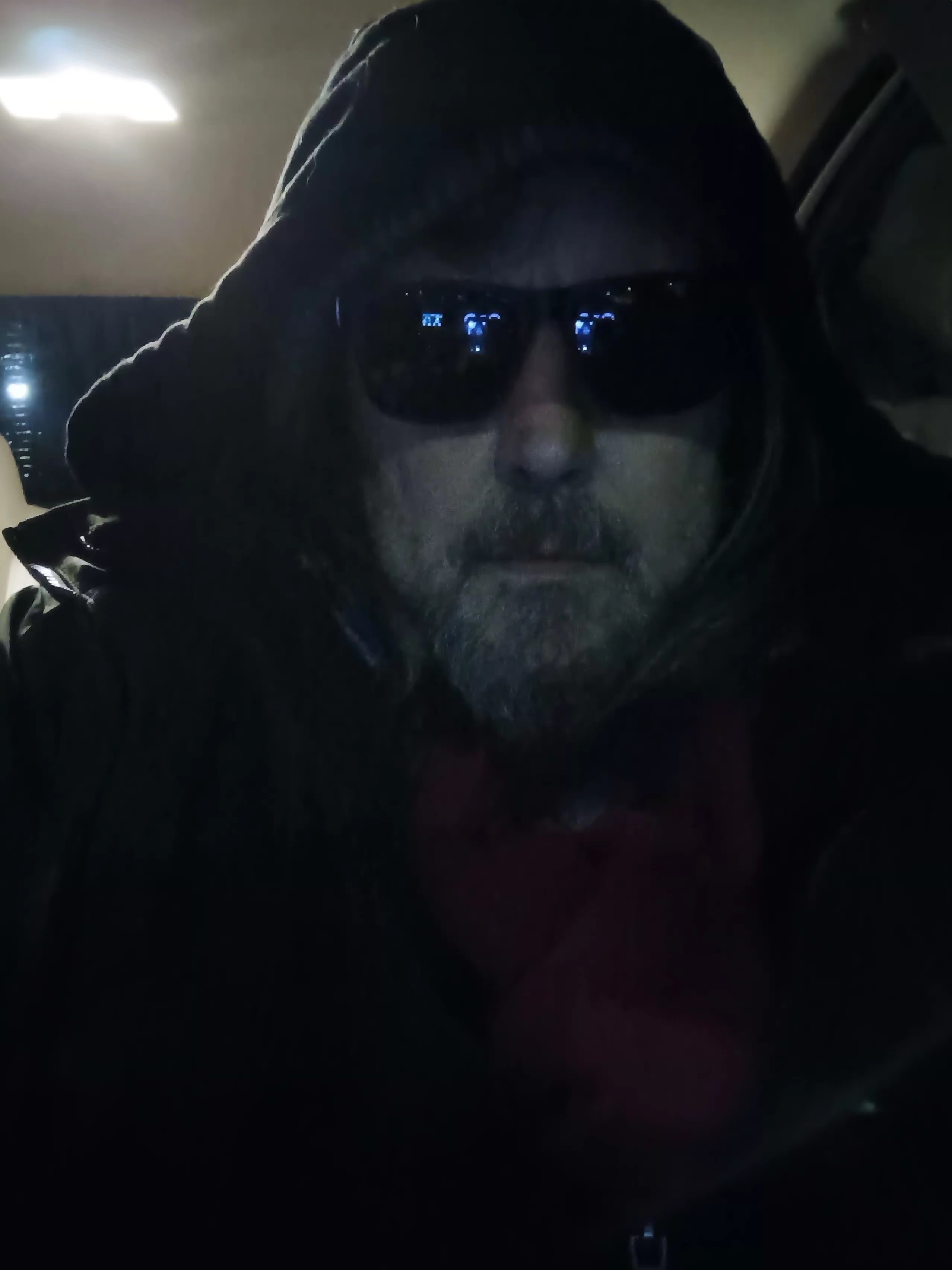
(All images provided by The Drifter)


Hi Drifter!
Happy 59th!
I’m a big fan of Margot Robbie. Her portrayal of Tonya Harding was magnificent. I’d love to see her in Wuthering Heights.
I just watched the “The Lord of The Rings,” trilogy again. I couldn’t stop watching it.
I think Orson Welles himself would find the irony and humor of perhaps his most famous line coming from a wine commercial. It all came back when I read it here. What a terrific description of him! Haven’t thought about it in years! I would like to see those other movies too. I liked “The Long Hot Summer,” with the arsonist Paul Newman, Woodward, and Welles.
Your taste in movies and directors is topnotch. I always thought “Being John Malkovich” was pretty good and strange.
I think you are right about overlooked movies that stay in the mind as true art. “Being Human,” with Robin Williams, in a dramatic role, was one that stayed with me. Maybe it’s the time of 1994, when it came out, is what I miss, but it still did something to me.
I like your George Orwellian like pictures. The strange AI caption hit home too. The benevolent but soulless companion is the new therapeutic method based on a software delusion. Like how mentally ill people think they are interacting with sitcom and soap opera actors.
“as we walk outside into the rain, the characters and their situations will stay with us” This line itself will stay with me. It’s haunting and poetic.
I totally enjoyed your essay! Engaging topics to contemplate!
Christopher
LikeLike
Christopher
I really liked what you said the other day about writing comments being a valuable form of LEARNING. It is not idle blather, instead it is deep discussion and a form of conversation. It is a new, a brand-new, form of conversation and deep discussion which is being explored by the most cutting-edge artists, writers, and “creatives” out there (us, and whoever else wishes to claim the title). The reason for this is that we are all “living our lives” online now (to a large extent) and this form of living and being NEEDS TO BE HUMANIZED, with imagination. There are forums where thousands upon thousands of comments appear daily. It looks impressive until you glance at the contents. Any place, and that means ANY PLACE, where thousands, or millions, of people are commenting like that, THEY ARE ALL SAYING THE SAME THING. THE EXACT SAME THING, sometimes with silly variations.
There is much more originality, and much more in-depth discussion, and much more thought and lasting material, and much more humanity and imagination, in the handful of commenters on Saragun Springs than there is on other sites where there are MILLIONS of commenters ALL SAYING THE EXACT SAME THING (with tiny variations).
Your commentary is always fascinating and fun to read, and challenging and thought-provoking to respond to. Definitely a learning process, a brand-new form of artistic conversation!
Dale (aka the drifter)
LikeLiked by 1 person
Hey Drifter
I know what you mean about comments being the same, and for political reasons or other impure reasons on FB and Twitter. A lot of click bait topics, too.
Our comments are a higher art form usually discussing the arts. I listen and value what you have to say. The other sites are time wasters.
Thanks!
CJA
LikeLiked by 1 person
Hello Drifter
I wish I knew where to send this so the director could see it–No doubt she would be pleased.
First, Robbie is a great actress. She is so damn good looking that you really want to hate her, but, no, as Tonya and brilliantly as Sharon Tate she is fantastic–as good as Streep (whose number of Oscar nominations is getting to be a joke–she could appear in Predator vs Porkies and get a nomination).
I spent my late teenage years living in the country far from neighbors and I think I can understand the Bronte POV (although they did not have electricity or TV or radio). There’s something about seclusion that forces you to live in your imagination and welcome in the natural world (we had Deer and the very occasional Black Bear–about Boo’s size). That, in part, is why the Bronte family was so maturely creative at such young ages (I think Agnes Grey by Anne would make a good film).
Orson was young, and he was so advanced for the opposite reasons–he became a citizen of the world very early, and I think (in the complimentary sense) he was a first rate con man–which you had to be in Hollywood.
I look forward to seeing the new version. The original with Olivier and Oberon is brilliant yet completely ruined by the insipid happy ending that the Hays code required. The same people who required the girl to live at the close of Our Town.
Brilliant essay!
Leila
LikeLike
Leila
Emerald is probably too busy stewing about all the bad reviews her movie received from the “big name” critics; but I have a feeling she will see this piece eventually. Whether that will be next week or a decade from now remains to be seen. I don’t claim to have created a masterpiece in this essay, but I do claim to have created a thoughtful, in-depth, personal response to the movie. Thoughtful, in-depth, personal writing is harder and more difficult to read (almost every single time) than the usual twaddle that passes for film criticism in the good ol’ USA. (NPR is abominable about this: producing twaddle, I mean.) And in academic film criticism they use incomprehensible jargon that says nothing. If this essay gets “discovered” in ten years from now by Emerald, the glory will redound even more unto yourself and me than it would next week. Literature, with a capital L, is a long game (and I know you know that) and that is one reason why Mr. Van Gogh is so popular with almost every single genuine artist, “creative,” and writer out there.
That’s wild that you had that experience of living on the “moors” in younger years! You are absolutely right about the Brontes – and Orson the con man. Like Leonard Cohen said, “I do what I have to do to get by.” I also want to throw a shout out there for Branwell Bronte, the only brother. He made the most famous painting of his three sisters, was also a genius like them, and was also an alcoholic and opium addict, the combo of which placed him in an early grave.
I first saw Margot Robbie as Harley Quinn in one of those big blockbuster super hero things. I couldn’t believe, and I still can’t believe, how good-lookin’ she is. In Wuthering Heights, she sometimes looks horrible, ill, freaked out, with a bad complexion and haunted eyes, etc. etc. Yet still gorgeous…
Thank you!
Dale
LikeLiked by 1 person
Drifter
As you know a great many what are now considered classics (or even cult films) were bashed by the popular critics because (I think) they were “bad for business.” Sergio Leone created art at first tagged with “spaghetti” and lots of so called experts overlooked the utter geniius of The Chimes at Midnight and A Touch of Evil (for a time no one wanted to be in the Orson Welles’ fan club).
I really hate what the goody-goody code that Hollywood sucked up to did to the movies. Then v the Blacklist, then the triumph of art only to see it hidden behind a loud wall of comic book films
I do hope she sees your essay. I would love to find a way to make it happen.
Leila
LikeLike
Very persuasive. I’d read much negative about the new version but will now approach it with an open mind. (Creepy good photo!)
LikeLiked by 1 person
Thanks David!
Yes, a lot of reviewers complained about the sex (which I thought was realistic) and many others complained about many other silly things. All wrong, wrong, wrong! (And very well-paid in being very wrong.) Some even complained about the music, and it’s the best music in any movie in a long, long time. Shout out to Anthony Willis and Charli XCX.
I usually don’t have high hopes for Hollywood movies any more. This one was a shocking good surprise.
Thanks again!
Dale
LikeLiked by 2 people
Don’t remember the Olivier version, prolly wait for TV to see the new version. I did see a mention of the moors, which reminded me of 1988 when we traded houses and stayed for a few months on the moors. Lots of rain and pubs, so split decision. Sharon started to sink into the ground in the general area of The Hound Of The Baskervilles.
LikeLiked by 1 person
SEE IT ON THE BIG SCREEN IF YOU CAN, MIRTHFUL! If not, hide your phone and use the biggest screen you have!
I would not want to sink into mud with the hellhound on my trail!
As Robert Johnson said, “It keep me with ramblin’ mind, rider / Every old place I go…”
D
LikeLiked by 1 person