“The great enemy of clear language is insincerity.” – George Orwell
“All bad poetry is sincere.” – Oscar Wilde
“During times of universal deceit, telling the truth is a revolutionary act.”
– George Orwell

What is art? asked Leo Tolstoy of himself and his readers in the late nineteenth century.
He had many answers – because he was possibly the most comprehensive writer since Shakespeare (or one of them) and there are many answers.
One of the answers which Vladimir Nabokov, author of Lolita, provided was this: “divine play.”
Vlad said art equals “divine play” because nowhere else and at no other time does the human subject get closer to the divine than when creating art.
And the second part of the equation is equally crucial.
If it were real, we wouldn’t be able to digest it and allow our imaginations to work upon it in the same way (thereby helping us create our own identities among many other practical tasks, like helping us decide what to do when we realize that “the mass of men lead lives of quiet desperation” and soon it might be you, too).
If we were really watching Hamlet slaughter everybody and be slaughtered in turn, our reactions would be quite a bit different at almost every level to say the least, starting with physiology.
The Danish philosopher Soren Kierkegaard thought art was “indirect communication.”
If you just stand there spewing out (or hurling out) all your preconceived and received (and stale) opinions, this is propaganda and obnoxious behavior, but it isn’t art.
Jesus said, “It isn’t what goes into your mouth but what comes out of it that makes you sinful,” and how I wish this quotation were read aloud from endless pulpits every single Sunday in the USA, from Maine to Timbuktu.
It seems pretty clear that there are three categories of art.
The gigantic bottom.
The vast middle.
And the higher realm/s (and levels of the high/er, from the bottom of the higher to its very top).
The bottom revels in sensationalism, titillation, distraction, the same old same-old yet again (and again). (“Entertainment” and art are not the same thing.)
The higher kind lasts much longer, sometimes many, many centuries, because it goes deeper as well as higher – the mind, the heart, the body, the soul of the human are there in higher kinds of art in ways that they simply are not in the gigantic bottom or even the vast middle.
The gigantic bottom is more popular in the moment, just as the higher kinds of art are far, far more lasting and durable, and therefore much more popular, in the long term.
Shakespeare said, “So long lives this and this gives life to thee,” while one of Shakespeare’s American heirs said, “There are many here among us who feel that life is but a joke.” (During Shakespeare’s day, the population of London, largest city in the world, was around 200,000. The population of Des Moines, Iowa, USA, today, in 2026, is around 200,000. The world has changed.)
Bob Marley, the Jamaican Shakespeare, said, “How long shall they kill our prophets, while we stand aside and look? / Some say it’s just a part of it – we’ve got to fulfill the Book.”
I was almost shocked one time when I heard a Catholic priest say quite clearly to a church full of restless elementary school children, “The story of Jonah and the whale isn’t a real story. No one has ever been swallowed whole by a whale then vomited out upon the shore fully intact three days later. It isn’t a real story. But the truth it tells is real.” (He then went on to use the word symbolic and explain what it meant.)
The anonymous Jewish author who wrote the thousand-word story of Jonah and the Whale also didn’t think the story was “real.” He, or she, too, knew that the story’s truths were internal, representative, real only in the sense that they tell it like it is, so to speak (the outward facts are not what the issue is when it comes to art).
…
The book of Genesis in the Bible contains not one, but two, creation stories, almost completely contradictory in many of their aspects, just as the gospels of Matthew and Luke contain two different accounts of where Jesus came from.
Neither of these facts either prove nor disprove anything having to do with the existence or non-existence of a Supreme Being, a Creator God, an Unseen Power that lives well beyond, or inside, us, or both.
I have heard many people who claim to be agnostics give fevered atheistic (and veiled capitalistic, materialistic) explanations for why they are agnostic, apparently not understanding the difference between agnosticism and atheism, especially in American academia, where such arguments are the dominant mode of thought and have become utterly stale and unoriginal. People parrot these kinds of things because they think not doing so will make them look bad.
Some of us turn to God when we can no longer stand the pain (or the meaninglessness).
Art is the thing that helps put us in deeper touch with the mystery or reminds us when we forget.
The mystical branches of Islam believe people need to be reminded, not converted.
ART, not organized religion, is my religion because the first religion was art and art was the first religion.
People and people-like creatures were being nailed to crosses (symbolically) for millions of years before Jesus came along.
No wonder they called him “The Word.”
GRIPPING END NOTE: Art is also amazing because of its dual nature: alone while not alone or with others while solitary amounts to the best of both worlds combined and makes Art relevant forever!
ANOTHER GRIPPING END NOTE from The Drifter on Genre, AI, and a few other issues: The Drifter considers this piece of writing to be a comic philosophical essay on the meaning of, or reason/s for, human art. It contains elements of the personal essay through the lens of Gonzo journalism.
Since it contains personal HUMAN thoughts, feelings, actions, and reactions, AI could neither write nor read and understand this.
The comic philosophical essay is nothing new under the sun, also practiced by Kierkegaard, Nietzsche, Plato, Henry David Thoreau, and Philip K. Dick among many others.
The Drifter is thoroughly versed in the lives and writings of all five philosophers named. So much so that they appear as living beings in his dreams. This little treatise could not have been penned (and most of the rough draft was penned before it was typed, a practice I recommend to all beginning or aspiring writers, since if you aren’t willing to make the effort it won’t be worth anything) without them. In other words, it builds upon them.
I have made crucial, life-altering decisions based on the info I thought these five philosophers were giving me. Art is about tutelary spirits, connections through time, both past and future; AND your own original voice interacting with all of the above in the present.
As Thomas Paine wrote pamphlets and William Blake was an engraver and Bukowski and the Samizdat writers in Russia made mimeos, so do we all use the tools we find at hand. Nothing less; and nothing more.
It isn’t supposed to be easy.
FINAL THOUGHT (For Now): Instead of mechanical plot devices, stock characters, and unchallenging themes, Shakespeare and Cervantes, those mysterious twins, gave the world natural plots, realistic characters, and challenging themes.
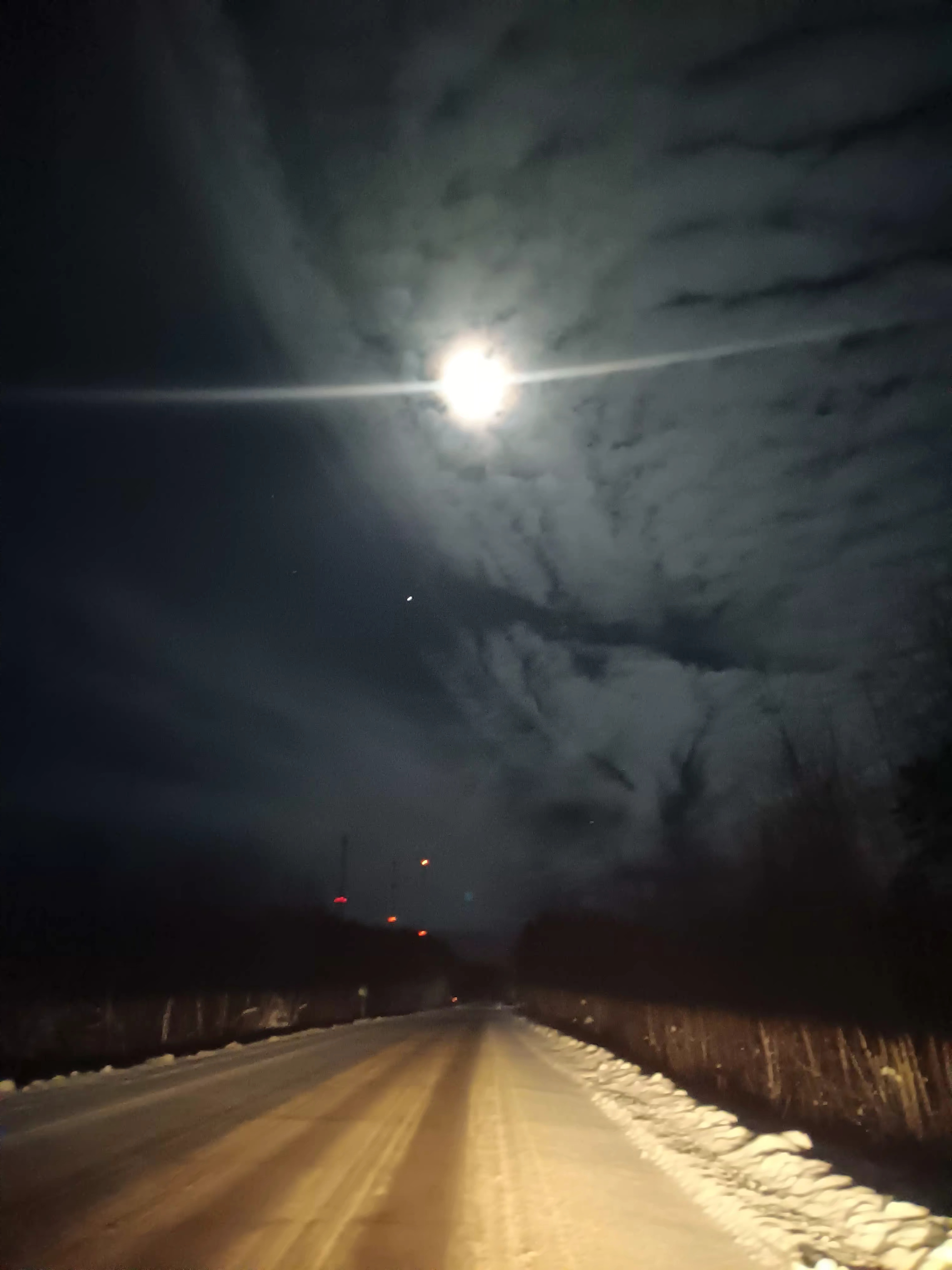
(all images by The Drifter)
The Drifter
 Saragun Springs
Hello Drifter
I have heard many smart atheists aver their belief in nothing with the same fervor as the fundamentalists who say every word in the Bible is the literal truth (those who believe Jonah got swallowed). I find that arrogant because the atheists are the ones who state extraordinary claims require extraordinary evidence, but at the same time they do not feel any need to support “nada” with absolute proof. Carl Sagan did his best to prove it but knew he could not be better than 99.999 to infinity certain. He understood that no amount of proof can defeat the smallest amount of pure faith. Harlan Ellison (a good writer, but quite often a little prick who needed a good slapping) didn’t bother. He just said nothing is it, that no God is so, because he thought so. That pissed me off because it assumes that he thought he knew everything. He had lots of good points, but he was also a nasty little bully at times, and his bragging about having sex with over a thousand women sounds awfully bad and boyish at any time (not just now).
There are three things a person may love and not understand: God, Art and getting fucked up to the point of euphoria (forgive the crudity, but no other word digs it out better). Those who want the first turn to the second and those who are too confused by the first two turn to the third (in all forms booze, weed, smack, whatever).
Those are two fantastic images. Nature (I think an imagined quality caused by it being too large to hold in one’s mind) is the summation of God and Art (she also makes the best opium), but she never brags about it.
Great stuff (Orwell was as smart as they come–Wilde was great, but sometimes I can smell the show-off in him–as in some of the wit he shared on the witness stand when keeping his mouth shut would have been smarter).
Leila
LikeLike
Hi Leila!
Happy February, month of Saint Valentine and my humble birthday (17) as well as the time setting for one of my favorite films, Eternal Sunshine of the Spotless Mind.
The Drifter thanks you too for many great points made about this column and for giving your time to it, and for reading – and understanding.
Throughout the Drifter’s creator’s existence, many people have mocked him for his sometimes constant cries (pathetic) about being misunderstood, or just plain not understood at all (not quite the same thing).
And yet, he’s quite certain that they did not understand, even though their sarcastic rejoinders and mocking bon mots made fun of the fact that they could not care less anyway whether they understood or not.
You have a way of understanding what he’s (I’m) trying to get at in his (my) writing which he’s never met with before.
To say that that fact is inspiring is the understatement of all understatements.
Thanks again!
Dale
LikeLike
Good Mornin’ Drifter
First off great pictures! Your expression of the wise sage is perfect, and those night pictures are outstanding! The first one with the four long shadows is almost prophetic. Like there’s something coming.
What Nabokov said about creating art, bringing you closer to God is so true. I feel better when I’m writing, drawing, or doing photography. The hell of the mind can be lifted. My favorite story by him is “Signs and Symbols.”
What you said about art as a real substance–how it can change you. This is so true.
Great way to classify art into three categories, and how some things aren’t art at all–even though they can use the same mediums. Like writing… We see a lot of words on the Internet and everywhere else. Not as much art.
I wonder if a conversation can reach the heights of art? I’ve had memorable (good) conversations that don’t go away. They also seem to have a permanence, unlike the bullshit or bitch sessions that are a part of life. But these too can rise to this level of art if documented by an artist.
I have, like others, found contradictions in the Bible. I think it makes the Bible even more mysterious–with more possibilities for different interpretations. Like the Marines say, “We want Thinking Marines.”
A powerful statement about Jesus being The Word. The Bible must be the highest art I’ve ever read. The words are so concrete and inescapable that it might make you want to run with Cain for awhile toward oblivion, but God’s right there at the finish line.
Great philosophical views on art and religion! The clarity of your writing is high level tackling such complex issues. Making them understandable and applicable. I also like what you said about the Agnostic vs the Atheist, and the direction of the Universities. The ring of the hollow bells.
“the centre cannot hold” W.B.Y.
Christopher
LikeLike
Ananias
As I’ve said before, your commentaries upon the Drifter’s columns are just as good as the columns themselves (no need for misplaced modesty when you’re on a roll). Thanks for interpreting the Drifter’s pictures in such a sympathetic way. What a perfect example of what art is, which is a dialogue. It can’t be art without someone to see and say that it is so. One doesn’t need a large audience, and often someone like Emily Dickinson or Van Gogh had an audience of one, but the “audience” needs to be there for it to be art. Thanks for your dedication in engaging with The Drifter’s attempts.
What a brilliant point about the best of conversation being art too! James Boswell’s book THE LIFE OF SAMUEL JOHNSON is a thousand pages mostly of recreated conversations Johnson had with Boswell himself, and others. And it’s considered the greatest biography in English of all time, bar none.
Also the book CONVERSATIONS WITH ECKERMAN, translated from the German. Here we find the greatest German of all time, Goethe, creator of the modern Faust myth, locked in conversation with his pal Eckerman, who wrote down a lot of the stuff by hand just like Boswell did for and with Johnson.
Some of Oscar Wilde’s most famous works are just the things he said to various people, glittering jewels of conversation fragments. When he arrived in America for the first time and they asked him, he said, “I have nothing to declare except my genius.” Hahaha!!!…
So YES, conversation, great conversation, can be and is an art! A wonderful perception of yours. It doesn’t have to be written down, either.
Jesus said, “Where two or three are gathered together in my name, there am I in the middle of them,” which meant WITH them.
I think he meant that good conversation is indeed an art, one of the highest arts. NOT small talk, NOT bullshit, NOT the usual run-of-the-mill blah blah blah, but oral story-telling, questioning, answering, exploring life through a dialogue of words with no other purpose than connection and exploration, etc.
Thanks again!
Dale
LikeLike
Dale,
Bravo for tackling The Big Subjects head on. In the hope of lending more power to your arm, I thought I’d share an experience I had nearly seventy years ago…
Someone told me that ‘Religious Education’ is not part any compulsory State school curriculum in America, whereas it is compulsory in State schools in the UK. Aged 11, in my first year at secondary school, I was taught Religious Education by the school headmaster. I imagine that none of my class knew what a metaphor was before the start of one of his lessons. But he explained simply and by examples what a metaphor was, and what the difference was between a literal truth and metaphorical truth. A distinction that I’ve been clear about ever since.
bw mick
LikeLiked by 2 people
Dear Mick
Thanks for sharing this anecdote which does indeed strengthen my arm and argument.
Still working on a piece about S.T.C.
I’ve been rereading things by him and about him. Sometimes can’t decide who I like more, Samuel Taylor Coleridge or the Swedenborgian mystic William Blake. Despite all their differences they have much in common, too…Coleridge was much more well-known in their own time but sometimes it seems like Blake is more contemporary to our own time, similar to Byron and Shelley that way…
Dale
LikeLiked by 1 person