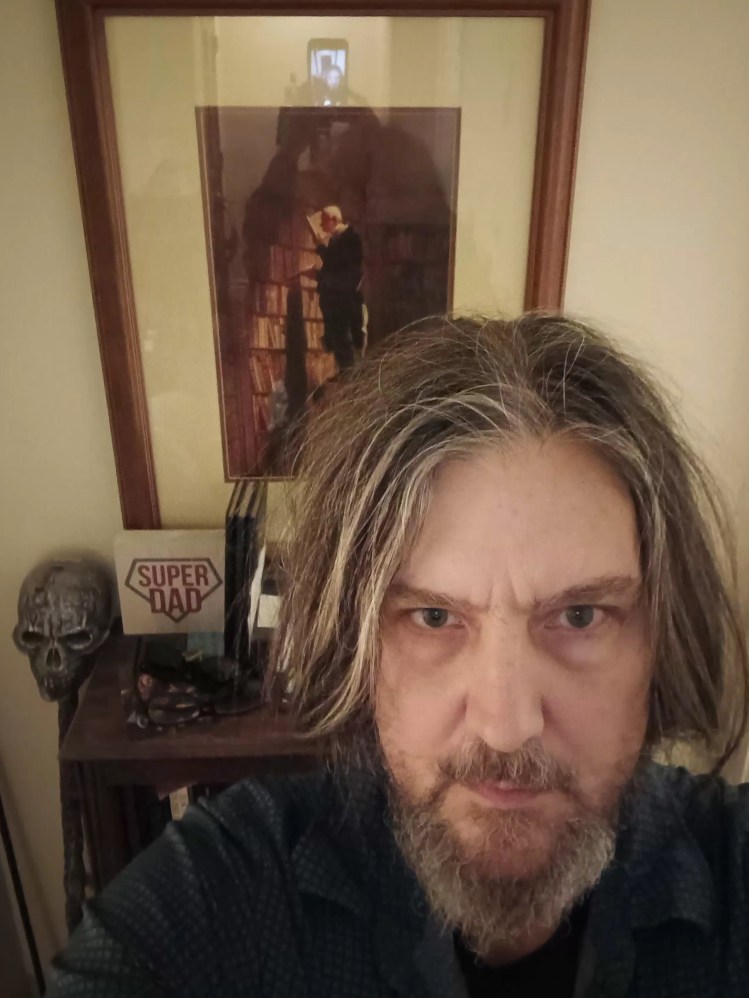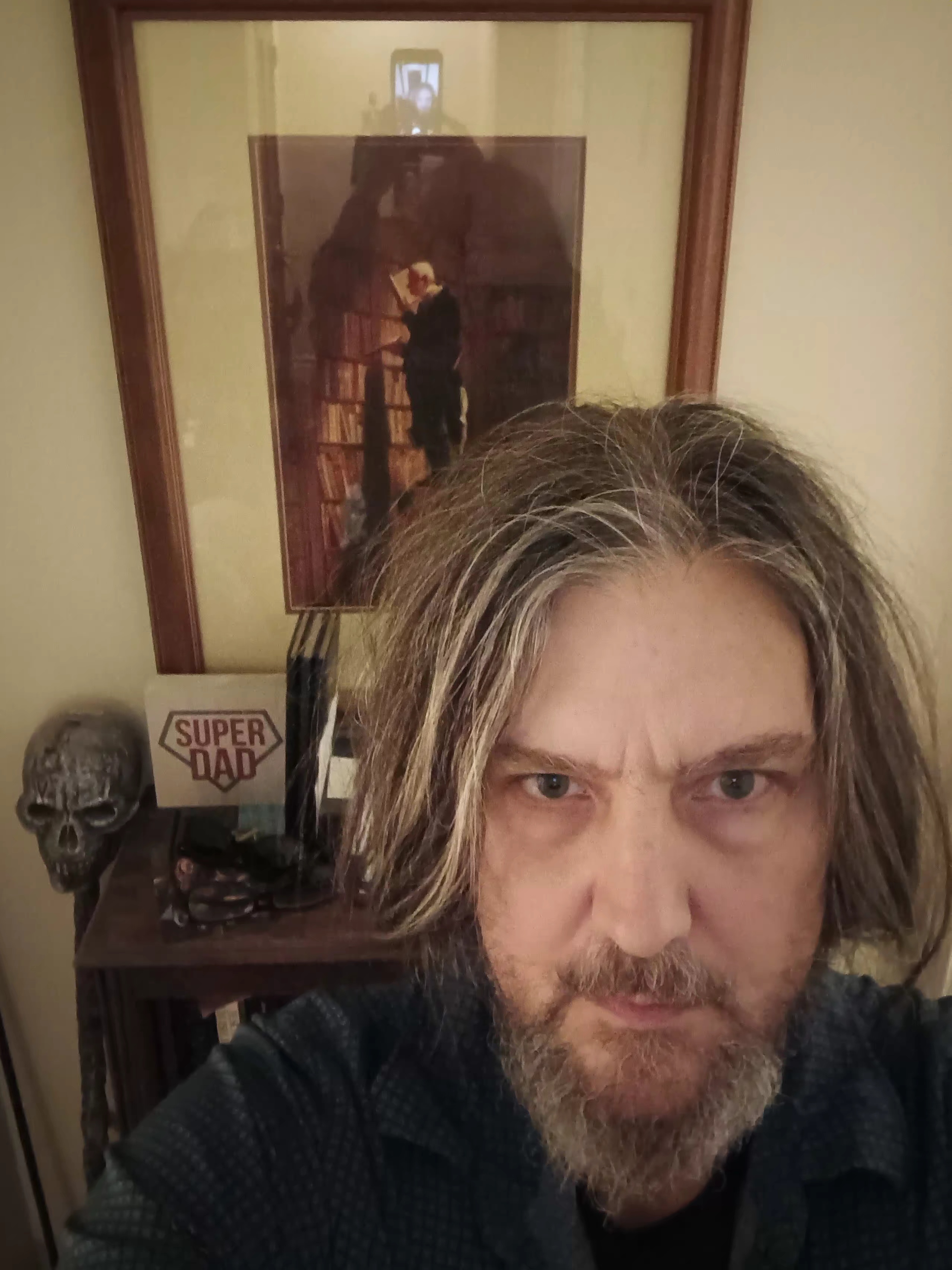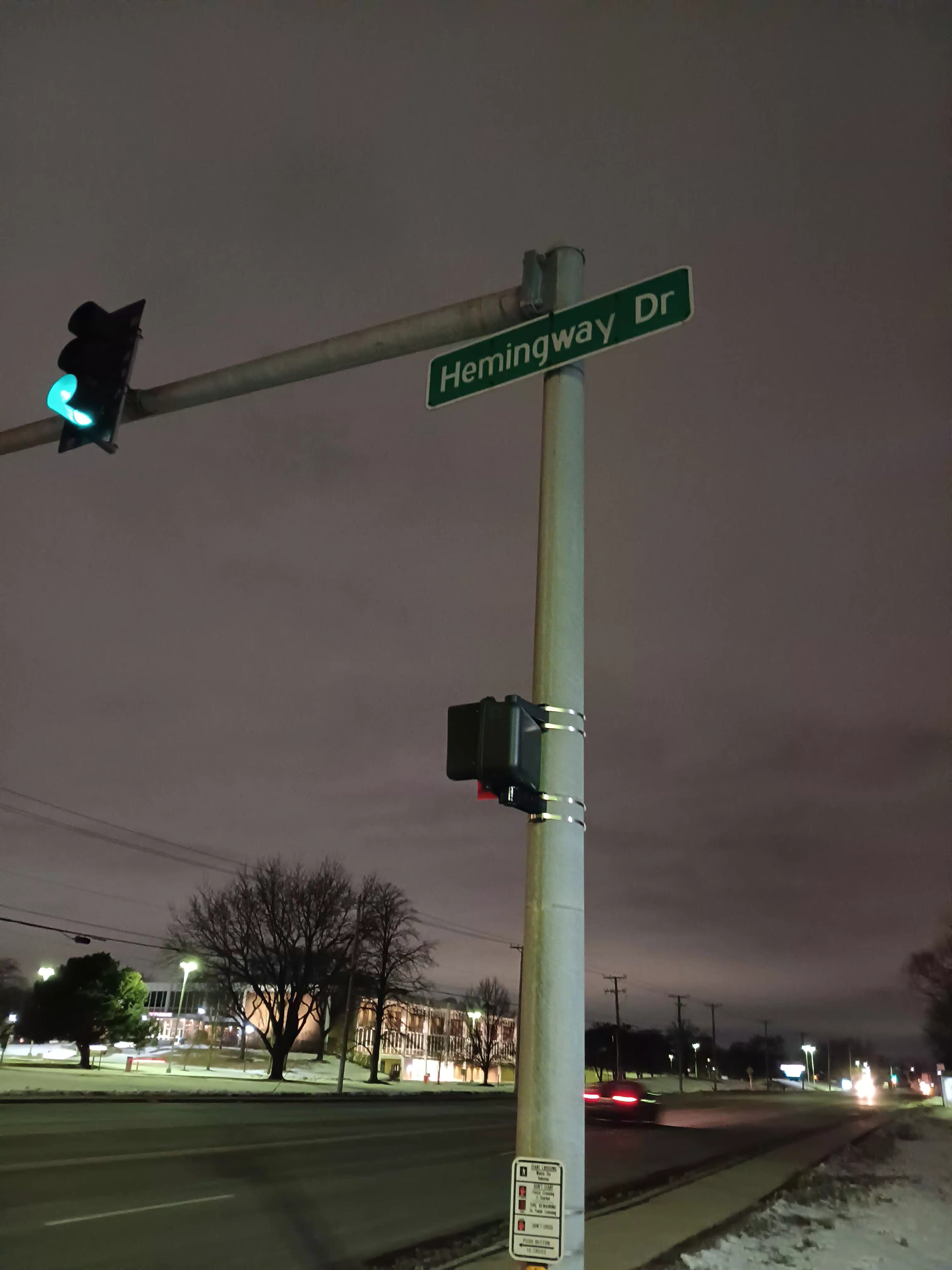

Complainings by the Drifter

“If we live good lives, the times are also good. As we are, such are the times.”

– Saint Augustine

“The Drifter” wishes to complain this week.

Out of respect for potential hyper-sensitive readers, he shall limit himself to three brief topics.

His two kids and his three dogs can fairly attest to the fact that complaining is one of his fave hobbies.

Some folks call it “letting off steam,” so a gasket doesn’t blow.

They say Henry Miller was still complaining about his mother on his death bed, when he was 89, even though she had died 75 years earlier, when he was 14.

And yet, Miller always called himself the happiest man alive.

The other day on NPR I heard some clown (a well-known, well-paid clown) say that the “tech bros” are the “cool kids on the block,” and I almost chucked up the lunch I hadn’t eaten.

(The seven cups of coffee that were in my stomach began to swirl around. It’s usually half-caf since I had a stroke a year and seven months ago. FYI, zero side effects from the stroke and I’ve also given up any and all smoking of anything. But I still enjoy second-hand smoke whenever I can find it, like walking through the halls of my Chicagoland apartment building any time of day or night.)

The term “tech bros” is itself an absurd and ridiculous thing (even though, or especially because, “everybody” seems to be saying it now).

And yet, to say that these folks are “cool” is even more ridiculous, when one thinks of where the term was born.

MILES DAVIS was, and is, cool.

His album, Birth of the Cool, came out in 1957, the same year as On the Road.

Miles Davis was so cool that even Bob Dylan said he was the coolest.

Jack Kerouac was cool.

Charlie Parker was cool.

Shirley Jackson was cool.

N. Scott Momaday was cool.

I saw him live one time in Chicago, reading some of his things and giving a talk. I met him for two minutes afterward and it was more than enough for me to assuredly confirm that N. Scott’s coolness was at Miles Davis levels.

The “tech bros” are highfalutin, ruthless industrial capitalists (to the extreme in a world (seemingly) without accountability for the rich).

But they are not cool.

The NPR guy himself is “slick,” but not cool, as in: a bullshit artist. (Which is why Hemmie said the most important thing an artist of the real needs is a good BS-Detector.)

In the nineteenth century, the German philosopher Fred Nietzsche wrote, “The public permission to choose between five main political opinions insinuates itself into the favor of the numerous class who would fain appear independent and individual, and who like to fight for their one-sided opinions. After all, however, it is a matter of indifference whether one opinion is imposed upon the herd, or five opinions are permitted to it. He or she who diverges from the five public opinions and goes apart, has always the whole herd against him.”

In the USA, we ain’t even got five. We have two. And one side is controlled by the generic corporate capitalists. And the other side is also controlled by the generic corporate capitalists, which is why they failed to enforce accountability when they had power, i.e. 2021 to early 2025, which is why we’re in the situation we’re in now, at the end of 2025. How in the hell can this be called “freedom” any longer?

Dr. Cornel West, if you’re reading this, PLEASE keep doing what you’re doing. Your admin skills may be lacking like some of them say, but you’ve got more soul than the entire US Congress put together. And SOUL is what is needed now.

(After Nietzsche lost his mind, he sent a letter to someone saying that he was traveling around Germany executing all the antisemites. He saw IT coming even then, and even though he was (according to “them”) insane.)

The last thing the Drifter wishes to complain about today is all the people who are in a hurry to get nowhere. They will run over innocent children or old ladies on the street without looking backward just so they can get home faster to sit on their fat asses doing nothing (fat asses are fine if you’re doing something). If you have done this or are doing this, please slow down and give it another thought, if you ever have thoughts. Also, Henry David Thoreau said, “When in doubt, slow down.” I can also recommend Leonard Cohen’s song “Slow” to all the folks who are in a hurry to marry themselves off to someone else. Living alone ain’t a sin. It makes you an outlier in our society, but some of the best people have been outliers.

Jesus, Buddha, Shams of Tabriz and Joan of Arc would be four examples.

THE DRIFTER’S SONG RECOMMENDATION FOR THIS WEEK (December something ’25):

The Drifter recommends the song “Still Think About You” by A Boogie wit da Hoodie, from his 2016 mix tape titled ARTIST (his real first name is Artist).

This song is rap as ART, and the piano in it will break your heart, as will the lyrics and the content of the song. The word on the street is that his girlfriend got preggo with another man, and left him, inspiring this beautiful, intense tune.

Boogie also worked as a pizza delivery person at one point. The Drifter sympathizes; he did the same thing (in the 1990s).

THANKS to Tressa and Elena and their friends for the knowledge of this song.

Signed, Dale Williams Barrigar, MFA, PhD

The Broom Closet by The Drifter

The worst punishment I ever received at that place was being locked in a broom closet, in the dark, for three hours.

The school was Our Shepherd Lutheran Elementary located in a suburb of Detroit. The time was the mid-1970s.

I was in third grade when she locked me in the broom closet.

I say “she” because it was her who did it – my third grade teacher, Ms. Caul, who actually wasn’t that bad most of the time and who I even thought of as a friend some of the time.

But this time we knocked heads.

She wanted me to go up to the front of the class and join the other five kids who were serenading the rest of the class who were sitting at their desks.

She requested that I join the singing, that I head up front and begin to bust out in passionate song, singing hymns to the rest of the class as if I were some sort of transported hymn-singer, which I wasn’t. And far from it.

I was the kind of kid who wasn’t too good at joining, or singing (except when I was alone).

I had been sitting there at my desk looking at the happy hymn singers and thinking how pathetic and sad they were when she requested that I leave the security of my desk, head up front, and join them.

When I said no, she told me again to get out of my desk and march to the front of the room, pronto, buster.

When I said no again, she started walking down the aisle toward me, and she was here (which was there) before I even knew what hit me.

She was hovering over me, helicoptering above me, pointing at the front of the room and demanding that I take my place with the singing group.

I crossed my arms, turned my head away, and said no again.

Now she grabbed me by the arm, yanked me out of the chair, and dragged me to the front of the room.

Then she swung me around and slammed me (accidentally) into the kid at the end of the hymn-singing line.

Next she informed me that I would now be singing, not with the group, but as a soloist.

I had refused to sing in the group and it astonished me that she believed I would now consent to busting out in a solo for these fools.

I set my jaw shut tight, crossed my arms, and stared out at my classmates in their desks, all of whom seemed more horrified than I felt.

She began yelling, telling me to sing.

The truth was, I could not have sung at that point even if it had meant my life.

That was when she yanked me out of the room by the arm and marched me straight down the hall to the broom closet. For some reason, the light switch for the broom closet was on the outside of the little room, in the hall.

She threw the door open and with a great shove she fairly hurled me into the tiny room filled with brooms, mops, buckets, and cleaning supplies.

Then she slammed the door shut tight, locked it from outside, and turned the light off from outside.

I was alone in the broom closet, locked in, in the dark.

Like I said, I was in third grade, so that means I was either 8 or 9 years old.

I state my age as a reason for why I spent my time silently weeping in there, in rage and terror.

I felt like I’d been locked in a dungeon and, indeed, to this day I almost feel like I know what it’s like to be locked in a dungeon because of my refusal to join the singing fools.

Some people enjoy being cheerleaders for the system.

Some people see absolutely nothing wrong with groupthink, following the herd, living the life of a passive approver of the ways things get done around here, no matter how they get done, as long as the group gets what it wants and the majority rule, in a societal system that wants slaves for its great devouring jaws, and not even IT knows why, except that’s the way it goes.

“Consistency is the hobgoblin of little minds,” said Ralph Waldo Emerson, and, “Nothing is at last sacred but the integrity of your own mind.”

The three hours might only have been thirty minutes.

When she let me out, she said, “I’m sorry Dale, but you had it coming to you and I hope you’ve learned your lesson this time.”

The Drifter Presents: Joan Crawford at Midnight; or, Overacting vs Overreacting

(all images provided by The Drifter)

F. Scott Fitzgerald called Joan Crawford the quintessential flapper (which, for Fitzgerald, meant the quintessential literary woman) because she combined two qualities into one.

She had a desperate-hearted love of life, or a love of life that was tinged with desperation, and she had it more intensely than anyone else.

He also disparaged her acting abilities. He said it was nearly impossible to write for her. (He was a screenwriter who usually didn’t even receive writing credits.) It was nearly impossible to write for her because of the tendency she had to overact, he claimed.

But there’s a very fine line between overacting, on the stage or screen, and over-re-acting, which happens in life.

To me, when I watch it now, much of Joan’s overacting on screen seems like nothing more than the OVERREACTING that certain people are all-too-capable of when they find themselves in emotionally charged situations.

Joan overacts on screen because she overreacted in life half the time.

She did both because she was an artist. And artists are people whose moods sometimes, or even most of the time, get the better of them.

Because it comes with the territory.

Art is about emotion, moods, atmospheres, feelings (as well as thoughts and ideas but here we’re focusing on mood).

Joan Crawford had a genius-level intellect on many levels.

And one thing she understood far better than most people was the ways people’s moods get the better of them.

And she understood this even as her own moods would get the better of her.

All of this comes out very clearly when you watch her, with close attention, on the screen.

It’s best to do it in a partially darkened room when you’re wide awake in the middle of the night with good creative energy but not creating anything, just absorbing more for later.

Try to find your own sweet spot regarding medications that can keep you buzzing while not taking you over the edge.

Breathe the midnight deeply, relax, and be very alive.

It’s best to focus on some of the movies she made during the 1950s.

For me, this decade is Joan’s high point.

Before that, she hadn’t fully matured. After that, she started to become a bit of a parody of herself. (There are exceptions in her work in either direction in time.)

It doesn’t have to be a great movie (in technical terms). All it needs to do is have the great Joan Crawford in it.

Watch the way her face moves.

The beautiful way her face moves and never stops moving.

And what it shows. (And she knows it.)

Joan Crawford understands (all too well) when people are playing her (or trying to).

She’s always willing to give other people a chance to be their best selves (but watches very closely when they veer off the track – because she’s been hurt before).

She knows that the world is made up of people who need one another but also can’t live together (or not peacefully).

She can read the reactions to what she says as deeply as if she were reading a book (which she also did much of during her life).

She knows that more sadness is up around the next bend.

But she also communicates the Dickinsonian fact that hope springs eternally.

She knows that humans are beautiful and ugly by turns, and that being ugly inside is much more important (in the wrong way) than being beautiful on the outside.

And she knows that outer beauty is what Jesus called “the light of the body.”

This exists for those can see it. It is an inner radiation that travels outward even when the subject (its source) is unaware that it’s doing so.

It’s the reason Joan was just as beautiful at 70 as she was at 20, even though she chain-smoked and chain-drank for most of her years.

The Drifter on Dickens and De Quincy

…And one thinks of the elder Charles Dickens (in his 50s) embracing his new, or renewed, favorite hobby: exploring London’s opium dens.

We don’t know if the esteemed author ever developed a habit, but we can be sure he partook, and not lightly, of the primary wares in the opium dens.

Such behavior resulted in several immortal characters who are contained in Dickens’ last, unfinished novel, The Mystery of Edwin Drood.

This book is a murder mystery which became a true murder mystery for all future history, since Dickens never finished the book, never provided a clue to who the murderer was (he never left notes nor told anyone about it, either), and since he died of a stroke right in the middle of the book’s composition, at the age of 58.

Her Royal Highness the Princess Puffer is one immortal character from this novel.

She’s a haggard-looking woman who runs an opium den and who the world thinks is also disabled and in need.

But she’s neither disabled nor in need in reality. And I say “haggard-looking” only because her haggard appearance is a costume she deliberately dons.

She spends her time looking like she’s pretty out of it while secretly gathering info on all the customers of her establishment, just in case she ever needs any of it. A spy, in other words.

Over the years, many literary scholars have pointed out that Dickens’ last tale, Drood, almost reads like a rewriting of one of Dickens’ all-time favorite books, Confessions of an English Opium Eater, by Thomas de Quincy.

The Confessions is a short book (or long essay) that first appeared in The London Magazine when Thomas was around 36 and Charles was around 9 years old, in 1821.

(The population of London and environs was just over two million in the early to mid nineteenth century. Most English writers lived in London, and most knew or had at least met one another. At the time, London was, by far, the largest city in the world.)

Within a year or so of its magazine appearance, the Confessions appeared in book form. It made de Quincy an immediate “celebrity” (of the dubious variety) and remained his best-known work for the rest of his life, even though he completed many other works just as worthy as this one. Later, he blew up the text to four times its original size and republished it once again, this time in a much slacker, weaker, more verbose version probably influenced by none other than laudanum.

De Quincy’s book would later go on to have an explosive impact on American writers of the twentieth century as well, including William S. Burroughs, Jack Kerouac, Allen Ginsberg, and Hunter S. Thompson. The influence extended through them, of course, onto entire counter-cultural movements continuing through to our own time (2025).

De Quincy was a lifelong laudanum user and addict (he discovered it as a teenager). He cycled back and forth between just using and being hopelessly addicted. He was 4 feet ten inches tall, and thin. He lived to be 74 (which would be like at least 84 now) and often walked 25 miles a day, including on heavy use days. He had eight children; Dickens had ten; such numbers were normal back then.

Thomas took his inspiration from his pal and mentor, Samuel Taylor Coleridge, another lifelong user who cycled between addiction, use, and abuse.

De Quincy called it “eloquent opium!” and said it gave him the feeling of having “hands washed free of blood.”

But he also depicted the horrific, terrifying, nightmarish aspects of the drug in his writing.

He wrote about it as if using opium were like dropping into a pit.

In the same way, Dickens very much had a dual view of the world. His characters in Drood are still hilarious and horrible by turns, just like De Q’s depiction of drugs.

Thomas de Quincy was also an author who (in many ways) started what we now call the “true crime” genre of nonfiction writing, when he began to explore London murder/s in his works, like people getting their throats cut in their own beds over their own taverns on the edge of town and the crimes never being solved.

In The Mystery of Edwin Drood, Dickens gathered together the triple obsessions of De Quincy with crime, drugs, murder and put them all on display in a way he never had before. One way he did this was with the prose style.

Before Thomas de Quincy, prose was prosaic. There were exceptions, like John Donne and Samuel Johnson. But prose was considered to be far below poetry and its nature was merely functional.

In his Confessions of 1821, De Quincy talked about wanting a new thing in the world: what he called “impassioned prose.”

And then he proceeded to make it happen, as did Herman Melville 30 years later in America. De Quincy took opium and Melville drank wine.

Dickens had a massive stroke after a hard, full, fulfilling day of working on Drood, and never regained consciousness.

The Drifter: The Writer’s Most Important Job in 2025 (and Beyond)

(Wonderful images provided by The Drifter)

In the present age, the writer has one single solitary job to do which is far, far more important and crucial than all other aspects of the writer’s work.

It is a job so important that if the writer fails in this, she or he immediately loses all credibility and all right to call one’s self a writer.

It is a job so important, too, that it’s more important than any other job anyone else in society is called upon to do – by far.

It is a job so crucial, and so difficult, and so nearly impossible almost all the time, that it shows us why so few people in this world have really earned the right to call themselves writer in the highest sense of the word.

Without this job, which the writer must do alone, totally alone, society itself is utterly doomed. Utterly doomed as in destined to fail, to completely collapse, if this job of the writer, this one key job of the writer, were to completely disappear from society.

This job of the writer is so important that it’s even more important than the writer actually writing anything, especially today in a world drowning in meaningless words.

And it’s far more important than the writer gaining any kind of mainstream “success.” (Fame in a land of zombies is about as solid and valuable as air, as thin, thin air.)

This job will sound simple. It will sound so simple that you may even be amazed – at first.

THE WRITER MUST STAY SANE.

THEY MUST STAY SANE, BE SANE, REMAIN SANE, ALWAYS BE SANE, AND NEVER NOT BE SANE. THE WRITER MUST BE, WITHOUT PEER, THE SANEST PERSON IN HIS OR HER SOCIETY.

An AI computer, no matter how intelligent it becomes, cannot do this job for humans. Only humans ARE humans, and only humans can think for humans about what it means to be human.

The writer is a thinker who sees more nuance than anyone else. Without nuanced thought, which is profound thinking, which is against “black and white,” “us and them” thinking, the writer’s work becomes mere regurgitated entertainment, a thing the world is literally swamped with, a thing that may cause a flood so bad it will make the Noah’s Ark story look like child’s play.

The real (human) writer must stay sane and be able to see reality for what it truly, really is.

All other jobs of the real writer are utterly subservient to this.

The irony is that, in this society, USA America 2025, the writer looks like the nuttiest person on the block to most folks in mainstream society.

Staying apart from the herd, refusing to believe what almost everyone else believes (because they are lies sold to us by snake oil sales folks), drifting around with your eyes wide open, living “underground” (literally or metaphorically), and keeping your inner eye so clear that IT IS NEVER DELUDED, NOT EVEN FOR A SINGLE SECOND, are all jobs that are so hard to do it can actually cause one to lose one’s footing again and again and again. And to fail, and to fall, again and again and again.

But the real writer never stays down; or not for long.

They may stay down long enough so they can rise again once rested.

And that too is sanity, though it surely looks like madness to the rest of the world, as the writer lays there in plain sight with eyes closed, refusing to move, almost as if paralyzed.

But the writer is never paralyzed. Not if they really are a writer.

The inner vision, the eye that sees beyond the party line, the other eye that can see around corners, the eyes that can see through walls, the eyes that can see someone who is thousands of miles away, the eyes that can see the future and the past as clearly as they can see the present, are always the sanest eyes in town.

Many millions of American men stand around outside with their leaf blowers now in November determined to obliterate every beautiful fallen leaf from their well-manicured lawns. And they will stay there all day, with their blinders on and their leaf blowers blowing, creating horrendous noise pollution and other pollution, and do it. Meanwhile the world burns with global warming, rising seas, species extinctions happening before our eyes, climate change – faster, much, much faster climate change than has ever happened on the Planet before except from extreme events like an asteroid hitting the ground and blowing up the dinosaurs.

Many millions of American women sit around online, watching each other take fancy vacations and shop endlessly at the most fun online locations, whether that be shopping for goods or services or romantic partners. Meanwhile, seven hundred thousand Americans live on the streets and don’t know where their next meal is coming from (and in many cases they are much happier than the people within the houses, which also says something profound).

Many millions of American children live their lives chained to tiny, dominating machines that shape, mold, shrink, and rot their brains, and turn their eyes into useless orbs of nothingness reflecting unreal, lifeless screen dreams manufactured by technological monsters. And getting a pat on the head from mom and dad before being sent back to their rooms for more screen time.

And those three examples are just a tiny few of the surface symptoms.

There is something much, much deeper and more profound going on. It’s so evil it doesn’t even have a name.

And people in the United States have lost touch with themselves.

And they have lost touch with reality.

And they have lost touch with each other, too.

Our cold and distant and sometimes even frozen hearts have gotten the leaders and the systems and the lifestyles that we deserve.

Only the writer, or people like the writer (and there are many of them, although they are a vast minority), can see through it all, beyond it all, within it all, around it all, and over it all – above it all.

The writer must stay the course, remain sane in an insane world, and tell the human truth.

Great fiction itself is nothing less than a lie that tells the truth.

Great poetry is the truth boiled down to its essence in beautiful language.

Great essays are poetry in the form of prose.

Staying sane in an insane world is the hardest thing in the world to do.

It’s a thankless task but somebody has to do it.

The reward for the writer is inner wholeness, and ultimately, inner peace, an inner peace that can perhaps only be matched by someone like a genuine Buddhist monk, a Tibetan Buddhist monk – who is a kind of writer.

“Only that day dawns to which we are awake,” wrote the writer Henry David Thoreau.

The Drifter

Beatific Dreams

For Leonard Cohen

“I sang in my chains like the sea.” – Dylan Thomas

(Images provided by The Drifter)

Hello!

“The Drifter” writes this with a wickedly bad, early November Chicago head and lung cold which he contracted from his kids’ friends and the sneezing baby in their care while he was driving them to Urgent Care.

I didn’t enforce a mask policy and now I’m paying the price.

Symptoms include the usual coughing, sniffling, loss of appetite, stomach issues, and body aches.

But the worst part of a cold for me is always, always the horrible MALAISE and FATIGUE (and brain fog) that always comes with it.

Thinking slows down. Therefore writing, too, slows down. If I don’t write on a regular basis, I start to lose touch with it all. On the other hand, after a few days of not writing, the writing energy usually returns with a (very satisfying) vengeance.

The reason why the malaise and fatigue are always so horrible for me is because I have an advanced case of Bipolar One Disorder.

“Disorder” is a wonderful word for this sometimes magical, sometimes terrifying brain disease, because it causes so much constant disorder in the life of the sufferer.

But “bipolar,” while I like the term well enough, is not as vivid and telling as the older term: MANIC DEPRESSION.

Manic Depression can mean many things in many ways. One thing it means that most people are not aware of is that, for many of us who have this, the depression itself is often manic (sometimes called a mixed state).

Manic depression, where the word manic is an adjective describing the depression, is the “worst” kind. This is the kind that leads to the most suicides.

Another thing about us bipolar people is that we CANNOT STAND TALKING ON THE PHONE.

This is a very, very, very, very common symptom of bipolar disorder, so common that almost everyone who has bipolar also has an intense phobia of the phone.

Those who don’t have bipolar disorder are almost always hard-pressed to understand WHY bipolar people are terrified of talking on the phone.

There are many and many more reasons.

One reason is because the mind of a bipolar person has much trouble confining itself to the requirements of a conventional phone call, for example when dealing with a medical or insurance issue. Listening to the other person, or robot; following instructions; answering immediately; speaking clearly; being immersed in and surrounded by a generic world; all can cause intense Kafkaesque anxiety, general uneasiness, mental and emotional disruption, and even panic and terror in the average bipolar person.

And sixty percent of bipolar people are alcoholics, alcohol abusers, heavy drinkers, or former alcoholics, alcohol abusers, or heavy drinkers.

A single wrong phone call can cause a bipolar person to suddenly feel SUICIDAL.

It can cause a bipolar person to suddenly fall off the wagon, too.

Or if they don’t fall off the wagon, it can cause them to FLEE. To disappear. To vamoose. To vanish. Again. Without warning.

People who have to deal with this sort of behavior up close and personal tend to get very annoyed by it. Even when they themselves are suffering from some sort of bipolar disorder.

It appears utterly irrational (that is to say, at least half insane, or “just plain nuts”) to the “average,” non-bipolar, well-adjusted person.

A bipolar person has a lot of trouble following society’s rules, especially things like all the coordinated schedules, highly structured group activities, and rigidly organized social situations, all the boxes they make you check and recheck and check again.

Oftentimes, bipolar folks have so much trouble following society’s rigid rules that it is utterly impossible for them to do so at all.

This can really irritate and annoy misunderstanding bosses, employers, family members, friends, romantic partners, the public in general, and the unlucky ones who have to deal with the bipolar person on the phone.

People who have bipolar disorder often suffer from headaches, digestive issues and the shakes; they frequently feel battered by life to the point of total burnout and exhaustion; they are frequently astonished; frequently amazed; and frequently quite lost in flights of fancy that mask as being lost in space.

The author of this column will now, before he loses energy today, supply a round half dozen further symptoms of most bipolar people, in honor of Leonard Cohen, who himself suffered from bipolar disorder and always acted as an advocate for the mentally ill in various ways, from writing songs and poetry about it, to speaking openly about it, to performing free shows in mental wards throughout his career.

These six do not say it all. They only begin to say some of it.

One: frequent, intense, out-of-control arguments with other people, followed by various forms of emotional, mental, and hormonal collapse.

Two: wicked, truly wicked, Irritability coupled with uncontrollable Impulses, such as walking off the job or burning other bridges with unpredictable dramatic flair, later hauntingly regretted.

Three: feeling so thin-skinned that the smallest brush-off from someone else can give you a minor nervous breakdown or make you want to break out into tears, fits of rage, or both. Morbid sensitivity coupled with an extremely tender heart.

Four: intense difficulty being around other people while also needing to sometimes be around other people.

Five: the feeling of being watched by people (or spirits) even when they’re not there. Paranoia about being watched in general.

Six: regular, lifelong Insomnia coupled with inexplicably intense dreams (day dreams and night dreams), sometimes horrific; SOMETIMES BEATIFIC.

Drifter” Concluding Note: Happy Death Day to Dylan Thomas, one of the most inspiring Manic-depressive Alcoholic Writers of the twentieth century. I say “Happy Death Day” because I don’t believe he’s really dead.

Robert Browning said, “Never say of me that I am dead.” What he really meant by that remains to be explored by everyone, whether they know it or not.

(Do it now before it’s too late…)

My Heart Laid Bare by The Drifter

(Images provided by the Drifter)

“Tenderness of heart started the Buddha on his journey to awakening.”

– an anonymous sage from his mountain cave

Benevolent-hearted Reader,

(Parenthetical opening salvo: Beware. A column has a right to be an essay and an essay has a right to be a meandering thing (like the mind of the writer), going from point to point for 1,100 words seemingly almost without direct connections. In this case, the Reader can assume that this essay has a destination like a river reaching the sea; and all the parts along the way needed to be there even if for sometimes mysterious (or veiled, hidden) reasons.)

For three decades, ever since I first heard it, one of my favorite quotations about writing, and life, comes from the US writer Harry Crews: “Walking the wire is everything. The rest is just waiting.”

It’s been so long since I first heard the quote that I don’t even know if I have it exactly any more. I do feel that I know the spirit of it.

For pondering purposes, life can be broken down into two aspects, or halves.

One is where we feel “on;” where we’re “in the zone;” where we feel life intensely, and beautifully; where all the connections are understood and there is relevance and meaning aplenty, even an overflowing of this for some of us. This is the higher side of life.

The other side of life is the low side. This is where the meaning and faith disappear. It’s where the doubts come in, and the serious questioning starts to happen. This is when the drudgery returns. Call it a test of faith. Think of the ancient Jews wandering in the desert for forty years – and never giving in – although they were driven to despair and various kinds of starvation many times.

The first half of life is Jesus giving the Sermon on the Mount, where he couldn’t make a mistake even if he tried to.

The second half is him in the Garden of Gethsemane. As all his friends sleep comfortably, he knows very clearly what will happen tomorrow. “Let this cup be taken from my lips.” But the cup of blood was not taken from his lips. He had to drink it all the way, and then some. Even him – the one and only son of God.

Edgar Allan Poe said that he wanted to write a very short book that would say it all. The title would be MY HEART LAID BARE. He never wrote the book because he didn’t have it in him while he yet lived, and he was dead after. Charles Baudelaire, the Frenchman who became Edgar Allan Poe’s most brilliant and universal disciple, said he wished to write the same book with the same title. He did write it and left it unfinished (because he died, in his mother’s arms).

Nietzsche, the German philosopher, wrote, “Of all writing, I love only that which is written in blood.”

Nietzsche also said that the true artist needs to combine both Dionysus and Apollo within her or himself. This is the part that Jim Morrison knew best about Nietzsche (he surely would have learned more had he lived longer).

Dionysus stands for nature, wildness, energy, anarchy, the wind, the waves, pushing the boundaries, breaking the limits, being wild and free, having agency and vast willingness to break the rules.

Apollo stands for Reason (that term has many meanings, including a-reason-for-being, motive), order, focus, unity of purpose, control, form, shaping, sculpting, selecting, leaving out, knowing what to bring in.

If an artist can’t channel the Dionysus aspect of their personality, their work will be dry, boring, tame, cheerless, conventional.

And if they can’t channel the spirit of Apollo at the same time, the work will not be Art; it will be a formless mess, a pile of something lying lifelessly on the floor of the hapless would-be artist.

It’s like the tightrope walker of Harry Crews, doing something utterly wild that calls for the utmost in self-discipline.

And the poem appended to the end of this essay is my example of all this.

The term “troubadour” in this poem both does and does not mean that which it usually means in the literal sense. Since both of the main characters in this poem are and think of themselves as troubadours the definition/s of the term throw light over the whole work.

The first eight words of this poem summarize a period of years, as does the entire poem.

The phrase “ragged at the unemployment office” in the poem stands for a single moment and an entire way of being that is both chosen and forced upon one at the same time, as does the action “frowned and fled fast.” It’s this kind of reach and doubleness in the speech of this poem which give this poem whatever value it has.

The phrase “she, she, she” means her continuous changing.

Her monologue, in this poem, is the single most important thing she ever said. This verse/stanza changes its meaning every single time one reads it, as it should.

This poem, “Oklahoma Homeless 2015,” is the entire story of a relationship, beginning, middle, and end.

The casual nature of the narration in the poem (if it is casual) arises from its after-the-fact nature (which is called here: distance, or an escape from an overload of desperate-hearted emotion).

This kind of poem is best read aloud (even if that means silently in the mind) very, very, very, very SLOWLY. (Ideally many times, over years, after the first few readings, and thinkings.)

A writer, an artist, a poet, can say whatever they want to about their own work. They are entitled to at least that much in this world of painfully little rewards.

There have been famous cases where a writer belittled their own masterpiece and readers believed them for decades, only to discover later that the writer had been wrong about their own work all along (or had been being too humble probably in the aftermath of another high).

I say that this poem is my “Tangled Up in Blue.”

It is written in blood; it is my heart laid bare; and it is a place where Dionysus and Apollo come to a beautiful truce, holding hands and complimenting each other.

Oklahoma Homeless 2015

We were two troubadours for quite some

Time and i, i was ragged at the unemploy-

Ment office again when i

Frowned and fled fast

And she, she, she was a piano player in

Kansas fading on the line, a cowgirl

We rise, she said, if at all, only slowly,

And lonely, and only

One at a time…

Later we were cruise ship stowaways.

And always two troubadours,

Night and Day.

END NOTE: The Drifter wishes to here thank Irene Leila Allison for rescuing this ten-year-old poem by the writer who called himself Dale Williams Barrigar from dusty obscurity.

The End of the World by The Drifter

(Images by The Drifter)

“Then I turned to see the voice that was speaking to me.” – John, Revelation

“There’s a man goin’ ’round takin’ names / And he decides who to free and who to blame.” – Johnny Cash, “The Man Comes Around”

In the old days, you could hear the barbarians arriving at the gate out of nowhere.

And it might not have meant the whole world, but it meant that your world, was about to end: completely, and thoroughly: forever; which was tantamount, back then, to the whole world ending.

It’s happened thousands, or even millions, of times before, here on Planet Earth, to humans. The end comes. And it comes hard. And it comes fast. And it comes for good. That’s it: kaput! Lights out; the world you knew and thought would last beyond you is suddenly gone.

People always knew it could happen at any time. Even though we have nukes now and are capable of blowing up virtually the whole world, we could never be sure, under those circumstances, that the nukes got everybody.

It’s actually almost impossible that the nukes will get everybody, if there’s a nuclear war.

There will probably be at least some random groups of people, in the southern hemisphere among the mountains and jungles, for example, who survive.

Even if some celestial body, hurled by the hand of God, crashes into Planet Earth and wipes out all humans; even then; we would never know, individually, that the world was, for sure, over everywhere, for everybody.

Even if it were true, we wouldn’t know it.

The end will come.

We can be sure of that.

The threats we are facing now are legion, and so horrifying, if you stare them in the face, that it seems like the book of Revelation, which was one of Dr. Hunter S. Thompson’s favorite literary works.

The book of Revelation was written as a warning; and to give aid and comfort to the good people, the few good people, who live, who live now, who have lived before, and who will always live: until the end.

Charles Bukowski wrote this: “Goodness can be found sometimes in the middle of hell.”

Buk considered the society he was inhabiting at the time to be HELL.

It’s worth considering what he and others like him would think about our own day.

Would they suddenly think everything was great back in the time/s in which they lived which they thought were hell at the time? Would they suddenly think it was great then, and horrible now?

Buk also wrote this (probably drunk): “Slavery was never abolished, it was widened to include everyone.”

On this Sunday, October 26, 2025, the underground internet persona “The Drifter” asks caring Readers to consider the following passage from the book of Revelation, one of Hunter S. Thompson’s favorite literary works, in a metaphorical way.

And in a symbolic way.

Not in a literal way. It was never meant to be taken literally.

The metaphorical truth it tells is the truth.

And the beast was captured. And with it the false prophet who in its presence had done the signs by which he deceived those who had received the mark of the beast and those who worshiped its image. These two were thrown alive into the lake of fire that burns with sulfur. And the rest were slain by the sword that came from the mouth of him who was sitting on the horse. And the birds were gorged with their [the evil people’s] flesh.”

The Drifter: Johnson’s Jesus’ Son

(Images by The Drifter)

“All things are full of weariness; a man cannot utter it.”

– The Preacher, Ecclesiastes

“I don’t know just where I’m going / But I’m gonna try for the kingdom /

if I can.”

– Lou Reed, “Heroin”

When I was a graduate writing student in the Midwestern USA in the 1990s and early 2000s (I was a graduate writing student in the Midwestern USA for nine years) there was one book of contemporary fiction that was almost universally acclaimed by all the best students I came in contact with, from Kansas to Missouri to Iowa to Chicago and a few points not in between; and it was not Infinite Jest by David Foster Wallace, that son of Illinois.

The book was Jesus’ Son, by Denis Johnson.

Jesus’ Son is a collection of interlinked short stories with the same unnamed narrator (he has a nickname: Fuckhead) that rounds out at 160 pages. Infinite Jest is a novel that rounds out at over 1,000 pages.

It is my literary prediction, here and now, that Jesus’ Son, that slim, thin, small book, will last far longer than the fat, door-stopper tome of Wallace (and many other fat, temporary, door-stopper tomes that are currently seen as important literary works).

A triumph of brevity and concision, of saying the most in the fewest words (as opposed to piling on the words willy-nilly and ad infinitum), just like Edgar Allan Poe (the most famous American writer of all time, even more famous than Twain, although not while he lived) told American writers to do.

Kahlil Gibran’s The Prophet, a masterpiece that will be around as long as humans read, rounds out at 15,000 words. The book of Ecclesiastes is around 5,000 words.

In the old days, when Dickens and Dostoevsky and Tolstoy composed 1,000 page novels, these books were published one short chapter at a time, serialized over years.

A recent literary critic recently opined that probably no one has actually finished reading Wallace’s tome, however much they may claim to have liked it.

Wallace is a fascinating writer for other reasons. I’ll have more to say on him in future columns.

Denis Johnson died “suddenly,” at the age of 67, in 2017, of liver cancer, sort of in the manner of two of his heroes, Lou Reed and David Bowie.

Writer and critic William Giraldi said of Jesus’ Son that it’s about “transformative spiritual seeing,” that its sentences have “a deathless beauty that sings of possible bliss.” J. Robert Lennon said the book is about the main character and narrator’s “aspiration toward holiness.”

To some of us, that would sound odd, given the fact that the main character is a down-and-out, unemployed, couch-surfing heroin addict AND chain-smoking alcoholic who doesn’t even turn his friends in to the police when they commit murder.

But it isn’t odd. In fact the same could be said for many down-and-out addicts and alkies in the real world. And that is what Jesus’ Son is really about.

The stories in Jesus’ Son are set in Chicago, Seattle, Arizona, Iowa, and Missouri. Johnson went to college in Iowa and took classes from Raymond Carver, even though Carver was famous for not really teaching his classes much of the time because he was drunk in the bars with people like John Cheever instead.

And Johnson himself ended up being an alcoholic and drug addict for most of his twenties and thirties, until he supposedly cleaned himself up in later years.

He knew whereof he spoke, or wrote what he knew, which is what William S. Burroughs (and many others) said to do.

And Jesus’ Son is a collection of tales about the underbelly, and the underdogs, of vast America. They are the people nobody cares about, except God.

It’s about the losers, the lost, the law-fleers, the last-at-the-party people, the failures, the falling-apart ones, those who vote with their feet, the revelers, the hitchhikers, the road followers, the bus-riders, the drifters, the wanderers, the bar flies, the borderlines, the busted, the broken, the broken-down, the broken-hearted, the out-of-pocket, the homeless, the desperate, the derelict, the depressed, the disabled, the demented, and deformed, and defeated, the mad, the horrified, the hypomanic, the unemployed, the unable-to-be-employed, the collapsing, the incapable-of-handling-It, the addicted, the smokers and tokers, the insulted and injured, the drunkards, the hermits, the underground men, women, and children, the street peeps, the dispossessed, the outcasts, the outsiders, the invisible ones. And they are everywhere: especially in America.

And all these people are SEERS; and they all believe in Jesus – even those of other religions: because he’s the only one who can save them.

The only one. The only One. (“How high that highest candle lights the dark,” said Wallace Stevens.)

Johnson himself was a non-church-going believer in Jesus after almost dying from all his life experiences – many times.

Bob Dylan said of American pop music that it’s “not enough,” that it “isn’t serious and doesn’t reflect life in a realistic way.”

The “original vagabond” and scruffy Nobel prize winner said he vastly prefers folk music because “the songs have more despair, more sadness, more triumph, more faith in the supernatural, much deeper feelings.”

Cast your eyes over the fiction best-seller lists in America today and decide whether all those popular, cookie-cutter books are more like pop music or more like folk music, in Dylanesque terms.

Then ask yourself which you prefer, and why.

You don’t have to answer to anyone but yourself.

It’s the kind of thought experiment hardly anyone in America ever tries, these days. And THAT is the reason why this country is in the position it’s in right now.

This is written from Chicago on October 17, 2025. There were flash bomb midnight door crashing ICE raids against children in my neighborhood just the other day.

And the persons ordering and doing all of it call themselves Christians (except for the biggest cheese of all, who seems to know very clearly that he isn’t a Christian, no matter how much he sometimes tries to pretend, when he thinks it will benefit him).

Harold Bloom, greatest literary critic in the English Language since Samuel Johnson himself, Bloom, a writer as great as Hemingway, and maybe as great as James Joyce, too, wrote of the real Jesus: “Even among Jews he seeks only a saving remnant” (meaning while Jesus lived).

Bloom wrote: “So complex is his stance as a teacher that he could not survive institutional review in the US of today.”

Comments from the Drifter on a contemporary heir of Denis Johnson:

There is a fiction writer writing out of the great state of Indiana right now who can match Denis Johnson in very many ways, and, in some ways, Christopher J. Ananias can overmatch Johnson, especially when it comes to the depth of individual characterization.

Ananias has published a dozen stories on Literally Stories UK, and a few on Saragun Springs (as well as other places on the internet), which contain the same kind of immediate power, the same kind of tragedy and sense of humor, the same kind of genuine, realistic sympathy for the underdog, as Denis Johnson.

From the heart of the heart of the country, Ananias has quietly created a fiction-writing style that is an original hybrid and fusion of Raymond Carver, Anton Chekhov, and Stephen King.

Carver’s etched prose, Chekhov’s wide-ranging human knowledge, King’s intuitions about everyday horror that is sometimes hilarious, sometimes not, are all present in the work of CJA.

His prose is some of the most imaginative and vital being written in America right now.

He, like Johnson, like the Drifter, has had his share of troubles, dead ends, and addictions.

And unlike so many of us, he has learned from them, deeply and profoundly.

Watch out for this writer. And read his work.

I don’t know how, and I don’t know when, but I do know that this writer is a writer who deserves to gain the kind of audience he deserves to gain!

The corporate fiction-making machine these days latches on to a few “name” writers; and it pays them well to repeat themselves with the same cookie-cutter formulas; and it promotes what has already been done before (badly, and then badly again, many times); and it thinks the fat, fake-plot-driven, sensationalized, tv-influenced, Hollywood-rip-off, unrealistic (some fantasy writing is more realistic than much of what passes itself off as realism), novel is the way to go.

A writer like Ananias TELLS THE TRUTH, like Johnson, Carver, Chekhov, and like King (in his best work, which haunts practically all of us, whether we know it or not).

Ananias, like the Ananias who opened Paul’s eyes in the Book of Acts, is also a believer.

I offer just seven single-sentence examples of Ananias’ writing style. His work is filled to bursting with this kind of thing.

Like Denis Johnson’s, these sentences both do, AND do not, echo those of Raymond Carver. The notion, or magic trick, of both imitating, and NOT imitating, simultaneously, is how the best is written.

See Ernest Hemingway – Dashiell Hammett; William Faulker – Flannery O’Connor as examples; even as Hem did and did not imitate Twain; and Faulkner did, and did not, imitate Conrad. (Or as Shakespeare did, and did not, imitate Ovid and Plutarch. ETC…)

“This was the day I lost my soul and I suspect Stu did too, considering…”

– “Where Everything Got Broken,” Literally Stories

“Roger went overboard into an almost fervent spiel of religiosity.”

– “Eclipsing Indy,” LS

“I follow the funeral brigade into the cemetery.” – “The Footnotes,” LS

“Spanish moss dangles from the trees in a green veil of silence.” – “Still Speaking,” LS

“I took long walks into the insomniac’s night.” – “A Starless Street Corner,” LS

“The new neighbors invited me to a party, so I climbed the hollow staircase of the apartment house.” – “Potato Salad and Mixed Drinks,” LS

“Earlier, we stood around looking at this Ernie as he gave birth to the delirium tremens.” – “Our Lunatic Uniform,” LS

Thanks very much to the intrepid Eds. of Literally Stories: Leila, Hugh, and Diane.