…And one thinks of the elder Charles Dickens (in his 50s) embracing his new, or renewed, favorite hobby: exploring London’s opium dens.
We don’t know if the esteemed author ever developed a habit, but we can be sure he partook, and not lightly, of the primary wares in the opium dens.
Such behavior resulted in several immortal characters who are contained in Dickens’ last, unfinished novel, The Mystery of Edwin Drood.
This book is a murder mystery which became a true murder mystery for all future history, since Dickens never finished the book, never provided a clue to who the murderer was (he never left notes nor told anyone about it, either), and since he died of a stroke right in the middle of the book’s composition, at the age of 58.
Her Royal Highness the Princess Puffer is one immortal character from this novel.
She’s a haggard-looking woman who runs an opium den and who the world thinks is also disabled and in need.
But she’s neither disabled nor in need in reality. And I say “haggard-looking” only because her haggard appearance is a costume she deliberately dons.
She spends her time looking like she’s pretty out of it while secretly gathering info on all the customers of her establishment, just in case she ever needs any of it. A spy, in other words.
Over the years, many literary scholars have pointed out that Dickens’ last tale, Drood, almost reads like a rewriting of one of Dickens’ all-time favorite books, Confessions of an English Opium Eater, by Thomas de Quincy.
The Confessions is a short book (or long essay) that first appeared in The London Magazine when Thomas was around 36 and Charles was around 9 years old, in 1821.
(The population of London and environs was just over two million in the early to mid nineteenth century. Most English writers lived in London, and most knew or had at least met one another. At the time, London was, by far, the largest city in the world.)
Within a year or so of its magazine appearance, the Confessions appeared in book form. It made de Quincy an immediate “celebrity” (of the dubious variety) and remained his best-known work for the rest of his life, even though he completed many other works just as worthy as this one. Later, he blew up the text to four times its original size and republished it once again, this time in a much slacker, weaker, more verbose version probably influenced by none other than laudanum.
De Quincy’s book would later go on to have an explosive impact on American writers of the twentieth century as well, including William S. Burroughs, Jack Kerouac, Allen Ginsberg, and Hunter S. Thompson. The influence extended through them, of course, onto entire counter-cultural movements continuing through to our own time (2025).
De Quincy was a lifelong laudanum user and addict (he discovered it as a teenager). He cycled back and forth between just using and being hopelessly addicted. He was 4 feet ten inches tall, and thin. He lived to be 74 (which would be like at least 84 now) and often walked 25 miles a day, including on heavy use days. He had eight children; Dickens had ten; such numbers were normal back then.
Thomas took his inspiration from his pal and mentor, Samuel Taylor Coleridge, another lifelong user who cycled between addiction, use, and abuse.
De Quincy called it “eloquent opium!” and said it gave him the feeling of having “hands washed free of blood.”
But he also depicted the horrific, terrifying, nightmarish aspects of the drug in his writing.
He wrote about it as if using opium were like dropping into a pit.
In the same way, Dickens very much had a dual view of the world. His characters in Drood are still hilarious and horrible by turns, just like De Q’s depiction of drugs.
Thomas de Quincy was also an author who (in many ways) started what we now call the “true crime” genre of nonfiction writing, when he began to explore London murder/s in his works, like people getting their throats cut in their own beds over their own taverns on the edge of town and the crimes never being solved.
In The Mystery of Edwin Drood, Dickens gathered together the triple obsessions of De Quincy with crime, drugs, murder and put them all on display in a way he never had before. One way he did this was with the prose style.
Before Thomas de Quincy, prose was prosaic. There were exceptions, like John Donne and Samuel Johnson. But prose was considered to be far below poetry and its nature was merely functional.
In his Confessions of 1821, De Quincy talked about wanting a new thing in the world: what he called “impassioned prose.”
And then he proceeded to make it happen, as did Herman Melville 30 years later in America. De Quincy took opium and Melville drank wine.
Dickens had a massive stroke after a hard, full, fulfilling day of working on Drood, and never regained consciousness.
 Saragun Springs
Hello Drifter
Opium dens hit the skids when the State took control. Big money in methadone: pennies to produce, dollars to be raked in, all of it legal. Funny how “immoral” items can become legit once the Man gets a cut.
I imagine that the grimey streets of London and the terrible class system made opium a profitable business. Funny how nothing really changes.
Drood needs a finish worthy of itself, but only one author can do it. But maybe (i hope) there are happier dens on the otherside in which such is possible.
Thank you for another brilliant Sunday work. And thank you for highlighting great writers of yore.
(lovely, “reflective” Canine.)
Leila
LikeLike
Thank you, Leila!
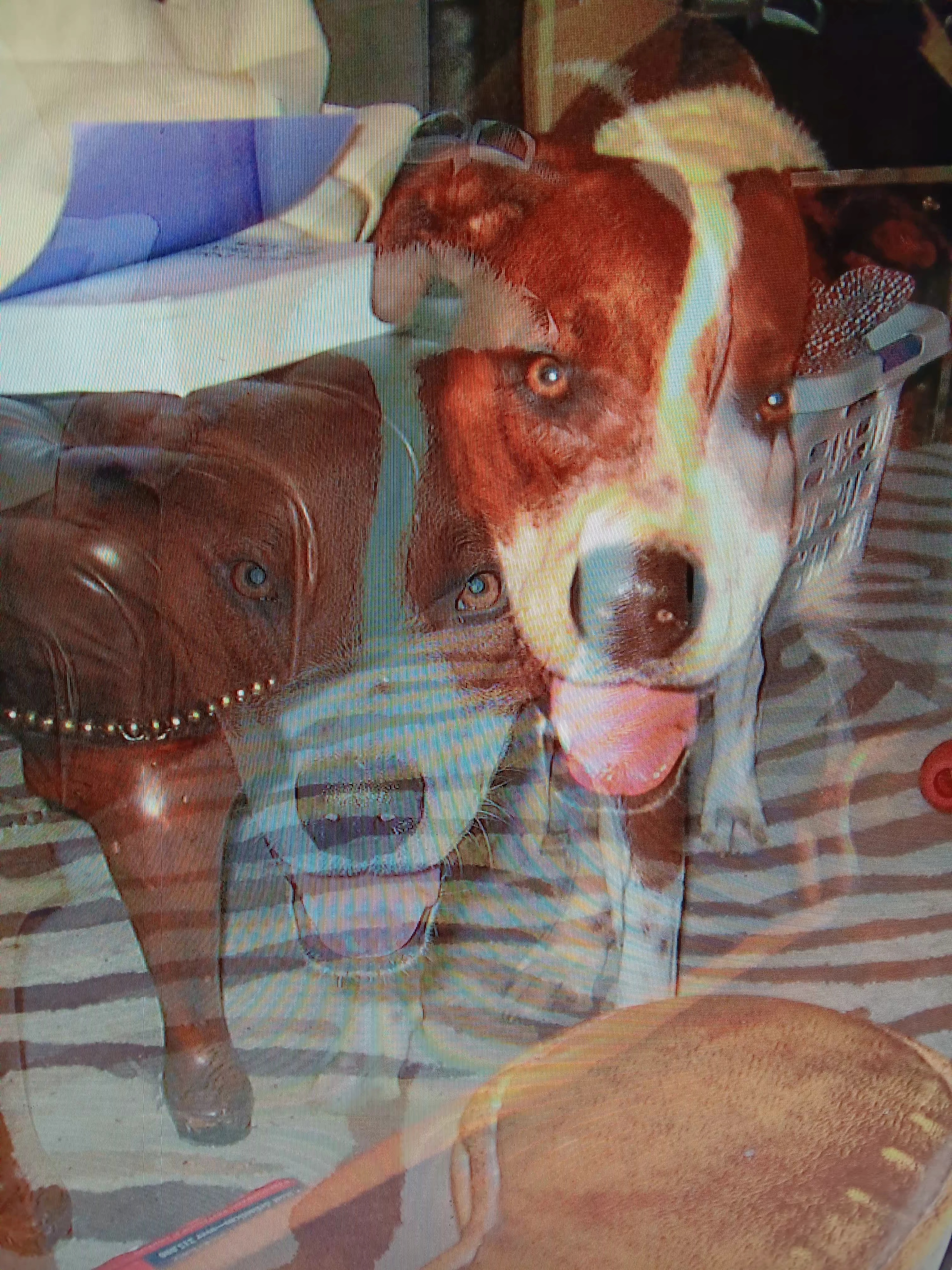
The handsome ghost dog and his ghost dog shadow are Cowboy, who was the precursor of Boo, Bandit, and Colonel. I rescued him when he was 7 weeks, and held him in my arms when he breathed his last ten years later (2006 – 2016). And in between, he rescued me. I got him to help keep me off alcohol (I drank and smoked so much that I would be dead otherwise and I and all around me knew it), and he was successful. And of course he still visits me in my dreams – more often than one might think in fact. (He and Boo have very similar personalities.)
One big reason I wrote about Charles right now is because today is (for me) the Official Start of the Holiday Season (besides Halloween) which is, after all, a season of spirits and ghosts (all those who have gone on before us who are no longer at the fireside with us in the flesh) as much as it is celebrating “what remains.” Scrooge, Tiny Tim and all the Christmas Ghosts are all stories that haunt me now as much as they did 50 years ago. I first watched the story on television, reading it only in my teens later. It remains EXTREMELY READABLE even today, probably (or certainly) Dickens’ most accessible work and, of course, it’s short – a long short story or maybe a novella. There are many good tv and stage adaptations and all these were begun by none other than Charles himself, who Harold Bloom called the best stage presence and actor of the nineteenth century, all of which he did while reading/performing his own works, doing the voices in separate voices, etc. Truly a rock star of his age. (Shakespeare, on the other hand, hid quietly in the shadows and only played minor roles.)
Signed,
The Drifter (partially named after The Artful Dodger)
And, Happy Holidaze to All!!
LikeLike
Cowboy lives on. This post and any others you have created is proof of that.
LA
LikeLike
I’ll probably elicit frowns and sighs when I say that I never quite got on with Dickens. However, I am very much in awe of the knowledge that you have about these authors and the literary life in general, would that I had such knowledge about anything. Thank you for sharing it in such an interesting and accessible way. I do wonder if my feeling about Dickens are because we were forced to read it in school and not for enjoyment but for dissection. Maybe. But, I do fully acknowledge that these are the giants upon whose shoulders we all teeter so, like them or not, we have to admire and thank them while wondering what it was like to live such strange debauched lives. I feel a fraud sitting in my ordinary living room in my ordinary dressing gown with not an opium pipe nor a bottle of laudanem in sight. Do indigestion tablets and whisky count?
LikeLiked by 1 person
Oh yes, whiskey always wins the day!
LikeLike
Diane
Whisky in a dressing gown definitely qualifies as writer-style rock and roll.
In my personal experience, whisky is actually much more dangerous and edgy than opioids. (I mean the milder varieties, no needles, no fentanyl, no heroin, stop use BEFORE physical addiction).
It is a shame the way literature gets taught to kids in schools in the USA. It sounds like it’s similar in England. They should only be introduced to things they can handle. In his day, Dickens was sold cheaply on the streets in cheap rag newspapers run by himself and all his novels appeared as serials, in short episodes with a week or a month between chapters. Like television in the modern age, almost, but everybody was reading back then, or having it read aloud to them.
In school now, they hand a kid the entire tome of DAVID COPPERFIELD all at once and tell them to read it by Tuesday. There are a few who can and will do that. But in general, it isn’t even being presented in the form he intended it to. Same thing with Shakespeare.
Thanks for all your great thoughts!
Dale
LikeLiked by 1 person
Learned a lot here.
mm
LikeLiked by 1 person
Thank you, Mirthful Mirthless One!
D
LikeLiked by 1 person
In days of yore, on considering Marx’s comment on religion being the “opium of the people”, I used to think, Now if OPIUM were the opium of the people, I’d be first in line for continued enslavement. (God’s Own Medicine, as Burroughs called it.) As it happens, I’d just started drafting a piece on De Q. but this here essay knocks it into the proverbial cocked hat. A rivetingly fine read, Dale, & very much your own “impassioned prose”. Incidentally, didn’t Baudelaire attempt a translation of the Confessions? You’ll know too De Q’s description of the drug’s first effects on him – a passage that’ll smack of the real to any 21st century addict – as it will in readers/viewers of e.g. Trainspotting. “What an apocalypse of the world within me! . . . the abyss of divine enjoyment thus revealed. Here was a panacea . . . for all human woes . . . happiness might now be bought for a penny and carried in the waistcoat pocket . . . ” Also, for such a tireless procrastinator, De Q’s Collected Works – 14 hefty tomes of it – is a monumental achievement in itself. Looking forward to your next instalment.
Geraint
LikeLiked by 1 person
Thank you, Geraint!
I can’t wait to see what you do with De Q whenever it’s finished! Whatever you produce will have an immediate home at Saragun Springs whether or not it also appears elsewhere now or later (if you so wish). What you’ve already written here adds a great deal to today’s “Drifter” column; among other things, the quotation you presented is absolute perfection. Your sensibility and eloquence seem wonderfully attuned to someone like De Quincy. As with many writers, his influence is far bigger than his name (among the general population). Thanks as always for these literary dialogues on great writers. I always think of Beckett and De Quincy as connected too. Especially in Krapp’s Last Tape, which seems like De Quincy resurrected and preserved.
D
LikeLike
My son is not a reader – I think maybe the hospital swapped him when I wasn’t looking. But his son was reading Great Expectations for his O levels and in a display of parental support my son said he would read it with him. Well it took him a year – well past the examination date but by gum he finishe it. Credit where it’s due he said he enjoyed it!!
LikeLiked by 1 person
Hi Drifter
First off–amazing pics! Great camera and editing work. There is a psychedelic fusion and the smoke makes me think of an opium den in Chinatown. “Forget it Jake. it’s Chinatown.”
This is an eye opening essay about the seedier side of Dickens. I knew he wasn’t a perfect person. It’s great how you show the human side of Chuck. Also a new author, at least to me ,Thomas de Quincy. Now, I want to read Confessions of an English Opium Eater. I’m drawn to these sordid subjects. It sounds like one of the first books about addiction.
London sounds like an absolute metropolis back then with all the trappings. No wonder “The Ripper” found a home in Whitechapel, born from the smoke stacks of the industrial revolution and squalor.
de Quincy had quite the influence on writing prose (as I just learned). Interesting how you showed this sort of poetic elitism that he wanted to change. Also his early true crime stories and long reaching influence.
This is what I really like about your essays. This wealth of knowledge that you freely share.
Great essay!
Christopher
LikeLiked by 1 person
Hi Christopher!
Thanks for letting me know that the pictures achieve their intended effects. Also for letting me know about the Train Dreams film. Good to know someone is interested in adapting his work in that way.
Another thing Dickens did that scandalized the Victorians was leave his wife, then accuse her of being crazy, then write multiple defensive self-justifications for his actions. Unheard of during those times on multiple levels. But he felt like he was doing the right thing.
De Quincy’s wife was always aware that she hadn’t exactly married the most upstanding citizen in England at that time. He went his own way most of the time and she let him do it, yet they still had 8 kids together.
Don’t know if you’ve ever seen the film of Jesus’ Son. None other than Denis Johnson himself plays the man who shows up at the ER with the knife in his eye and says he only wants them to prosecute his wife for stabbing him “if I die.”
Dale
LikeLike
Hi Dale
Dickens for some reason seemed like a sort of saintly figure to me for a long time. After reading some of your previous work about Dickens (this work for sure) , and maybe some of my own research, the myth has been officially debunked.
He sounds like he blew up his life like a lot of lesser mortals do in those strange yearning days of the mid-life crisis or whenever he pulled the plug. Quite bodacious to use his pen in the deference to the little lady. It never works out when famous people air their dirty laundry or try to wash it in public. I remember Tiger Woods’ standing up there admitting guilt for cheating on his wife and it wasn’t a good look. He didn’t owe the public anything.
Wow, I did see the movie or part of it, but somehow I missed Denis J. with the knife in his eye. Crazy! “Emergency” was the first story I read of his in “The New Yorker.” That was a great line too. It seemed accurate. That’s how couples are.
Christopher
LikeLike
Dale,
I read this with great interest, though I’m afraid I share Diane’s school-induced lack of interest in Dickens. ‘Bleak House’ is the only one I’ve managed to re-read in later life.
What I was selfishly wondering is whether you are planning to extend your posts to one of my heroes, Samuel Taylor Coleridge, a lifelong addict?
bw Mick
LikeLiked by 1 person
Thank you, Mick!
This is a great, wonderful, awesome suggestion.
STC is now officially on the list of Drifter columns, and for the near, not the far, future, too. Probably before Xmas.
Thanks for this suggestion.
STC is, among all my other favorites, one of my favorite of favorites.
I have enormous affection for him as a writer, and as a personality.
Not sure what angle “The Drifter” will take when he starts in on STC but I will pray to the literary gods that it’s a successful one. Maybe even sending up one prayer to none other than STC himself, as he asked us to do in his “Epitaph”: “O, lift one thought in prayer for S.T.C.”… Thanks again!
D
LikeLiked by 1 person
Thank YOU, Dale! Looking forward to it. He’s one of my heroes too.
bw mick
LikeLiked by 1 person